
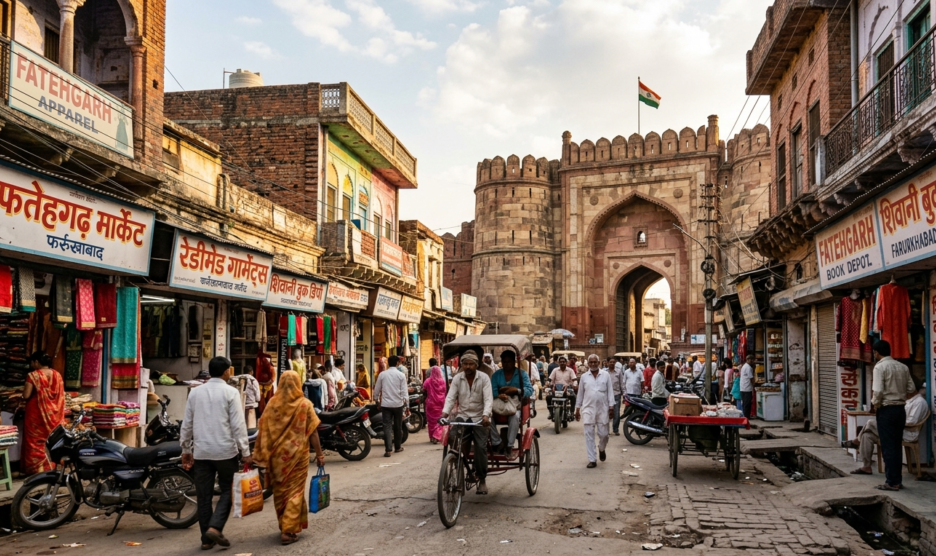
Farrukhabad District :- The Land of Ganga-Jamuni Culture, Ancient History, and Potato Hub
Nestled along the banks of the holy rivers Ganga and Ramganga in the mid-western part of Uttar Pradesh, Farrukhabad is a historic district whose significance spans from mythological eras to modern times. Known globally for its unique hand-block printing (Zardozi), rich Buddhist heritage, and massive potato production, Farrukhabad stands as a proud testament to the perfect amalgamation of history, spirituality, and agriculture in Uttar Pradesh.
Detailed History :-
The history of Farrukhabad is deeply rooted in prehistoric and Mahabharata periods. In ancient times, this region was a part of the ‘Panchala Mahajanapada‘, whose capital ‘Kampilya‘ (now Kampil) is located right in this district. It is believed to be the kingdom of King Drupad and the site of Draupadi’s Swayamvar. The modern city was founded in 1714 by Nawab Mohammad Khan Bangash, who named it ‘Farrukhabad‘ after the reigning Mughal Emperor Farrukhsiyar. The district has also been a major center for Jainism, Buddhism, and Sanatan culture. Its historic site, ‘Sankisa‘, is revered by Buddhists worldwide as the place where Lord Buddha descended to earth from heaven.
Detailed Architecture :-
The architecture of Farrukhabad reflects a beautiful blend of ancient forts, Mughal heritage, and scenic river ghats.
- Exterior :– The district’s exterior landscape is marked by historical gateways from the Nawab era (like Lal Darwaza), ancient tombs, and pristine ghats along the Ganges (like Ghatia Ghat). The areas of Kampil and Sankisa showcase the historic structural remnants of ancient stupas and Jain temples.
- Interior/Surroundings :– The tombs and structures of Nawab Bangash feature intricate carvings, traditional red bricks, and lime mortar. The old marketplaces retain narrow lanes and traditional structural layouts that offer a nostalgic glimpse into the past.
Travel Guide & Routes :-
- Ticket and Entry Fee :– There is no entry fee or ticket required to explore Farrukhabad or its historical and religious sites. It is entirely free for everyone.
- Visiting Time :– The ideal time to visit historical and religious monuments is from 6:00 AM to 7:00 AM. Capturing the morning Aarti at the Ganga Ghats is highly recommended.
- How to Reach :–
- By Rail :– Farrukhabad (FBD) and Fatehgarh (FGR) are the primary railway stations, directly connected to major cities like Delhi, Lucknow, Kanpur, and Agra.
- By Road :– The district enjoys good road connectivity with Kanpur (approx. 140 km), Bareilly, and Lucknow. UPSRTC buses and private taxis are easily available.
- By Air :– The nearest airports are Kanpur (Chakeri Airport) and Lucknow (Amausi Airport), from where one can take a train or taxi to reach Farrukhabad.
- Photography Spots :–
- Ghatia Ghat :– Perfect for capturing beautiful sunrises, sunsets, and boat rides along the Ganges.
- Sankisa Stupa :– Ideal for photographing Buddhist heritage and peaceful landscapes.
- Ancient Jain Temples of Kampil :– Renowned for their intricate carvings and heritage look.
- Local Taste :– When in Farrukhabad, do not miss the authentic taste of Bedai-Kachori made in pure desi ghee, Khasta Samosas, and the famous local Pedas. The street-side Chaat is also immensely popular.
- Famous Market :–
- Chowk Bazar :– The central hub for clothing, cosmetics, and daily essentials.
- Sadhwara Bazar :– Internationally acclaimed for its exquisite textile hand-block printing, Zardozi work, and traditional fabrics.
Interesting Facts :-
- Asia’s Massive Potato Market :– Farrukhabad is recognized as one of the largest potato-producing regions in North India. The Saatanpur Potato Mandi here is counted among the largest in Asia.
- Lord Buddha’s Descent Site :– Sankisa is revered as one of the eight holiest places (Ashtamahasthana) for Buddhist pilgrims across the globe.
- Military Hub :– Farrukhabad’s twin city, ‘Fatehgarh’, serves as the proud and historic regimental center for the ‘Rajput Regiment’ and the ‘Sikh Light Infantry’ of the Indian Army.
Important Questions and Answer :-
Question 1:– Which city is known as the twin city of Farrukhabad?
Answer:- Fatehgarh is known as the twin city of Farrukhabad. It houses all the primary administrative offices and the military cantonment of the district.
Question 2:– What handicraft is Farrukhabad famous for?
Answer:- Farrukhabad is globally renowned for its traditional hand-block printing, intricate Zardozi embroidery, and textile artistry.
Question 3:– Where is Kampilya, the site related to the Mahabharata?
Answer:- Kampilya (currently Kampil) is located in the Kaimganj tehsil of Farrukhabad district, believed to be the capital of King Drupad and the birthplace of Draupadi.
Author’s Thoughts :-
Farrukhabad district is like a silent book of history, holding chapters from the Treta Yug, Dwapar Yug, Buddhist era, and the Mughal Caliphate all in one place. On one hand, the peaceful ghats of the Ganges offer spiritual solace, while on the other, the exquisite block prints created by local artisans grace global fashion ramps. Despite minimal mainstream limelight, this district has beautifully sustained its cultural and agricultural essence. If you wish to experience India’s true mythological roots and rustic charm, a trip to Farrukhabad will touch your soul.
“Farrukhabad: Where ancient mythological roots, the holy currents of the Ganges, and magnificent craftsmanship smile in unison.”