
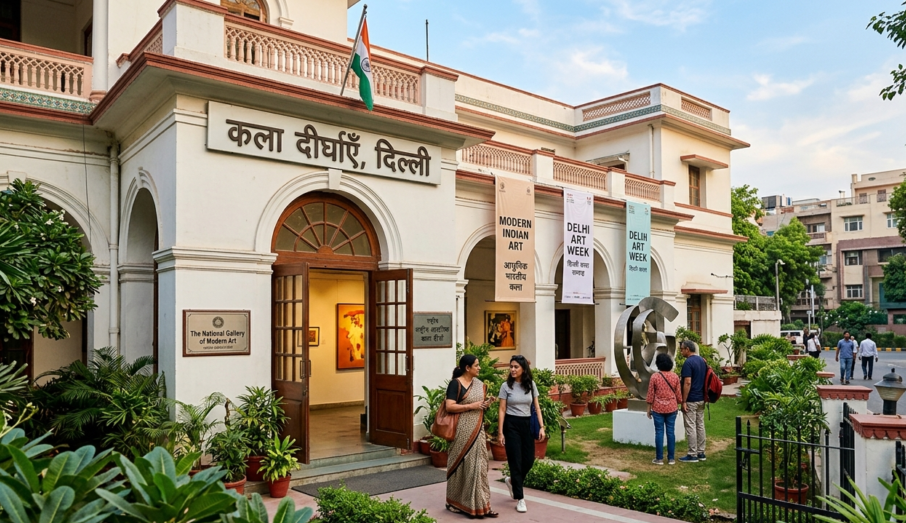
Art Galleries :- The Living Mirror of Human Emotions, History, and Creativity
Detailed History
Art galleries are far more than mere layout repositories for paintings and sculptures; they serve as the profound living chronicles of human civilization, cultural shifts, and intellectual evolution. The history of preserving and displaying art traces back centuries, originating from the private cabinets of curiosities and elite collections curated by royalty and aristocrats. Following the Renaissance and during the Enlightenment era of the 18th and 19th centuries, the concept of public art galleries emerged, democratizing art so that individuals from all walks of life could experience, contemplate, and learn from it.
In India, the timeline of modern art galleries grew immensely rich through the pathbreaking contributions of legendary pioneers like Raja Ravi Varma, Rabindranath Tagore, and Amrita Sher-Gil. Post-independence, the establishment of the National Gallery of Modern Art (NGMA) in 1954 in New Delhi provided a structured sanctuary for the nation’s evolving modern visual language. Today, art galleries have progressed far beyond classical oil-on-canvas works, transforming into global launchpads for digital art, avant-garde photography, monumental installation arts, and mixed-media contemporary formats that unite global thinkers.
Detailed Architecture
The architectural layout of a premier art gallery is intentionally designed to be an absolute masterpiece in its own right, yet subtle enough to ensure that it never overshadows the artworks on display.
- Exterior Architecture :– The structural outer presentation of galleries globally follows two distinct patterns. Several premium art spaces are located within repurposed heritage palaces, royal mansions, or grand colonial pavilions characterized by sweeping stone colonnades, high structural arches, and rustic red sandstones. Conversely, custom-built contemporary galleries favor the ‘Minimalistic’ style—utilizing clean structural glass panels, raw stainless steel, and unadorned white concrete structures to offer a sharp, futuristic aesthetic.
- Interior Architecture :– The indoor floor plans are mathematically configured to create optimal viewing environments, heavily utilizing the iconic ‘White Cube’ design philosophy—characterized by soaring, pristine white walls that eliminate visual distractions and let the colors of the art pop. The most critical component inside is precision track lighting and seamlessly diffused natural skylights configured to eliminate harsh shadows, glares, or reflections on protected canvases. High ceilings, wide open-span gallery halls, and acoustic dampening floors combine to offer a deeply meditative, hushed sanctuary.
Travel Guide & Routes :-
If you wish to submerge yourself in the mesmerizing ecosystem of visual arts, here is an essential visitor guide based on India’s premier arts clusters (such as the NGMA, Triveni Kala Sangam, and Lalit Kala Akademi in New Delhi).
- Entry Ticket :– A vast majority of public and government-run art institutions (like the Lalit Kala Akademi) offer completely free admission to all exhibits. The National Gallery of Modern Art (NGMA) charges a nominal conservation fee of just ₹20 for Indian citizens, while entry remains completely free for school students with valid IDs. Private commercial art galleries also generally welcome visitors free of charge.
- Visiting Timings :– Standard gallery operating hours run from 10:00 AM to 06:00 PM daily. Visitors must note that almost all major government-managed art galleries remain strictly closed on Mondays and national gazetted holidays.
- How to Reach :–
- By Metro :– The most interconnected metro gateways to reach the primary art galleries are the ‘Central Secretariat’ station (Yellow/Violet Line), ‘Mandi House’ station (Blue/Violet Line), and ‘Khan Market’ station (Violet Line). The galleries are situated within walking distance or a short e-rickshaw ride from these hubs.
- By Bus :– Extensive DTC bus routes traveling toward Central Delhi, India Gate, or the Mandi House roundabout stop directly near these premier cultural zones.
- By Auto/Cab :– App-based taxi aggregators and local auto-rickshaws offer seamless point-to-point drop-offs to these gallery gates from any part of the National Capital Region.
Nearby Attractions :-
- India Gate & Kartavya Path :– Positioned just steps away from the NGMA, this sprawling national boulevard and its surrounding water fountains offer a great outdoor walk post-gallery visit.
- Mandi House Cultural District :– Bordering local institutions like Triveni Kala Sangam, this zone houses legendary performing arts theaters including the Shriram Centre, Kamani Auditorium, and the National School of Drama (NSD).
- Connaught Place (CP) :– The historic colonial shopping and commercial heart of Delhi, which features premium dining options and a multitude of intimate private art spaces tucked into its heritage corridors.
- Humayun’s Tomb :– For design lovers, this magnificent UNESCO World Heritage Site showcasing the peak of early Mughal garden architecture sits a brief drive away.
- Lodhi Art District :– If you wish to experience public art outside conventional walls, India’s premier open-air public mural district is located nearby in the residential avenues of Lodhi Colony.
Photography Spots, Local Taste, and Famous Markets :-
- Photography Spots :– The landscaped outer courtyards of heritage galleries, the iconic step-seating amphitheater at the open-air Triveni Terrace Cafe, and the grand geometric perspective lines of the interior halls offer incredible frames. (Note :- Photography inside active display wings is frequently restricted to protect artist copyrights, so ensure you check specific institutional rules).
- Local Taste :– The legendary ‘Triveni Terrace Cafe‘ is a beloved institution among writers, painters, and art critics, highly celebrated for its signature Sabudana Vada, hot filter coffee, and beetroot kebabs. For high-end global bistros, the nearby eateries of Khan Market are unparalleled.
- Famous Markets :– Khan Market and Janpath Market are prime surrounding destinations for tourists seeking to purchase curated art books, handwoven textiles, authentic Indian handicrafts, and rare collectibles.
Interesting Facts :-
- The largest art gallery in the world is the historic Louvre Museum in Paris, France—home to Leonardo da Vinci’s ‘Mona Lisa’—a space so vast that touring every room comprehensively would take several days.
- Art galleries maintain highly specialized, automated climate control and relative humidity tracking systems inside their display vaults to prevent the degradation of centuries-old pigments and delicate canvas fibers.
- Modern galleries are rapidly embracing immersive multi-sensory technologies, utilizing massive high-definition digital projections to allow viewers to literally step inside digital paintings.
- Beyond public exhibition, commercial art galleries serve as the critical economic engine for the creative economy, hosting high-profile art auctions that discover and financially empower emerging artistic talent.
Important Questions and Answer :-
Question 1:- Which is the most prominent public art gallery institution in India?
Answer:- The premier public art gallery space in the country is the National Gallery of Modern Art (NGMA), headquartered at the historic Jaipur House in New Delhi, with active sister campuses operating in Mumbai and Bengaluru.
Question 2:– Is it necessary to possess deep technical knowledge of art history to enjoy an art gallery?
Answer:- Not at all. Art galleries are democratic spaces designed for anyone who appreciates visual storytelling and human emotion. Art is subjective, and every individual is free to interpret a piece through their own unique personal lens.
Question 3:- Can visitors purchase the artworks exhibited inside art galleries?
Answer:- Yes, artworks displayed within private, commercial galleries are generally up for sale to collectors. However, the masterpieces housed within national museums and apex government galleries are strictly non-transactional and preserved for national heritage.
Author’s Thoughts :-
Spending an afternoon inside an art gallery is a profound form of active meditation. The moment you step away from the chaotic rhythm of urban streets into the absolute stillness of a climate-controlled white hall, time slows down. Every canvas and sculpture serves as an intimate mirror to a human soul—transmitting an artist’s deepest joys, structural angests, political rebellions, or untamed dreams. A stroll through these galleries softens us, expanding our empathy and forcing us to slow down. In a world rushing blindly into tomorrow, do take an hour to sit quietly with art and listen to its unspoken language.
“Art galleries are those silent corridors where spoken words recede, allowing colors to converse directly with the soul.”