
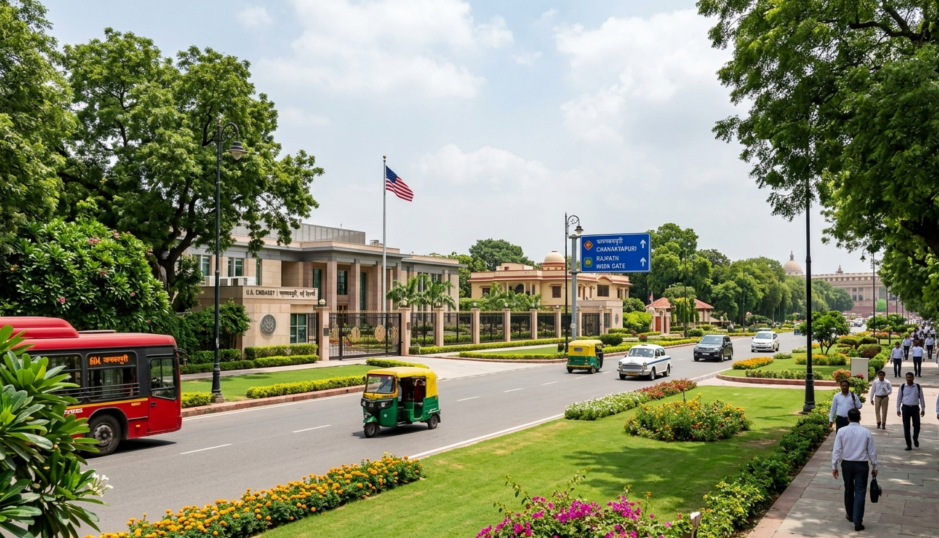
Chanakyapuri :- The Diplomatic Enclave, Global Architectural Masterpieces, and India’s Elite Sovereign Quarter
Nestled in the monumental heart of New Delhi, Chanakyapuri is far more than a premier administrative zone—it stands as the definitive epicenter of international diplomacy, architectural diversity, and ultra-luxurious living in India. Named after Acharya Chanakya, the legendary 4th-century BCE strategist, philosopher, and prime minister of the Mauryan Empire, this highly secure district is universally recognized as the capital’s exclusive VVIP Diplomatic Enclave. Characterized by expansive radial avenues, pristine tree-lined roundabouts, palatial embassies, and the lush lawns of Nehru Park, Chanakyapuri offers an incredibly serene, sophisticated, and manicured urban experience.
Detailed History :-
The historical blueprint of Chanakyapuri is intertwined with post-independence India’s urban development and expanding global foreign policy. Following independence in 1947, India’s geopolitical relevance triggered a massive influx of international diplomatic missions. As the historic bungalows of Lutyens’ Delhi faced space constraints, the Government of India, in the early 1950s, planned a dedicated, high-security enclave in the southwest fringes of New Delhi.
This modern sector was named ‘Chanakyapuri‘ as an architectural tribute to Chanakya, whose classical political treatise, the Arthashastra, remains a cornerstone of Indian statecraft. Mirroring this heritage, the primary arteries of the district were christened after India’s core values: ‘Shanti Path‘ (The Path of Peace), ‘Nyaya Path‘ (The Path of Justice), ‘Niti Marg‘ (The Policy Way), and ‘Kautilya Marg‘. Today, this zone serves as the sovereign diplomatic address for more than 100 foreign embassies, high commissions, and international consulates.
Detailed Architecture :-
The architectural landscape of Chanakyapuri represents a stunning, uninhibited global collage. Moving away from a singular structural format, each embassy compound is meticulously designed to project the unique heritage, indigenous materials, and contemporary architectural philosophies of its respective home nation.
- The Embassy of the United States :– Designed by the celebrated American modernist architect Edward Durell Stone, this complex is a brilliant intersection of mid-century modernism and traditional Indian architecture. Its iconic exterior features a continuous terrazzo geometric screen (lattice work) that beautifully filters the Delhi sun.
- The Russian and French Embassies :– While the Russian Embassy exhibits the monumental, fortress-like grandeur of Soviet-era architecture, the French and German Embassies are masterful expressions of contemporary European minimalist design, featuring extensive structural glass windows and sleek steel engineering.
- The British High Commission :– Retaining its profound colonial footprint, this sprawling compound showcases classical British brick masonry and grand columns that command a stately presence along Shanti Path.
- The Ashok Hotel :– Built in 1956 to host international delegates, this historic PSU landmark exhibits grand red sandstone architecture, dramatic Mughal-style arched gateways, and soaring sandstone chhatris (pavilions), balancing ancient Indian luxury with modern scale.
Travel Guide & Routes :-
- Tickets & Entry Fees :– Driving along Shanti Path, admiring the public floral gardens, and accessing the vast lawns of Nehru Park is completely free of charge. However, specialized recreational facilities like the National Rail Museum require an admission ticket costing ₹100 for adults on weekdays and ₹200 on weekends. Due to international diplomatic protocols, entry inside embassy interiors is strictly forbidden for the general public.
- Visiting Time :– The ideal windows to explore Shanti Path and Nehru Park are from 06:00 AM to 09:00 AM and 04:30 PM to 08:30 PM. The National Rail Museum welcomes visitors from 10:00 AM to 05:00 PM (strictly closed on Mondays). The luxury fine-dining hubs within The Chanakya and surrounding state bhavans remain active until 11:00 PM.
- How to Reach :–
- By Metro :– The Delhi Metro network’s ‘Pink Line’ offers immediate access via the ‘Sarojini Nagar’ and ‘Durgabai Deshmukh South Campus’ stations. Alternatively, the ‘Lok Kalyan Marg’ station on the ‘Yellow Line’ serves as a convenient transit point, located a short auto-rickshaw ride away.
- By Road :– Chanakyapuri is perfectly connected via the main Ring Road and the Dhaula Kuan flyover junction. Given its high-security status, the roads feature exceptional lane discipline and minimal congestion, making app-based cabs and auto-rickshaws highly efficient modes of transport.
- Photography Spots :– The stunning, curated tulip beds lining Shanti Path (active during the spring bloom), the vintage steam locomotives at the National Rail Museum, and the dramatic, diverse facades of international embassies. (Note: Avoid photographing close to security gates and check for explicit “No Photography” signs outside sensitive diplomatic zones).
- Local Flavors :– The ‘Yashwant Place Commercial Complex‘ is a legendary culinary destination in Delhi, highly rated for its sizzling, spicy Indo-Tibetan street food. Its open-air stalls are famous for steamed chicken momos, piping hot Thukpa, and crispy chili potatoes. For authentic regional food, the canteens of nearby State Bhavans (such as Andhra Bhavan and Tamil Nadu House) serve exceptional, highly economical regional thalis.
- Famous Markets :– ‘Santushti Shopping Complex’ (an elite open-layout courtyard featuring designer boutiques, traditional Indian textiles, and premium arts) and ‘The Chanakya’ (a high-end luxury mall hosting international couture brands, artisanal cafes, and a premium multiplex).
Interesting Facts :-
- Chanakyapuri functions as a critical “Green Lung” of New Delhi, maintaining one of the highest percentages of dense urban forest cover and manicured lawns across the capital.
- The 80-acre Nehru Park serves as a major cultural hub, hosting elite national events including the annual ‘Jahan-e-Khusrau’ Sufi musical festival and the Delhi International Jazz Festival.
- The National Rail Museum houses 1:1 scale operational vintage locomotives, including the historic Patiala State Monorail and the opulent 19th-century royal carriages built for the Prince of Wales.
Important Questions and Answer :-
Question 1:– Can tourists get an insider tour of the various embassies in Chanakyapuri?
Answer:- No, due to international diplomatic immunity and strict global security regulations, general tourists are not permitted inside embassy compounds without official diplomatic documentation, a valid visa appointment, or an official invitation. Visitors can, however, enjoy a driving tour to see the beautiful external architecture.
Question 2:– What makes Yashwant Place a specialized commercial asset in Chanakyapuri?
Answer:- Yashwant Place is unique because it combines high-end retail with legendary street food. It is universally sought-after for sourcing premium leather apparel, custom-tailored suede jackets, and bags, while its food plaza remains a timeless hub for generations of Delhiites seeking authentic Tibetan street food.
Question 3:– What are the primary tourist highlights at the National Rail Museum?
Answer:- The museum is an exceptional asset for families and engineering enthusiasts. It displays real vintage steam engines, introduces working scale models of Indian train networks, and operates a functional ‘Joy Train’ that takes visitors on a scenic loop around the heritage locomotives scattered across the manicured outdoor yards.
Author’s Thoughts :-
From my perspective, Chanakyapuri reflects a polished, profoundly disciplined side of Delhi that matches the standard of the world’s finest master-planned capital cities. Cruising down the wide, clean lanes of Shanti Path while observing the flags of different nations fluttering against the sky creates an inspiring, truly global atmosphere. It exists as a quiet, emerald oasis right in the center of a hyper-active metropolis. Whether you spend a peaceful morning walking under the canopy of Nehru Park or an evening enjoying the famous street food at Yashwant Place, Chanakyapuri offers a sophisticated and deeply relaxing escape from the urban rush.
“Chanakyapuri stands as a magnificent intersection of global heritage and strict statecraft, where the world’s diverse architectures gracefully unite along the clean, green pathways of India’s diplomatic heart.”