
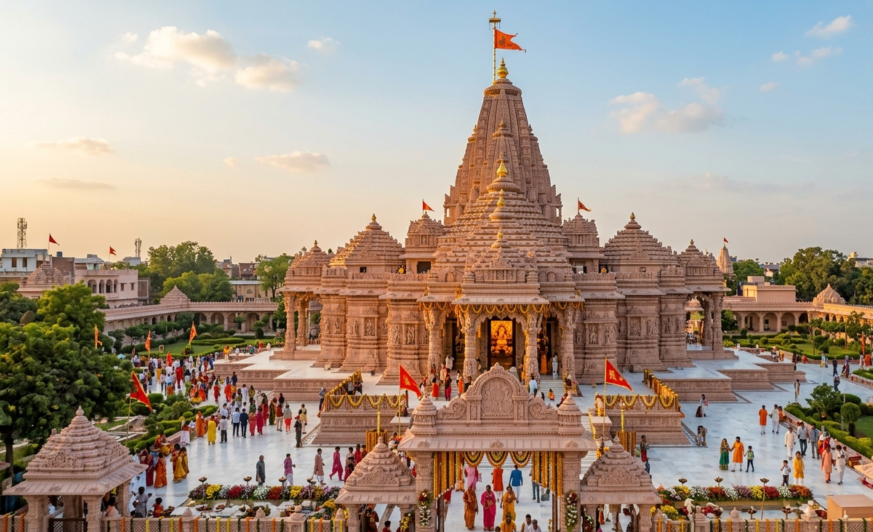
Shri Ram Mandir, Ayodhya :- The Epitome of Faith, History, and Grandeur
Detailed History :-
Located in the heart of Ayodhya, Shri Ram Mandir is the ultimate center of faith, patience, and unwavering devotion for millions of Hindus worldwide. According to sacred Puranic texts, this is the very holy site where Lord Rama, the seventh incarnation of Lord Vishnu, was born to King Dasharatha and Queen Kausalya. After centuries of long struggles, legal battles, and a cultural renaissance, the Supreme Court of India delivered a historic verdict on November 9, 2019, recognizing this land as the birthplace of Ram Lalla. Following this, the foundation stone of the grand temple was laid on August 5, 2020, and the historic ‘Pran Pratishtha‘ (consecration) ceremony of Lord Ram Lalla was performed on January 22, 2024, in the presence of Prime Minister Narendra Modi. Today, this site stands not just as a temple, but as a global symbol of the unwavering devotion and pride of Sanatan Dharma.
Detailed Architecture :-
The Shri Ram Mandir is a magnificent and breathtaking marvel built in the traditional Indian Nagara style of architecture. The master plan of this grand temple was designed by the renowned architect Chandrakant Sompura and his sons.
- Size and Structure :– It is a massive three-story temple structure with a total length of 380 feet, a width of 250 feet, and a height of 161 feet. No iron or concrete has been used anywhere in the construction. Instead, it is built entirely using pink sandstone from Bansi Paharpur, Rajasthan, meticulously interlocked to ensure a lifespan spanning thousands of years.
- Pillars and Carvings :– The temple features a total of 392 pillars and 44 majestic doors. Each pillar is intricately carved with figures of gods, goddesses, nymphs, and narratives from the Ramayana.
- Mandaps (Halls) :– Five major pavilions have been constructed inside the temple – Nritya Mandap, Rang Mandap, Sabha Mandap, Prarthana Mandap, and Kirtan Mandap.
- Main Sanctum Sanctorum (Garbhagriha) :– On the ground floor, the main sanctum houses a stunning 51-inch dark-toned idol of ‘Shri Ram Lalla’ in his 5-year-old childhood form, beautifully sculpted by Mysuru-based artist Arun Yogiraj.
Travel Guide & Routes :-
- Entry Ticket :– Darshan at the Shri Ram Mandir is absolutely Free. To attend the special Aartis (Mangala, Bhog, Shringar), you need to book a free pass in advance from the official website of the Shri Ram Janmabhoomi Teerth Kshetra Trust.
- Visiting Time :– The temple is open for devotees from 6:30 AM to 12:00 PM and from 2:00 PM to 10:00 PM. The gates remain closed from 12:00 PM to 2:00 PM for the deity’s rest and food offering (Bhog).
- How to Reach :–
- By Air :– The nearest airport is the Maharishi Valmiki International Airport (AYO) in Ayodhya, located just 10 km from the temple. Lucknow Airport (130 km) serves as another major alternative.
- By Rail :– Ayodhya Dham Junction (AYC) and Ayodhya Cantt (AYC) are exceptionally well-connected to all major Indian cities. E-rickshaws and auto-rickshaws are readily available from the stations to the temple.
- By Road :– Ayodhya is highly accessible via National Highways (NH-27 and NH-28) from Lucknow, Gorakhpur, Varanasi, and Prayagraj. State-run UPSRTC buses and private cabs operate 24/7.
- Local Flavors & Famous Markets :– When visiting Ayodhya, do not miss tasting the legendary Besan ke Laddoo from Hanumangarhi and fresh Rabri. For shopping, Tedhi Bazar and the Kanak Bhawan stretch are famous for wooden handicrafts, Ramnami stoles, and spiritual souvenirs.
- Photography Spots :– Due to high-level security, mobile phones, cameras, and leather items are strictly prohibited inside the temple premises. However, you can click beautiful pictures at the temple exit gates, Bhakti Path, and the iconic Lata Mangeshkar Chowk nearby.
Nearby Attractions :-
- Hanumangarhi :– It is believed that before visiting Lord Rama, one must seek the blessings of his ultimate devotee, Lord Hanuman, at this hilltop fortress-temple.
- Kanak Bhawan :– Popularly known as the golden palace of Goddess Sita and Lord Rama, it is famous for its stunning interior work and divine idols.
- Saryu River & Ram Ki Paidi :– The evening Maha Aarti at the banks of the sacred Saryu River and the illuminated steps of Ram Ki Paidi offer a surreal, divine experience.
- Dashrath Mahal :– The ancestral palace of King Dasharatha, featuring a remarkably beautiful carved entrance.
Interesting Facts :-
- Zero Use of Iron :– Not a single gram of iron has been used in the structure, as iron rusts over time. Instead, copper plates have been used to bind the massive stones together.
- Time Capsule :– A time capsule containing the detailed history of Ayodhya and Shri Ram Mandir written in Sanskrit has been placed 2,000 feet beneath the temple to prevent any future historical disputes.
- Holy Soil from 2,500 Sites :– The foundation of the temple incorporates sacred soil and water collected from over 2,500 holy locations, rivers, and shrines across India.
Important Questions and Answer :-
Question 1:- What is the best time of the year to visit Shri Ram Mandir?
Answer:– The winter season, from October to March, is ideal due to the pleasant weather. Visiting during festivals like Ram Navami and Deepotsav (Diwali) provides an unparalleled glimpse into Ayodhya’s festive grandeur.
Question 2:– Is there a baggage storage facility available at the temple?
Answer:– Yes, the temple administration provides a large, free cloakroom and locker facility near the entrance where you can safely store your mobile phones, footwear, and luggage.
Question 3:– What makes the idol of Ram Lalla unique?
Answer:– The 51-inch idol is carved out of a single piece of ancient black stone (Shaligrama Shila). It represents Lord Rama as a 5-year-old child, and the outer frame features exquisitely carved depictions of all ten avatars of Lord Vishnu.
Author’s Thoughts :-
A pilgrimage to Shri Ram Mandir is not merely a sightseeing tour; it is a soul-stirring spiritual experience. The moment you step into the temple complex, surrounded by resounding chants of ‘Jai Shree Ram’, the sheer positive energy and tranquility wash over you in a way words cannot capture. This harmonious blend of ancient heritage and modern engineering makes every visitor swell with pride. Witnessing this grand spiritual revival in Ayodhya is an absolute must-do in one’s lifetime.
S “Rama is not just a name; He is the living pulse and eternal faith of every Indian.”
Great content! Keep up the good work!