
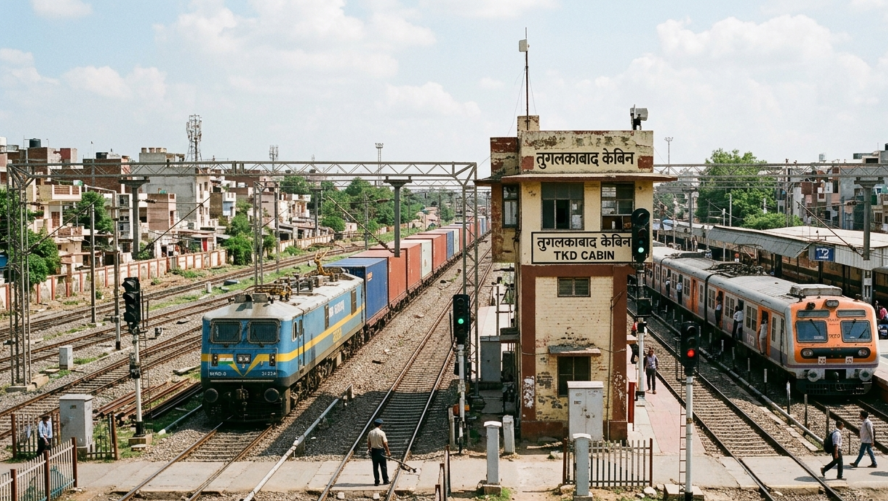
Tughlakabad Cabin Railway Area, Delhi
Detailed History :-
Tughlakabad Cabin Railway Area, nestled near the historic 14th-century Tughlakabad Fort in South Delhi, is a massive, strategically crucial railway junction and yard operated by Indian Railways. This bustling zone serves as the southern terminus for Delhi’s ‘Ring Railway’ network and represents a pivotal intersection along the high-density Delhi-Mathura Main Trunk Route.
From a historical perspective, this comprehensive rail complex was envisioned to streamline heavy freight traffic and industrial logistics within the capital region. The attached Inland Container Depot (ICD), established in 1993, has evolved into Asia’s largest dry port, playing an indispensable role in international trade. Furthermore, the Tughlakabad Loco Shed is recognized as one of the largest and most prominent locomotive maintenance facilities in the country. While it does not function as a flashy passenger terminal like New Delhi, its contribution to keeping the nation’s economy on track is both historic and unmatched.
Detailed Architecture :-
The architectural landscape of the Tughlakabad Cabin Railway Area is reminiscent of a sprawling ‘Industrial Rail Complex’. It presents an awe-inspiring layout where functional industrial architecture seamlessly blends with complex modern rail engineering.
- Sprawling Web of Tracks :– The most defining layout feature of this yard is the extensive grid of parallel railway tracks. These lines handle non-stop shunting, sorting, and marshaling of long freight rakes and heavy container wagons round the clock.
- Rail Flyovers and Grade Separators :– The structural planning incorporates dedicated rail flyovers (grade separators). These engineering structures allow cargo trains to bypass busy passenger lines without causing traffic blockages.
- Legacy Cabin Towers :– Elevated brick cabin towers are scattered across the yard. While modern Route Relay Interlocking (RRI) systems have replaced the old physical lever frames, these vintage structures still stand as a tribute to classic 20th-century railway design.
- The Locomotive Sheds :– The facility features gigantic industrial sheds built to accommodate, service, and maintain Indian Railways’ most powerful electric and diesel locomotives, such as the WAP-7 and WAG-9 classes.
Travel Guide & Routes :-
- Ticket Information :– Being primarily an operational and freight cabin zone, regular passenger ticketing counters and boarding platforms are situated at the adjacent ‘Tughlakabad Railway Station’ (TKD). Local train tickets for commuting into the city cost between ₹5 and ₹10.
- Timings :– The Tughlakabad Cabin and its shunting yards operate 24 hours a day, 7 days a week, and 365 days a year without pause. Rail movements are active at all hours.
- How to Reach :–
- By Metro :– The nearest transit hub is the ‘Tughlakabad Metro Station’ on the Violet Line of the Delhi Metro. The distance from the metro station to the main railway station and colony gates is roughly 2 to 2.5 kilometers.
- By Road/Bus :– The area enjoys excellent connectivity via Mehrauli-Badarpur Road (MB Road) and Mathura Road. DTC buses plying towards Badarpur, Okhla, or Saket drop passengers close to the railway perimeter.
- E-Rickshaw and Auto :– Regular e-rickshaws and auto-rickshaws ply consistently from the Tughlakabad metro exit directly to the railway colony gates for a nominal fare.
- Photography Spots :–
- The Railway Overbridge Perspective :– Capturing a wide-angle shot from the public overbridge overlooking the interlocking tracks filled with vibrant electric locomotives offers a magnificent industrial perspective.
- Sunset Over the Wagons :– During twilight hours, the silhouettes of long cargo trains against the sky, flanked by towering signal posts, deliver a striking rustic look for conceptual photography.
- Local Food :– The railway colonies and areas near the administration offices host long-standing dhabas that are hugely popular among railway staff. These places are famous for serving strong milk tea, piping hot samosas, bread pakodas, and budget-friendly North Indian meals like Dal Makhani and Tandoori Roti.
Nearby Attractions :-
- Tughlakabad Fort :– Located just a short distance from the tracks, this massive stone fortress built by Ghiyas-ud-din Tughlaq is renowned for its colossal ruins, massive bastions, and intriguing historical lore.
- Tomb of Ghiyas-ud-din Tughlaq :– Positioned right opposite the fort, this elegant mausoleum crafted from red sandstone and white marble represents a fine example of early Indo-Islamic architecture.
- Dr. Karni Singh Shooting Range :– A world-class shooting sports facility situated nearby, set amidst lush green surroundings, popular among sports lovers.
- Asola Bhatti Wildlife Sanctuary :– For nature enthusiasts, this protected forest reserve located a short drive away offers peaceful walking trails and stunning hidden blue lakes.
Interesting Facts :-
- Asia’s Premier Dry Port :– The Inland Container Depot (ICD) at Tughlakabad acts as the primary logistical clearing hub for international imports and exports across Northern India.
- Home of High-Speed Locomotives :– The local Tughlakabad Loco Shed is highly respected for maintaining the elite high-speed locomotives that pull premium trains like the Rajdhani and Shatabdi Expresses.
- The Silent Supplier :– While the metropolitan city sleeps, the freight trains marshaled at this cabin channel crucial supplies of coal, petroleum, and essential consumer goods into the capital every single night.
Important Questions and Answer :-
Question 1:– Can tourists tour the inside of the Tughlakabad Loco Shed or Container Depot?
Answer:– No, due to high-security protocols and hazardous heavy-industrial operations, unauthorized entry into the locomotive sheds, active cabins, and container yards is strictly prohibited. However, the expansive grid can be viewed safely from public overbridges.
Question 2:- Which trains primarily stop at the main Tughlakabad Railway Station?
Answer:– Tughlakabad Station primarily services local EMU commuter trains on the Delhi-Palwal-Mathura route, along with a few select regional express trains.
Question 3:– How far is Tughlakabad Fort from the Tughlakabad Cabin area?
Answer:– The fort is roughly 3 to 4 kilometers away from the railway hub and can be easily reached within 10 minutes via an auto-rickshaw or e-rickshaw.
“Where the rugged ruins of a 14th-century empire look down upon the non-stop rhythm of modern steel tracks, Tughlakabad Cabin remains the unsung powerhouse of Delhi’s connectivity.”