Badli Railway Station Delhi :- The Industrial Gateway and Lifeline of North-West Delhi
Located on the north-western fringes of the capital, Badli Railway Station is a significant suburban railway station under the Delhi Division of the Northern Railway zone of Indian Railways. Situated on the busy Delhi-Ambala-Kalka main line, the station serves a dual purpose. While the region of Badli is globally recognized for its massive Badli Industrial Area, the railway station acts as a robust transit lifeline connecting local residents, factory workers, and daily commuters to the heart of Delhi and neighboring states. In this detailed blog, we explore the history, architecture, travel guide, and key highlights of Badli Railway Station.
Detailed History :-
The history of Badli Railway Station mirrors the transformation of North-West Delhi from a cluster of rural pockets into a massive industrial and residential urban landscape. Historically, Badli was a small agrarian village located on the outskirts of Delhi. When the landmark Delhi-Ambala-Kalka railway line was laid during the British era, Badli was established as a minor countryside station along the route.
Over the decades, as the Delhi government aggressively developed the ‘Badli Industrial Area‘ and adjacent mega-townships like Rohini, the strategic value of this station grew exponentially. Nestled close to highly populated zones like Samaypur Badli, Rohini, and Jahangirpuri, passenger footfall witnessed a massive surge. It deservingly transitioned into the primary and most vital entry point into Delhi for thousands of daily wage earners, technicians, and small-scale traders traveling from Haryana cities like Sonipat, Panipat, Kurukshetra, and Ambala.
Detailed Architecture :-
The architecture of Badli Railway Station is purely functional, commercial, and commuter-centric, specifically engineered to manage heavy passenger influx during peak hours.
- Exterior :– The main station building features a minimalist, contemporary concrete structure. The outside area houses a bustling circulating zone seamlessly populated by e-rickshaws, auto-rickshaws, and local transit vehicles. Embellished with clean signage under the Swachh Bharat initiative, the entryway is designed for hassle-free navigation.
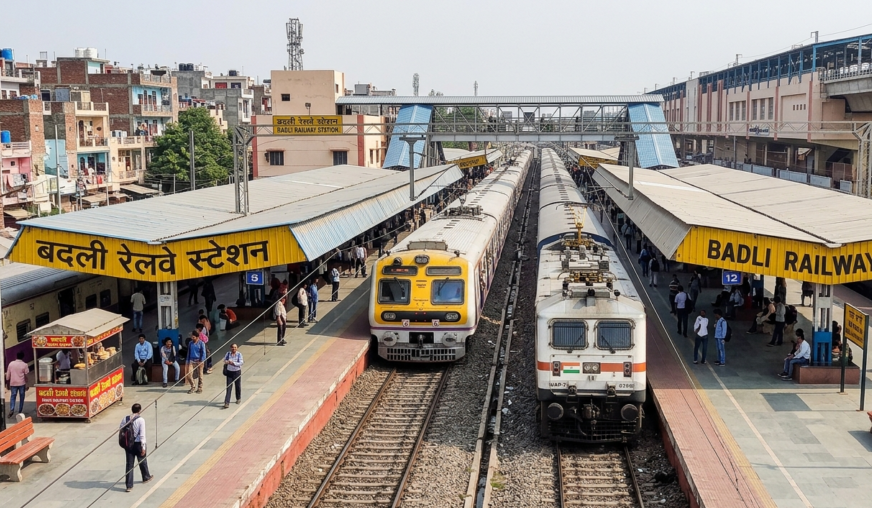
- Interior :– The station features 3 operational platforms, interconnected via wide and well-built footover bridges (FOBs). The platforms are systematically designed with ample open spaces to avert overcrowding. For passenger comfort, the station features extensive tin roofing sheds, computerized unreserved ticket counters, drinking water facilities, sturdy steel benches, and small food kiosks selling quick refreshments like tea and snacks.
Travel Guide & Routes :-
Special Note :– Badli Railway Station predominantly caters to local EMU/MEMU suburban shuttles, passenger trains, and a few selected express trains. For premium superfast trains like Shatabdi or Rajdhani, passengers must travel to New Delhi or Old Delhi Railway Stations.
- Tickets and Entry Fee :– Accessing the platform premises requires a standard platform ticket (approx. ₹10). For short-distance travel, commuters can buy tickets at the physical counters or skip the queues using the UTS mobile app.
- Operating Time :– The station is operational 24/7, with train frequencies beginning in the early hours of dawn and running until late midnight.
- How to Reach :–
- By Metro :– This is the biggest logistical advantage of this station. Samaypur Badli Metro Station, the terminal stop on the Yellow Line of the Delhi Metro, is located at a stone’s throw distance. Commuters can seamlessly walk out of the metro station and step straight onto the railway station premises.
- By Road/Bus :– The station enjoys superb road connectivity with Rohini Sector-18, Samaypur village, and the national highway (GT Karnal Road). DTC buses, auto-rickshaws, and local Gramin Seva vehicles ply frequently.
- By Rail:– Passengers can board any local Ambala/Panipat bound EMU from New Delhi (NDLS) or Old Delhi (DLI) stations and reach Badli comfortably in 20-30 minutes.
Photography Spots :-
- The Footover Bridge Vantage :– The elevated footover bridge offers an excellent framing perspective to shoot the unending symmetry of parallel railway tracks, especially striking when an express train zips through the station at top speed.
- The Metro-Rail Convergence :– The unique spot where the elevated futuristic tracks of the Delhi Metro run adjacent to the traditional grounded tracks of Indian Railways offers a fantastic perspective on modern urban transit.
Local Flavors & Famous Markets :-
- Local Flavors :– The perimeter outside the station and around the Samaypur Badli metro hub is a goldmine for North Indian street food. Commuters can relish piping hot samosas, bread pakoras, chole kulche, and traditional kulhad chai, which remain hot favorites among travelers.
- Famous Markets :–
- Badli Industrial Area :– A sprawling wholesale industrial market famed for steel manufacturing, plastic goods, and hardware machinery.
- Rohini Local Markets :– Situated a short distance away, the markets of Rohini Sectors 7, 8, and 11 offer extensive options for retail shopping, electronics, and multi-cuisine dining.
Interesting Facts :-
- Perfect Transit Integration :– Badli stands as one of the best examples of multi-modal transit in Delhi, where the transition from a suburban railway platform to a rapid transit metro system takes less than a couple of minutes on foot.
- The Industrial Catalyst :– By ferrying thousands of skilled laborers and factory workers daily to the Badli Industrial complex, the station functions as a major catalyst for the region’s micro-economy.
- The Student & Professional Node :– It serves as a major de-boarding station for scores of university students and professionals commuting daily into Delhi from towns across neighboring Haryana.
Important Questions and Answer :-
Question 1:– Are direct transport options available from Badli Railway Station to Rohini?
Answer:- Yes, shared e-rickshaws, auto-rickshaws, and feeder buses are available 24/7 right outside the Badli Station and Samaypur Badli Metro hub to drop passengers to various sectors of Rohini (Sectors 15 to 18).
Question 2:- Which metro line directly connects to Badli Railway Station?
Answer:- The Delhi Metro Yellow Line directly connects to it via the ‘Samaypur Badli’ metro station, which is within immediate walking distance of the railway platform.
Question 3:– Does Badli Station have a dedicated advanced passenger reservation computer (PRS)?
Answer:- Badli Station primarily operates unreserved ticket windows for general and suburban trains. For long-distance reserved tickets, passengers generally use online IRCTC portals or visit larger booking hubs like New Delhi.
“Blending the modern pace of the metro with the nostalgic rhythm of the rails, Badli Railway Station stands proudly as a living symbol of Outer Delhi’s industrial grit and relentless human hard work.”