
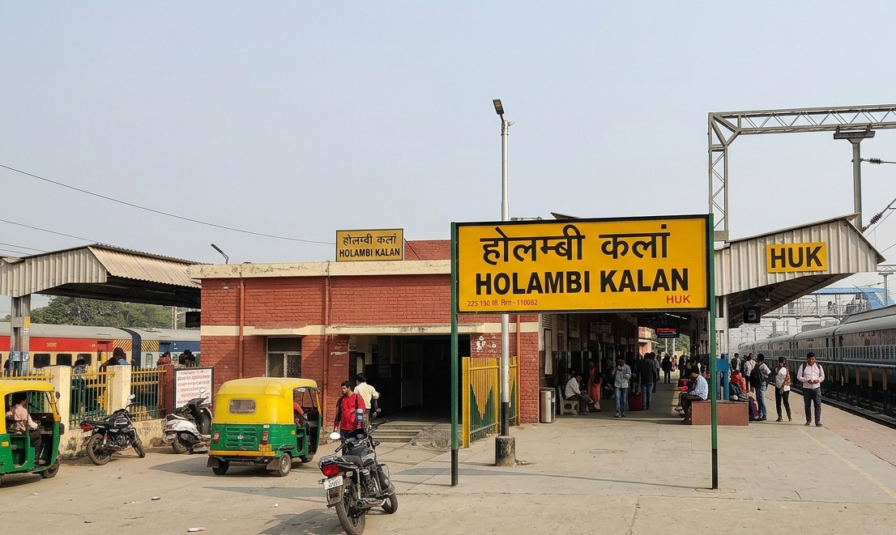
Holambi Kalan Railway Station Delhi :- A Serene Yet Crucial Rural-Urban Suburban Node of Outer Delhi
Nestled on the north-western fringes of the capital near the Haryana border, Holambi Kalan Railway Station is an emerging and vital suburban railway transit point under the Delhi Division of the Northern Railway zone. Situated on the high-density Delhi-Ambala-Kalka main line, the station serves a unique demographic. While Delhi’s central terminal stations are famous for their chaotic hustle and monumental structures, Holambi Kalan stands as a tranquil yet indispensable lifeline bridging the agrarian pockets and newer resettlement colonies of Outer Delhi with the city center. In this exhaustive blog, we explore the history, architectural traits, travel guide, and key insights of Holambi Kalan Railway Station.
Detailed History :-
The history of Holambi Kalan Railway Station is intrinsically woven with the urbanization, agricultural heritage, and resettlement policies of Outer Delhi. Historically, this vast expanse belonged to two traditional agrarian villages – Holambi Kalan and Holambi Khurd – characterized by endless crop fields. When the historic Delhi-Ambala railway line was laid during the British era, a small, unassuming halt was established here primarily to facilitate commute for local farmers and villagers.
The strategic profile of the station witnessed a massive shift in the early 2000s. Under the rehabilitation initiatives of the Delhi Government and Delhi Development Authority (DDA), thousands of low-income families and slum dwellers from central Delhi were systematically relocated to the ‘Holambi Kalan Resettlement Colony’ (JJ Cluster). This influx rapidly amplified the local population density. Concurrently, the nearby expansion of the Narela Industrial Area further elevated the station’s utility. Today, it has evolved into the most economical transport medium for thousands of industrial workers, daily wage laborers, small-scale dairy traders, and students traveling between Delhi and Haryana.
Detailed Architecture :-
The architecture of Holambi Kalan Railway Station presents a subtle blend of a classic Indian rural halt and a modern functional suburban commuter station.
- Exterior :– The main station structure is minimalistic, simple, and traditional. The entryway opens up into a spacious, semi-urban circulating area shaded by old Neem and Peepal trees, echoing a peaceful countryside station. Outside the entry gate, dedicated boarding lanes for e-rickshaws, Gramin Seva vehicles, and local autos are cleanly visible.
- Interior :– The station layout houses 2 wide platforms that have been progressively upgraded to handle modern longer passenger rakes. These platforms are seamlessly connected via a single heavy-duty iron Footover Bridge (FOB). Sheltered by corrugated sheets to shield passengers from harsh weather, the interiors feature a computerized unreserved ticket counter, a basic waiting perimeter, drinking water booths, and durable concrete and steel benches. The track alignment is built straight, allowing high-speed premium trains like Vande Bharat and Shatabdi Express to through-pass the station seamlessly at maximum speeds.
Travel Guide & Routes :-
Special Note :– Holambi Kalan Railway Station exclusively caters to suburban EMU, MEMU, and local passenger shuttle trains. For booking long-distance superfast trains or utilizing parcel services, commuters must transit via New Delhi, Old Delhi, or the nearby Narela junction.
- Tickets and Entry Fee :– Accessing the platform area requires a mandatory platform ticket costing ₹10. For commuting, daily passengers can use the unreserved physical ticket windows or skip queues entirely by booking via the Indian Railways ‘UTS Mobile App’.
- Operating Time :– The station premises remain accessible 24/7, with train operations actively running from 04:00 AM until 11:00 PM daily.
- How to Reach :–
- By Metro :– The nearest metro terminal is Samaypur Badli Metro Station on the Yellow Line, located roughly 10-12 kilometers away. From there, app-based cabs, local buses, or autos can drop you at the railway station. Rithala Metro Station (Red Line) is another alternative connection point.
- By Road/Bus :– The station is linked via peripheral roads to the Narela-Bawana link road and the Grand Trunk Road (NH-44). Reliable Delhi Transport Corporation (DTC) bus routes (such as 103, 175) ply regularly to the Holambi Kalan village and its adjoining resettlement blocks.
- By Rail :– Commuters can board any Ambala or Panipat-bound local train from New Delhi (NDLS) or Old Delhi (DLI) stations and reach Holambi Kalan comfortably within 35 to 45 minutes.
Photography Spots :-
- Sunset Views from the FOB :– Because the surrounding topography is flat and devoid of high-rise skyscrapers, the footover bridge offers an unhindered rustic view of the golden sun sinking behind the parallel rail tracks, perfect for landscape enthusiasts.
- High-Speed Train Trails :– For rail-fans and action photographers, the far ends of the platforms offer a safe vantage point to capture high-speed motion-blur shots of premium non-stop trains tearing through the station.
Local Flavors & Famous Markets :-
- Local Flavors :– The immediate vicinity outside the station offers authentic, raw street flavors. Small local kiosks serve fresh, piping hot samosas, deep-fried bread pakoras, spicy aloo kachoris, and strong kulhad chai, which act as a massive energy boost for early morning daily wage earners.
- Famous Markets :–
- Narela Grain Mandi :– Situated a brief drive away, this is one of Asia’s largest wholesale grain and pulse markets, offering a fascinating look at India’s massive agricultural trade ecosystem.
- Holambi Resettlement Local Bazaars :– A highly vibrant, budget-friendly local marketplace known for local produce, seasonal green vegetables sourced straight from fields, and cheap daily lifestyle commodities.
Interesting Facts :-
- The Lifeline of Resettled Families :– For thousands of families who relocated from inner Delhi slums, this station remains their cheapest economic link to travel to the core city for jobs and livelihood.
- The Dairy Commuter Hub :– During the early morning hours, the station witnesses a unique sight as local dairy farmers from nearby villages and Haryana board the trains with massive steel milk cans (traditionally called Doodhiyas), supplying fresh dairy across Delhi houses.
- The Rural Oasis :– Despite being very much inside the geographic boundaries of Delhi, its quiet, wide-open green surrounding gives travelers the nostalgic feel of a remote Indian village station.
Important Questions and Answer :-
Question 1:- Do major express trains have a commercial halt at Holambi Kalan Railway Station?
Answer:- No, major express, superfast, or mail trains do not stop at Holambi Kalan. Only local suburban EMU/MEMU shuttles and passenger trains have scheduled halts here.
Question 2:- How can I reach Holambi Kalan Railway Station from the Delhi Metro network?
Answer:- You can de-board at Samaypur Badli Metro Station (Yellow Line) or Rithala Metro Station (Red Line) and take a direct feeder bus, local auto, or Gramin Seva vehicle to bridge the remaining distance to the railway station.
Question 3:– Is the station area safe for late-night commuting?
Answer:- The station is perfectly safe during standard train operating hours when regular commuters are present. However, given its secluded location on the outer edges of Delhi, it is advisable to avoid lonely commutes late at night (past 10 PM) and ensure your connecting transport is pre-arranged.
“Where the earthy fragrance of open fields meets the metallic rhythm of the tracks, Holambi Kalan Railway Station quietly narrates the untold story of Outer Delhi’s struggles and silent transition.”