
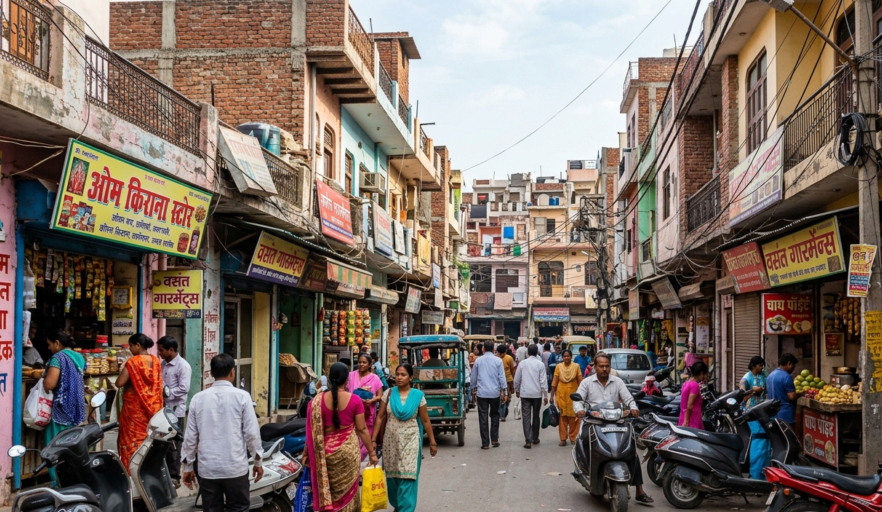
Vasant Gaon :- A Historic Village Nestled Inside Delhi’s Most Posh Locality
Right in the heart of South Delhi’s most expensive and modern neighborhoods, lies a historic urban village known as ‘Vasant Gaon‘ (or Basant Gaon). This village represents a unique contrast between rustic old-world history and futuristic urban development. Let’s explore the history and highlights of Vasant Gaon in this short blog.
Detailed History :-
- Historical Background :– The roots of Vasant Gaon trace back to the Mughal and Delhi Sultanate eras. Centuries ago, it was a prosperous rural settlement surrounded by agricultural lands. Historical records suggest the village shared proximity with Sufi shrines and ancient trade routes.
- The Modern Transformation :– In the 1960s and 1970s, when the Central Government acquired the agricultural lands of this area to develop the elite residential colony of ‘Vasant Vihar‘, the core residential cluster remained intact as ‘Vasant Gaon‘. Today, while it is surrounded by high-profile bungalows and international embassies, the village still retains its traditional community essence.
Detailed Architecture :-
- Exterior & Interior Layout :– The architectural landscape of Vasant Gaon is an intriguing urban village cluster. Its exterior features narrow winding alleys, multi-story packed residential blocks, and traditional community courtyards (Choupals). Hidden within and around the village edges are medieval ruins, ancient tombs (like the tomb of Vasant Khan), and remnants of old mosques that showcase classic Islamic stone architecture.
Travel Guide & Routes :-
- Tickets and Entry Fee :– Since Vasant Gaon is a public residential urban area, there is absolutely no entry fee or ticket required to visit.
- Visiting Time :– While the area is open 24×7, the ideal time to explore the historical ruins and the adjacent markets is from 09:00 AM to 06:00 PM.
- How to Reach :–
- By Metro :– The nearest metro station is the ‘Vasant Vihar Metro Station’ on the Magenta Line, which is at a walking distance from the village.
- By Road :– Located near the Outer Ring Road, it is highly accessible via local cabs, auto-rickshaws, or DTC buses stopping at the Vasant Vihar Bus Terminal.
- Photography Spots :– The centuries-old forgotten Mughal ruins inside the village alleys and the architectural contrast between the village lanes and the glitzy Vasant Lok market.
- Local Taste & Famous Markets :– The village is situated right next to the iconic ‘Vasant Lok Market’ (famous for the PVR Priya Cinema Complex), which features top-tier cafes, fine-dining restaurants, and upscale shopping outlets. Local street joints here are famous for quick bites like Momos and Rolls.
- Interesting Facts :-
- The Heart of VIP Zone :– Vasant Gaon sits strictly embedded inside Vasant Vihar, a premium zone that houses dozens of international embassies and diplomatic missions.
- Cinematic Connection :– The adjacent Vasant Lok Priya complex and the surrounding areas have been historical hangout spots for Delhi youth and have served as filming locations for various Bollywood movies.
Important Questions and Answer :-
- Question 1:- Which metro line connects to Vasant Gaon?
- Answer:– The Magenta Line of the Delhi Metro connects directly via the Vasant Vihar Metro Station.
- Question 2:– What was Vasant Gaon surrounded by before urbanization?
- Answer:– Before urban development in the 1960s, Vasant Gaon was surrounded by vast agricultural farmlands.
“Surrounded by elite diplomatic estates yet rooted in its ancient medieval past, Vasant Gaon stands as a fascinating living archive of Delhi’s grand urban evolution.”