
Raksha Bandhan :- A Complete Guide to the Sacred Festival of Brother-Sister Love
Raksha Bandhan is a profound festival symbolizing the immortal bond of love, trust, and the solemn vow of protection between brothers and sisters. Celebrated annually on the Full Moon day (Purnima) of the Shravan month, this festival reflects the glorious traditions of Indian culture. This blog presents comprehensive details, mythological history, significance, and other fascinating aspects of Raksha Bandhan.
Detailed History
The roots of Raksha Bandhan run deep into Indian history and mythology. According to ancient scriptures, during the Mahabharata era, when Lord Krishna cut his finger while slaying Shishupala, Queen Draupadi tore a piece of her silk saree and tied it around his bleeding finger. In return, Lord Krishna promised to protect her from every calamity, a vow he fulfilled by protecting her dignity during the Cheer Haran event.
Another famous tale is that of King Bali and Goddess Lakshmi. Goddess Lakshmi tied a sacred thread (Rakhi) to King Bali, making him her brother, and in return requested the return of Lord Vishnu to Vaikuntha as her gift. Furthermore, in medieval history, Queen Karnavati of Mewar sent a Rakhi to the Mughal Emperor Humayun seeking his protection against invaders, reinforcing this sacred bond both historically and socially.
Detailed Architecture (Cultural Setup & Decor)
While Raksha Bandhan does not feature physical architectural monuments, it embodies the exquisite structural beauty of traditional Indian home aesthetics and customs.
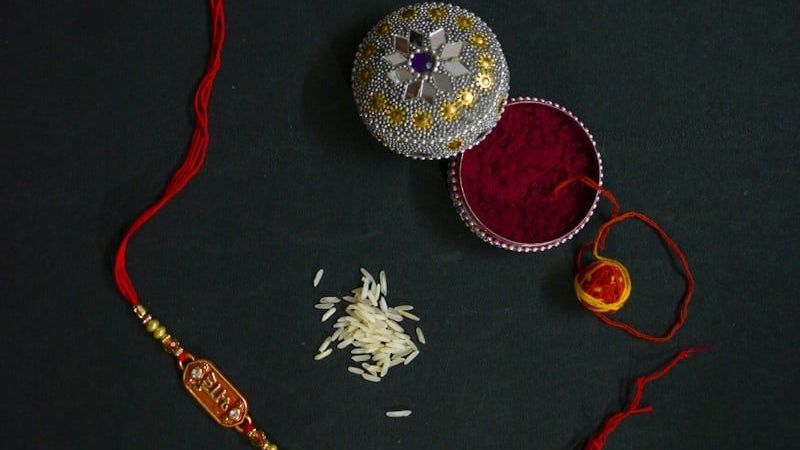
- Puja Thali (Worship Platter) :– A brass or copper platter is meticulously arranged with Kumkum (vermilion), Akshat (unbroken rice grains), sandalwood paste, a lighted oil lamp (diya), sweets, and decorative silk threads (Rakhis).
- Decorative Setup :– Entrance doors of homes are adorned with floral garlands (Torans). Sisters apply intricate henna (Mehndi) designs on their hands, and the worship area in the Northeast (Ishan) corner of the home is beautifully decorated with flowers and Rangoli patterns.
Travel Guide & Routes
- Timings and Auspicious Hours :– Raksha Bandhan is celebrated on Shravan Purnima. Tying Rakhi during Bhadra Kaal is strictly prohibited in Hindu traditions; hence, the ritual should always be performed during Bhadra-free auspicious hours.
- Duration :– Tying Rakhi in the morning hours between 06:00 AM and 12:00 PM, or during the late afternoon (Aparahna) period, is considered most propitious.
- Travel Routes & Tips :– Public transportation (buses, trains, and metro networks) experiences heavy rush during festival days. If traveling to another city to meet your siblings, it is recommended to book advance transit tickets at least 2 to 3 weeks prior.
Photography Spots, Local Flavors & Famous Markets
- Photography Spots :– Capturing family moments in traditional attire around the decorated altar, detailed close-ups of Rakhis on henna-adorned hands, and serene thali-lighting portraits make for the best memories.
- Local Flavors :– Traditional Indian delicacies like Ghevar, Kaju Katli, Coconut Laddus, Rasgullas, along with homemade Puri-Kachori and Kheer, form the core culinary experience.
- Famous Markets :– Local markets come alive weeks before the festival. Iconic hubs such as Chandni Chowk in Delhi, Johari Bazaar in Jaipur, or Crawford Market in Mumbai are vibrantly arrayed with colorful Rakhis and sweet boxes.
Interesting Facts
- Rabindranath Tagore & Raksha Bandhan :– During the 1905 Partition of Bengal, Nobel laureate Rabindranath Tagore initiated a mass Raksha Bandhan movement to promote unity between Hindus and Muslims and protest against British division policies.
- Tying Rakhi to Trees :– As an environmental awareness ritual, many communities tie Rakhis to trees, symbolizing a collective vow to protect nature.
- Avani Avittam in South India :– In South India, this day coincides with ‘Avani Avittam’, a sacred ceremony where members of the Brahmin community change their holy thread (Janaiu).
Important Questions and Answer :-
Question 1:– Why is Rakhi not tied during Bhadra Kaal?
Answer:– According to astrological beliefs, actions performed during Bhadra Kaal bring unfavorable results. Mythological lore states that Surpanakha tied a Rakhi to Ravana during Bhadra, which led to his ultimate downfall in that very year.
Question 2:– Which direction should one face while tying Rakhi?
Answer:– While tying the thread, the brother should ideally face East or North, while the sister should face West for auspicious spiritual alignment.
Question 3:- What is the correct ritual sequence for tying a Rakhi?
Answer:– Apply a Tilak of vermilion and unbroken rice (Akshat) on the brother’s forehead, tie the Rakhi on his right wrist, perform the Aarti with a lighted lamp, and offer sweets along with heartfelt blessings.
“Bound by sacred threads of silk, the eternal love between a brother and sister writes an everlasting story of protection, trust, and devotion.“