
Gogamedi Dham :- Faith, History, and Complete Travel Guide
Located in the Hanumangarh district of Rajasthan, Gogamedi is a prominent and sacred pilgrimage site. This place is world-famous as the holy Samadhi site of the folk deity Jaharveer Gogaji Maharaj (also known as Gogaji Chauhan, the protector from snakebites, and ‘Zahar Peer’). The annual fair held here during the month of Bhadrapada (Bhadon) presents a wonderful example of communal harmony, unwavering faith, and cultural heritage.
Detailed History
The history of Gogamedi is linked to the 11th century. Gogaji Maharaj was a powerful and just folk deity of Rajasthan, born into the Chauhan Rajput dynasty in Dadreva (Churu district). It is believed that he was a devout follower of Lord Shiva and was blessed by Guru Gorakhnath Ji.
Gogaji Maharaj is worshipped as the deity of snakes (Nagas). According to mythological and historical accounts, Gogaji fought numerous battles to protect his realm and faith. Impressed by his bravery and miraculous powers during a battle against Mahmud of Ghazni, Ghazni bestowed upon him the title of ‘Zahar Peer’ (a living deity or enlightened saint).
After the war, Gogaji Maharaj took a live Samadhi (entered divine rest) at this very spot. Hence, the place came to be known as ‘Gogamedi’. While Hindu devotees worship him as ‘Gogaji’, the Muslim community reveres him as ‘Goga Peer’. Gogamedi is one of those rare religious shrines in India where both Hindu and Muslim devotees offer prayers together in deep harmony.
Detailed Architecture
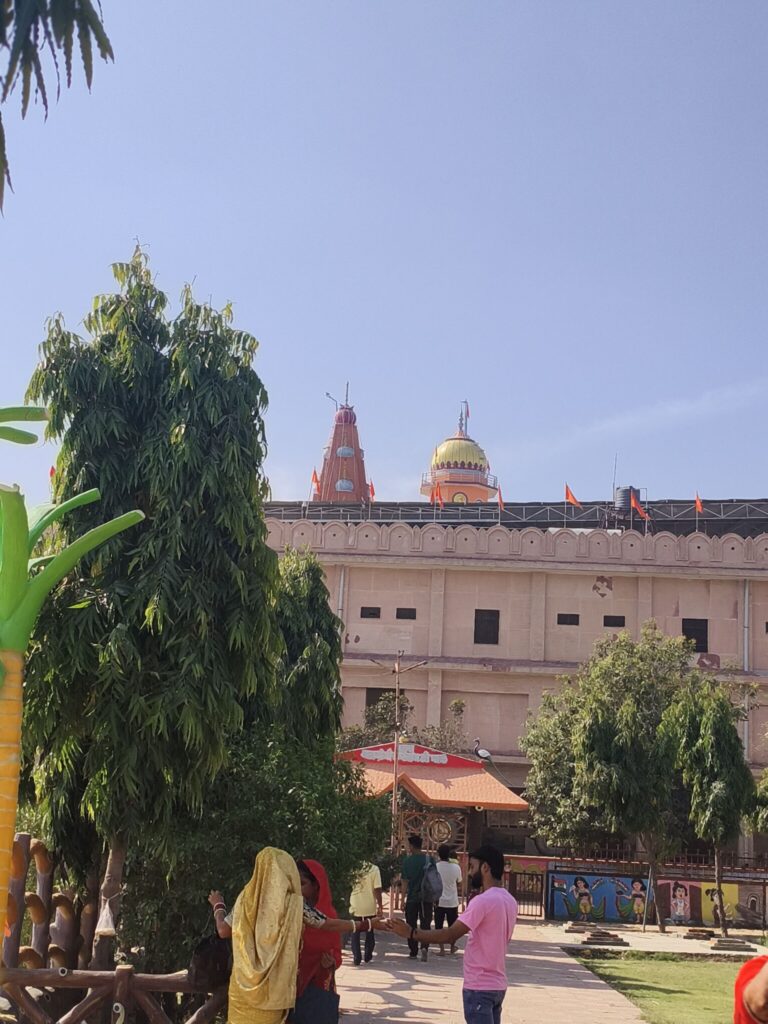
The Gogamedi Temple is a unique confluence of architectural styles and cultural synthesis. The structure of the temple holds great historical significance and uniqueness in both its exterior and interior designs.
Exterior Architecture
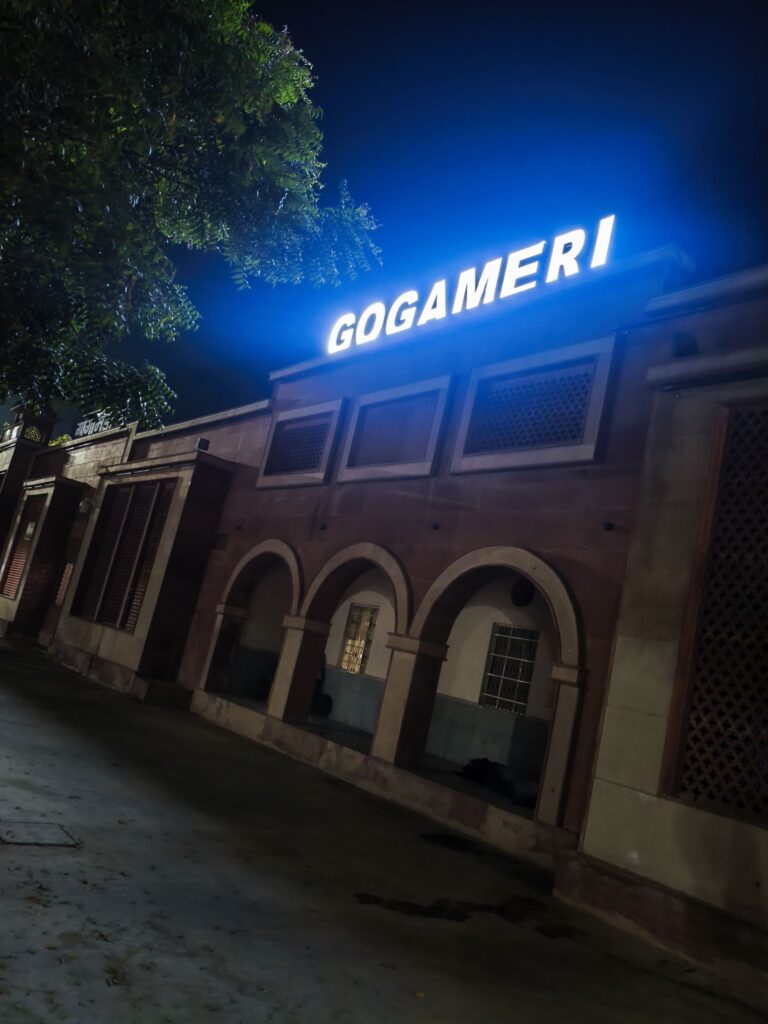
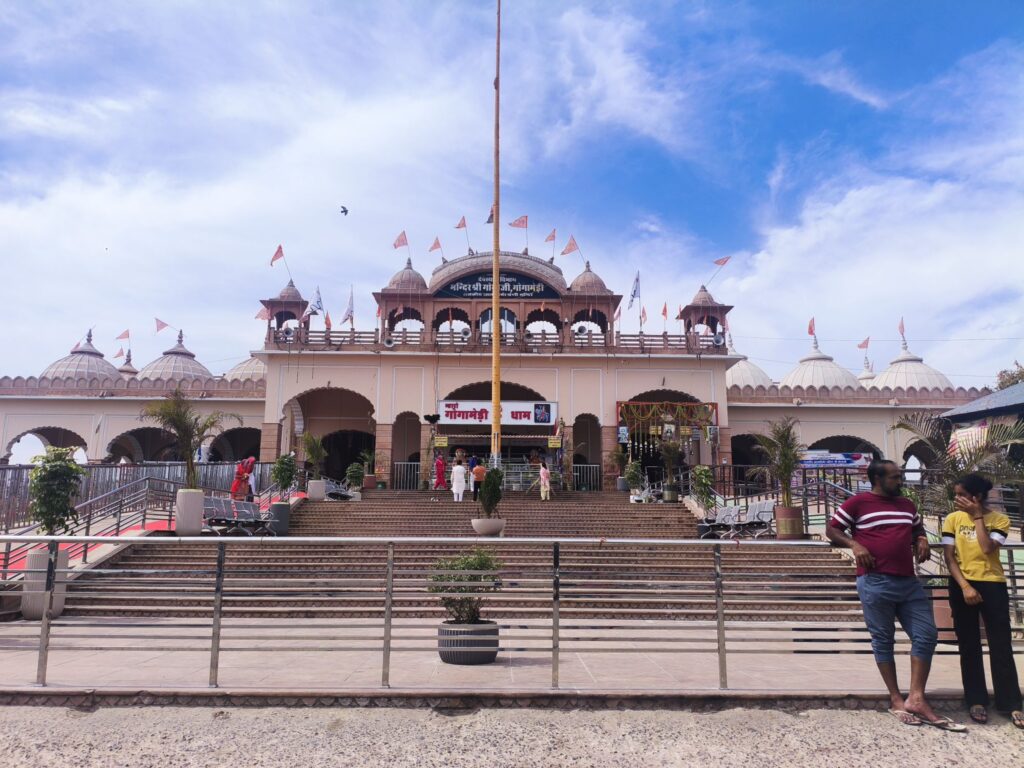
The exterior of the temple resembles a mosque or a mausoleum. The domes, minarets, and carvings above the main entrance are a beautiful blend of Islamic and Rajput architectural styles.
- Main Entrance :– The word ‘Bismillah’ is inscribed in Arabic/Persian script above the main entrance gate of the temple, symbolizing that Gogaji belongs to all communities alike.
- Circumambulation Path and Courtyard :– A vast courtyard and circumambulation path encircle the temple premises, where millions of devotees queue up to seek blessings.
Interior Architecture
The interior section of the temple is constructed entirely in accordance with Hindu traditions and Samadhi design.
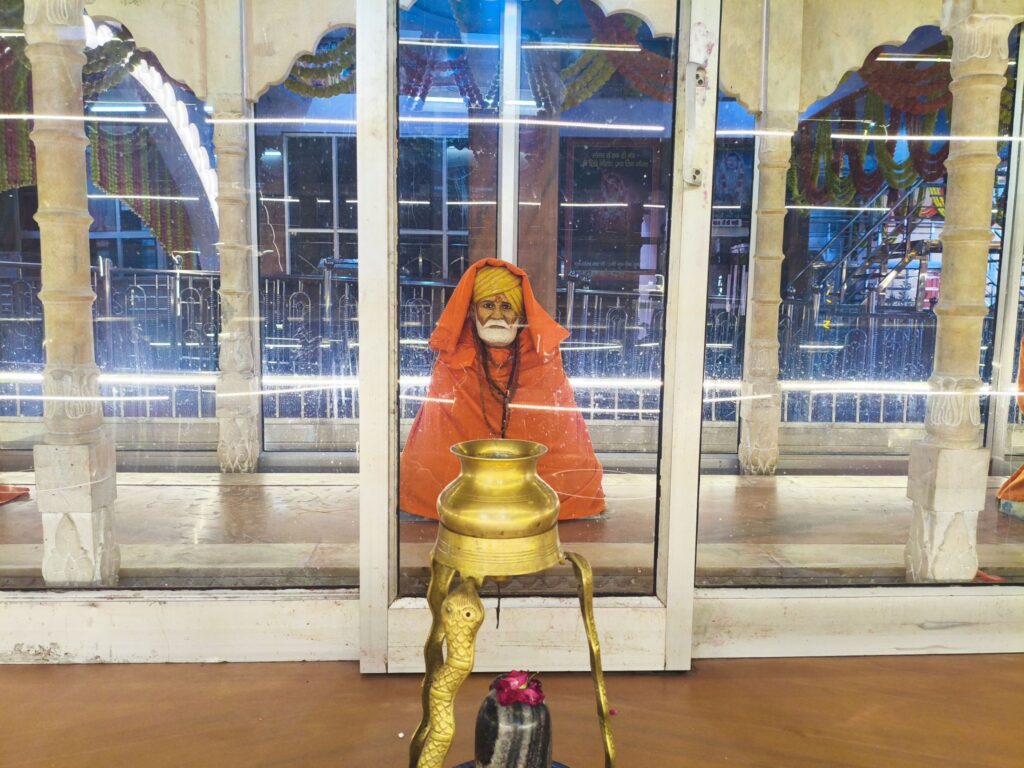
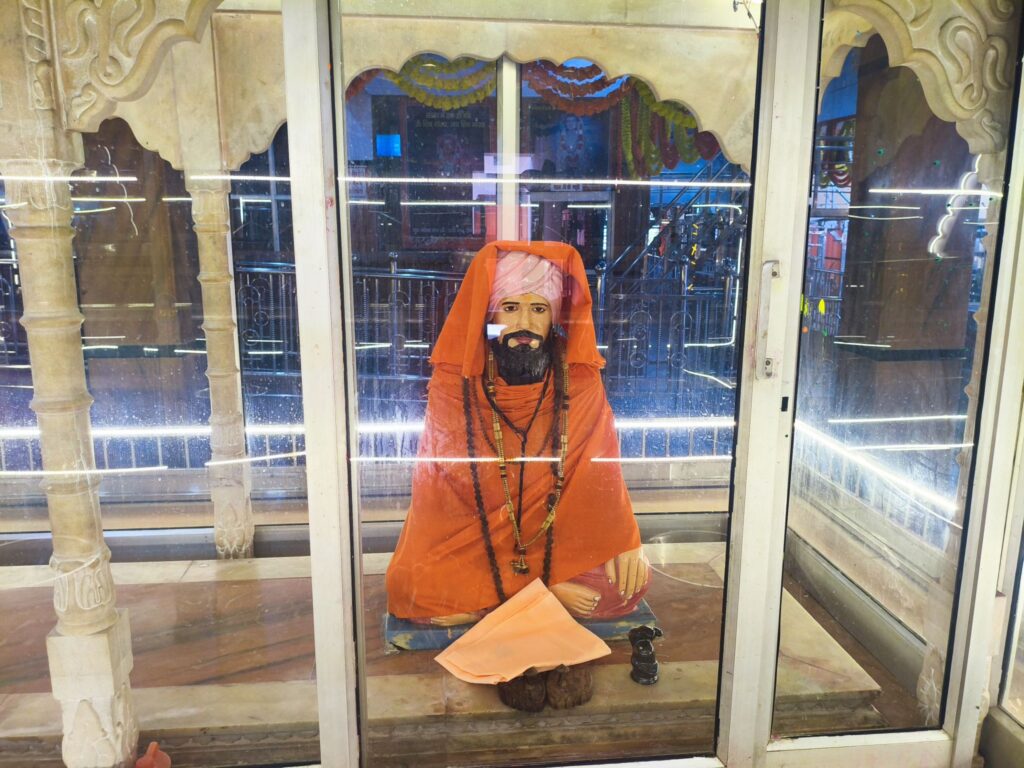
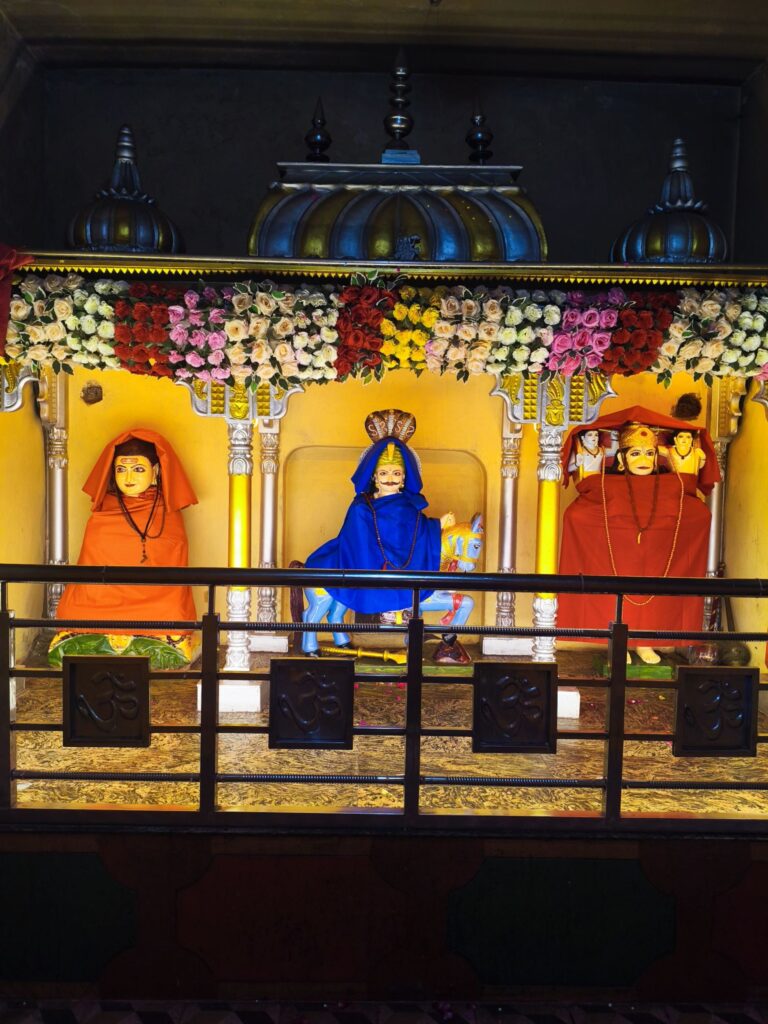
- Sanctum Sanctorum and Samadhi :– The holy Samadhi of Gogaji Maharaj is enshrined inside the main sanctum sanctorum. Nearby stands an equestrian statue of Gogaji holding a spear with a serpent around his neck.
- Eternal Flame (Akhand Jyot) :– An eternal flame burns continuously inside the sanctum sanctorum. Devotees offer Prasad, coconuts, milk, and sacred chadar (cloth sheets) here.
Travel Guide & Routes
Visiting Time
- Regular Days :– 05:00 AM to 09:00 PM.
- Fair Days (Bhadrapada Month) :– Open 24 hours.
Entry Ticket
- Entry is completely Free of Charge. No entry fee is required.
Photography Spots
- Main Temple Exterior :– The main courtyard offers the best vantage point to photograph the grand domes and hybrid Rajput-Islamic architecture.
- Gorakh Tilla :– Located right near Gogamedi, Gorakh Tilla is believed to be the hermitage of Guru Gorakhnath Ji. Its spiritual aura and sunrise/sunset views make it ideal for photography.
- Cultural Fair Moments :– During the Bhadon fair, capturing procession groups dancing in yellow attire carrying ‘Nishan’ (sacred flags) and local folk performances is truly rewarding.
Local Cuisine
During your visit to Gogamedi, you can savor authentic Rajasthani delicacies.
- Dal Baati Churma :– The signature and authentic dish of Rajasthan.
- Bajre ki Roti & Sangri ki Sabzi :– Rustic and flavorful traditional Rajasthani food.
- Lapsi & Peda :– Pure desi ghee Lapsi (sweet broken wheat pudding) and Mawa Pedas available near the temple precinct are extremely popular as offerings and treats.
Famous Markets
- Gogamedi Fair Market :– A bustling market outside the temple complex where brass and copper utensils, symbols of Gogaji (silver horse figurines, snake charms), handicrafts, traditional Rajasthani attire, bangles, and toys are sold in abundance.
How to Reach
Gogamedi is located in the Bhadra Tehsil of Hanumangarh District, Rajasthan, and is well-connected by road and rail network.
- By Train :– Gogamedi has its own railway station named ‘Gogamedi (GHK)’, which is directly connected to Jaipur, Bikaner, Delhi, and Jodhpur. The temple is just 2 to 3 kilometers away from the station, with auto-rickshaws and e-rickshaws readily available.
- By Road :– Gogamedi is seamlessly connected by roads to major cities in Rajasthan, Haryana, and Punjab. Direct state transport and private buses operate regularly from Delhi (approx. 250 km), Jaipur (approx. 300 km), and Hisar (approx. 80 km).
- By Air :– The nearest airports are Jaipur International Airport (JAI) and New Delhi Airport (DEL). From there, you can easily hire a taxi or take a train/bus to Gogamedi.
Interesting Facts
- Muslim Priests (Chayal) :– A unique feature of the Gogamedi temple is that for 11 months of the year, Muslim ‘Chayal’ (Kaimkhani) priests perform the daily rituals and prayers, while Rajput priests manage the ceremonies during the main month of Bhadon.
- Symbol of Communal Harmony :– The inscription of ‘Bismillah’ at the entrance and joint reverence by both Hindus and Muslims make it an outstanding example of India’s composite culture.
- Protection from Snakebites :– It is popularly believed that if a person bitten by a venomous snake wears a sacred thread (Dora) or applies sacred ash (Bhabhoot) associated with Gogaji’s name, the venom loses its effect.
- Yellow Attire and Flags :– Pilgrims visiting the fair (commonly called Poorbiya) dress in bright yellow clothes and march barefoot while chanting folk songs and carrying long bamboo flags known as ‘Nishan’.
Important Questions and Answer :-
Question 1:- When is the famous annual fair held at Gogamedi?
Answer:- The main annual fair of Gogamedi is held during the month of Bhadrapada (Bhadon) according to the Hindu calendar (around August–September) and lasts for a full month. The day of Goga Navami holds the highest significance.
Question 2:- Which deity is Gogaji Maharaj considered an incarnation of?
Answer:- Gogaji Maharaj is worshipped as Nagdevta (the God of Snakes) and is considered a prominent disciple of Guru Gorakhnath Ji.
Question 3:– Are accommodation facilities available at Gogamedi?
Answer:- Yes, several Dharamshalas, hotels, and guest houses managed by the Shri Gogaji Devasthan Trust are available at Gogamedi. Extensive tent cities and basic public amenities are also organized during the annual fair.
Question 4:- Which other spiritual sites are located near the Gogamedi Temple?
Answer:- ‘Gorakh Tilla‘, located right next to Gogamedi, is a sacred shrine dedicated to Guru Gorakhnath Ji. Additionally, Gogaji’s birthplace ‘Dadreva’ (Churu district) is located approximately 80 km away.
Nearby Attractions
- Gorakh Tilla :– Situated merely 500 meters from the main Gogamedi temple, this sacred mound is where Guru Gorakhnath Ji performed intense penance and granted blessings to Gogaji Maharaj. Visiting and paying homage here is considered essential by devotees.
- Dadreva :– Located in the Churu district, Dadreva is the revered birthplace of Gogaji Maharaj. It is also called ‘Sheersh Medi’ because, according to legend, Gogaji’s head fell here during battle while his body remained at Gogamedi. Devotees often visit Dadreva along with Gogamedi.
- Bhadra Kali Temple :– Situated on the banks of the Ghaggar River in Hanumangarh district, this historic and revered Shaktipeeth temple lies about 65 kilometers from Gogamedi. It attracts massive crowds during Navratri.
- Bhatner Fort (Hanumangarh Fort) :– Located approximately 100 kilometers away in Hanumangarh town, this is one of the oldest standing forts in India. It is famous for its massive mud fortifications and rich military history.
Author’s Thoughts
A trip to Gogamedi Dham is not merely a religious pilgrimage; it is an immersive experience of India’s glorious heritage that teaches unity amidst diversity. The moment you step into the Gogamedi complex, seeing ‘Bismillah’ carved on the outer facade while chants of ‘Jai Jaharveer Gogaji’ echo inside fills the mind with profound peace and devotion.
Millions of pilgrims kneeling together without any barrier of caste, creed, or religion proves that divine blessings transcend all human divisions. If you wish to witness Rajasthani folk traditions, deep-seated public faith, and fascinating syncretic architecture, visiting Gogamedi Dham during the Bhadrapada fair or on regular days will remain an unforgettable journey of your life.