
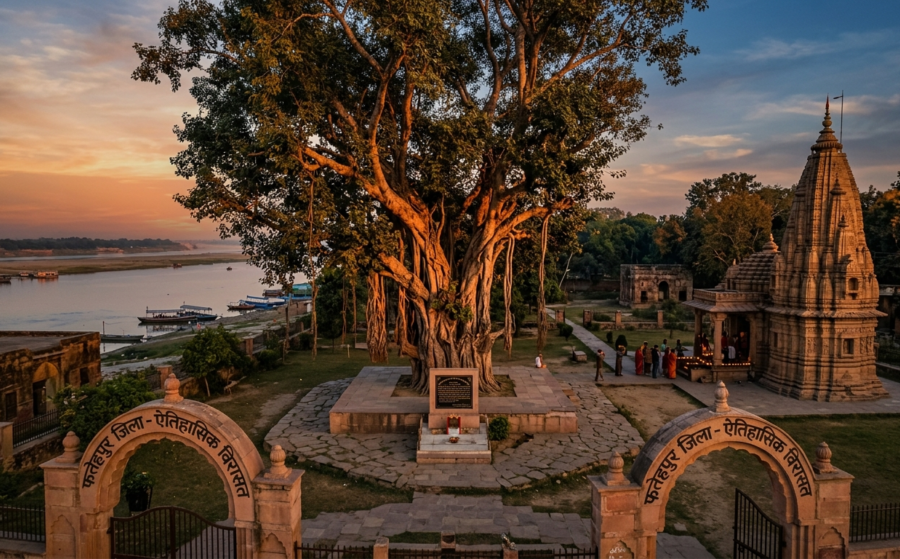
Fatehpur :- A History of Valor and Cultural Heritage of the Doab
Fatehpur district, located in the sacred Doab region of Uttar Pradesh, is an area nestled between the Ganga and Yamuna rivers, known for its historical bravery and spiritual peace. This district is not only administratively important but also a witness to many untold sagas of India’s freedom struggle.
Detailed History
The history of Fatehpur is glorious and ancient. According to mythological beliefs, Maharishi Bhrigu performed penance at Bhitaura, situated on the banks of the Ganga, during the Satya Yuga. In the medieval period, this region remained under the Delhi Sultanate and later the Mughal Empire. It was granted the status of a separate district in 1826. In the First War of Independence in 1857, Fatehpur became a major center of rebellion. The struggle waged by the brave warrior Jodha Singh Attaiya and his companions against the British rule is still felt in the air here today. On April 28, 1858, 52 revolutionaries were hanged together on the ‘Bawni Imli’ tree, which is one of the greatest sacrifices in Indian history.
Detailed Architecture
Exterior Architecture :–
The exterior design of the monuments and ancient temples of Fatehpur shows a deep influence of traditional Indian and Mughal architecture. Lakhori bricks and lime mortar have been used in the old buildings here. The outer spires of the temples are high and crowned with Kalash, featuring fine carvings. The walls of the old forts are thick and made sturdy for security, in which battlements and bastions are clearly visible.
Interior Architecture :–
Inside the buildings, there are high ceilings and huge domes that keep them cool even during summer days. Verandas with carved stone pillars have been built to enter the sanctum sanctorum (Garbhagriha) of the temples. Open courtyards and lattice windows (Jharokhas) within the havelis are characteristic of the architectural style here. Inside the temples of Bhitaura, scenes from mythological stories are very subtly carved on stones, reflecting the proficiency of the artists of that time.
Travel Guide & Routes :-
- Tickets :– There is no ticket for entry to the major historical sites (such as Bawni Imli, Bhitaura) and temples of Fatehpur. It is completely free.
- Timings :– The time from 5:30 AM to 7:30 PM is most suitable for visiting.
- How to Reach :–
- Rail Route :– Fatehpur Railway Station is a major junction located on the Howrah-Delhi main line. Direct trains to Kanpur, Prayagraj, and Delhi are available from here.
- Road Route :– This district is located on National Highway 19 (NH-19). Regular bus services and private taxis are available from Kanpur and Prayagraj.
- Air Route :– The nearest airport is Kanpur (Chakeri) which is about 80 km away, and Prayagraj Airport is at a distance of about 120 km.
- Photography Spots :– Sunset view at the Ganga Ghat of Bhitaura, the historical monument of Bawni Imli, and the ancient ruins of Haswa.
- Local Taste :– The ‘Peda’ here is famous all over Uttar Pradesh. Apart from this, do not forget to taste the Bedmi-Kachori and tea served in clay cups (Kulhad) here.
- Famous Markets :– Chowk Bazaar, Patel Nagar, and Bakarganj Bazaar are the main centers for local shopping here.
Nearby Attractions :-
- Bawni Imli Martyr’s Memorial (Bindki) :– A living witness to the freedom struggle.
- Bhitaura (Om Ghat) :– A very peaceful and spiritual place situated on the banks of the Ganga river.
- Haswa :– Ancient fort and Gupta period remains are found here.
- Asothar Fort :– Famous for its ancient structure and historical importance.
- Reni :– The village of the great revolutionary Thakur Jodha Singh Attaiya.
Author’s Thoughts :-
Fatehpur is a place where you experience the real roots of India. On one hand, where spiritual peace is found on the ghats of the Ganga, on the other hand, martyr memorials like ‘Bawni Imli’ remind us of our glorious history. If you want to dive into the depths of history away from the hustle and bustle, then Fatehpur must be on your travel list. The simplicity and the taste of this place will force you to come here again and again.
Interesting Facts
- Fatehpur is called the ‘Gem of the Doab‘ because it is situated between the two holiest rivers, Ganga and Yamuna.
- That historical tree of Bawni Imli is still safe, on which 52 patriots sacrificed their lives smilingly.
- It is believed that Ashwatthama worshipped in some Shiva temples of this area in his quest for immortality.
Important Questions and Answer :-
1. Question:– Which is the most prominent historical monument of Fatehpur?
Answer:- The most prominent monument of Fatehpur is ‘Bawni Imli’, which stands as a source of inspiration in memory of the 52 martyrs of the 1857 revolution.
2. Question:– Between which two major rivers is Fatehpur situated?
Answer:- Fatehpur is situated between the Ganga river in the north and the Yamuna river in the south, due to which it is called the ‘Doab’ region.
3. Question:– Which is the best season to visit here?
Answer:- The time from October to March is the best for visiting Fatehpur, when the weather remains pleasant and cool.
4. Question:– Where is the headquarters of Fatehpur and on which railway line is it?
Answer:- The headquarters of Fatehpur district is in Fatehpur city itself and it is situated on the Delhi-Howrah main rail route.
5. Question:– Are staying facilities available for tourists in Fatehpur?
Answer:- Yes, various categories of hotels, guest houses, and government rest houses are available in Fatehpur city, which are budget-friendly.
“Every grain of Fatehpur has been irrigated with the blood of revolutionaries and spirituality still resides in its waves.”