
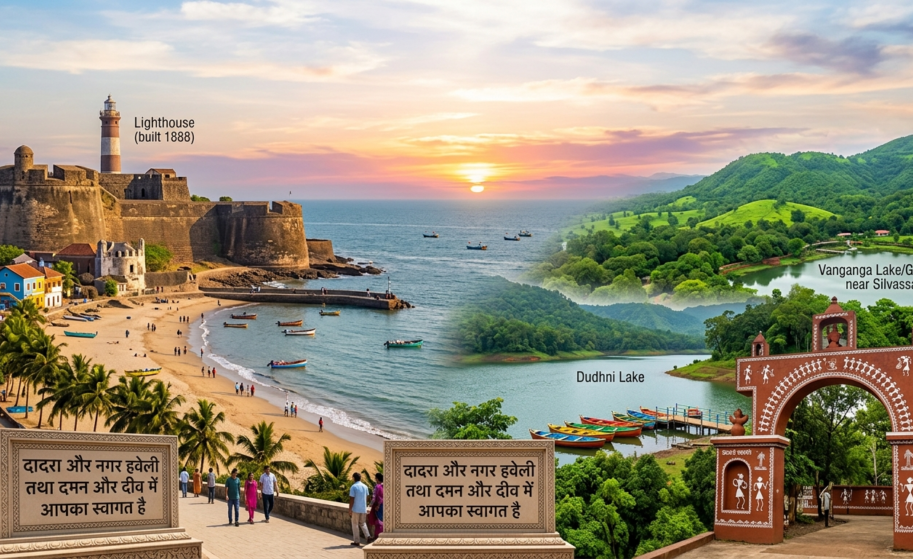
Dadra and Nagar Haveli and Daman and Diu :- A Blend of Portuguese Heritage and Coastal Beauty
Located on the western coast of India, this Union Territory is known for its unique culture, serene beaches, and rich Portuguese history. In 2020, these two regions were merged into one, making it a diverse destination for travelers.
Detailed History
The history of this region is deeply intertwined with Portuguese rule. Daman and Diu were under the Portuguese for nearly 450 years. Dadra and Nagar Haveli were liberated in 1954, and Daman and Diu in 1961. Even today, the architecture, food, and traditions reflect a strong colonial influence.
Detailed Architecture
The architecture is a beautiful mix of European and Indian styles.
- Forts & Churches :– The Diu Fort and the Basilica of Bom Jesus (Daman) are masterpieces of Portuguese military and religious architecture.
- Coastal Layout :– The islands feature rocky and sandy shorelines with iconic lighthouses.
- Tribal Influence :– Silvassa showcases the traditional huts and lifestyle of the Warli tribes.
Top Attractions and Points of Interest
- Diu Fort :– A massive structure by the sea, famous for its cannons and stunning view of the Arabian Sea.
- Jampore Beach (Daman) :– Known for its black sand and tranquility. Perfect for sunset walks.
- Nagoa Beach (Diu) :– A horseshoe-shaped beach, ideal for water sports and swimming.
- Swaminarayan Temple (Silvassa) :– A beautifully carved temple offering a peaceful spiritual retreat.
- Dudhani Lake :– Often called the ‘Mini Kashmir‘ of the region, it offers scenic boat rides.
Travel Guide & Routes
- How to Reach :–
- By Air :– Diu has its own airport. For Daman and Silvassa, Surat and Mumbai airports are the closest.
- By Rail :– Vapi is the nearest major railway station for Daman and Silvassa. Veraval is the nearest station for Diu.
- By Road :– Well-connected by highways from Mumbai, Ahmedabad, and Surat.
- Tickets & Timings :– Entry to most historical sites is free. Museums may charge a nominal fee. Timings: 8:00 AM to 6:00 PM.
- Local Taste :– Seafood is a must-try. Also, experience authentic Gujarati Thali and Portuguese-influenced snacks.
- Famous Market :– Maharaja Market in Daman for electronics and leather; Silvassa for Warli art handicrafts.
Interesting Facts
- Diu is the first city in India to run 100% on solar energy during the day.
- The ‘Hoka‘ palm trees found in Diu are unique to this region in India, originally brought from Africa.
- These two regions were officially merged on January 26, 2020.
Important Questions and Answer :-
Question 1:- What is the capital of this Union Territory?
Answer:- Daman is the capital of the merged Union Territory.
Question 2:- What is the best time to visit?
Answer:- October to March is the ideal time to explore without the heat and humidity.
Question 3:- What is Silvassa famous for?
Answer:- Silvassa is known for its lush greenery, gardens, and rich tribal heritage.
Question 4:- Is Portuguese still spoken here?
Answer:- While Gujarati and Hindi are dominant, Portuguese influence remains in local dialects and old records.
Question 5:- Which unique temple is located in Diu?
Answer:- The Gangeshwar Mahadev Temple, where the sea waves naturally wash over the five Shiva Lingas.
Author’s Thoughts :– This destination is a perfect escape for those seeking a mix of historical intrigue and quiet beach life.
“A unique meeting of historic walls and ocean waves defines the charm of Daman and Diu.”