
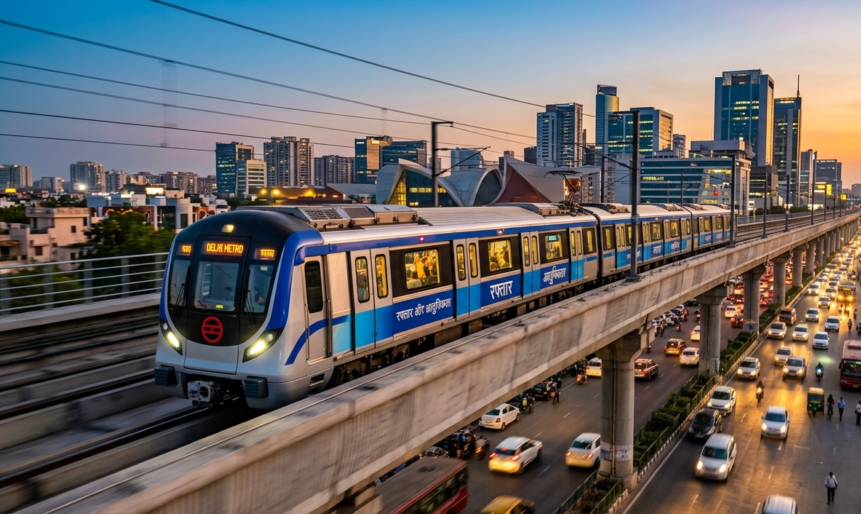
The Lifeline of Modern Cities :- Metro Train
Amidst the hustle and bustle of urban life, endless traffic jams, and rising pollution, if there is one thing that has made the life of a common man incredibly simple and smooth, it is the Metro Train. Today, the metro is not just a mode of transportation; it has become the backbone of modern smart cities. In this blog, let’s take a closer look at the history, architecture, and every minor detail of the metro system.
Detailed History
The history of the metro, also known as the ‘Subway’ or ‘Underground’ in many countries, is fascinating. The world’s very first underground railway opened in London on January 10, 1863, known as the ‘Metropolitan Railway’. In the beginning, these trains were operated using steam engines.
With the evolution of technology, electric-powered metro trains emerged. In India, the metro revolution began in 1984 from Kolkata. This was followed by the launch of the Delhi Metro in 2002, which completely redefined urban transit in India. Today, metro networks are rapidly expanding across dozens of Indian cities including Mumbai, Bengaluru, Lucknow, Hyderabad, and Jaipur.
Detailed Architecture
The exterior and interior design of metro trains represents a brilliant blend of modern engineering and contemporary art.
Exterior Architecture :-
The exterior body of metro trains is typically manufactured using lightweight yet highly durable stainless steel or aluminum alloys. This minimizes the weight of the train and ensures energy efficiency. The body features an ‘aerodynamic’ nose design to reduce air resistance at high speeds. Additionally, elevated metro stations and pillars are constructed with robust reinforced concrete structures that complement the city’s skyline. For underground sections, massive tunnels are carved deep beneath the earth using high-tech Tunnel Boring Machines (TBMs).
Interior Architecture :-
The view inside a metro coach is highly futuristic and passenger-friendly.
- Seating Arrangement :– Durable longitudinal seats made of fiber or stainless steel face each other, maximizing the central standing space for commuters during rush hours.
- Centralized Air Conditioning (AC) :– Keeps the entire journey cool, fresh, and free from external dust and noise.
- LED Screens & Announcement System :– Digital route maps and audio-visual displays alert passengers about upcoming stations.
- Safety & Accessibility :– Automated sliding doors, emergency alarm buttons, CCTV surveillance, and dedicated spaces for wheelchairs.
Travel Guide & Routes
If you are planning to travel via metro, here is a complete breakdown of tickets, timings, and routes.
- Ticket & Fare :– To commute, you can purchase a single-journey ‘Token’ from the station counters or Ticket Vending Machines (TVMs). For regular commuters, a ‘Smart Card’ or mobile QR Code ticket is the best option, offering attractive fare discounts. Fares generally range from a minimum of ₹10 to a maximum of ₹60–₹80, depending on the distance traveled.
- Timings :– In most cities, metro services operate continuously from 05:30 AM or 06:00 AM until 11:00 PM or 11:30 PM. During peak office hours, trains are highly frequent, arriving every 2 to 3 minutes.
- How to Reach :– Metro stations are strategically integrated with major railway stations, interstate bus terminals (ISBTs), and airports. You can easily reach your nearest metro station via local autos, e-rickshaws, or cabs.
- Photography Spots :– The elevated stations and large glass windows offer a breathtaking panoramic ‘skyline view’ of the city. Many underground stations feature beautiful cultural murals and artwork on their walls, serving as excellent backdrops. (Note: Photography might be restricted in certain high-security zones).
- Local Food & Markets :– Almost all major metro stations house internal or external food courts, cafes, and quick-snack corners. Furthermore, metro lines connect major shopping hubs and traditional markets of the city, making shopping incredibly accessible.
Interesting Facts
- Driverless Operations :– Technology has advanced so much that many metro lines now run successfully on UTO (Unattended Train Operation) mode without a driver.
- Regenerative Braking :– When a metro train applies brakes, the kinetic energy is converted into electricity and fed back into the power grid, saving around 30% to 35% of energy.
- Largest Network :– The Shanghai Metro in China is considered the longest and busiest metro network in the world.
Important Questions and Answer :-
Question 1:- Where and when did India’s first metro train run?
Answer:- India’s first metro train ran in Kolkata on October 24, 1984, operating between Bhawanipur (now Netaji Bhavan) and Esplanade.
Question 2:- What is the benefit of using a Smart Card in the metro?
Answer:- A Smart Card saves you from standing in long ticket lines and provides a 10% to 20% discount on the fare for every journey.
Question 3:- Is the metro environment-friendly?
Answer:- Yes, the metro runs entirely on electricity, resulting in zero direct tailpipe emissions. It plays a massive role in curbing city pollution by reducing the number of private vehicles on the road.
“Leaving behind the chaos of traffic and the race against time, the metro seamlessly connects us to our destinations.”