
Detailed History
Shri Adya Katyayani Shakti Peetham, popularly and locally known as the Chhatarpur Temple, is situated in the Chhatarpur locality near Mehrauli-Gurgaon Road (MG Road) in New Delhi. It stands as one of the most expansive, visually stunning, and highly revered Hindu temple complexes in India. The sacred shrine is primary dedicated to Goddess Katyayani, the transformative sixth manifestation of Navadurga (Goddess Durga).
The structural foundation of this spiritual oasis was laid in the year 1974 by the iconic visionary and austere saint, Baba Sant Nagpal Ji. Through his profound spiritual resolve and devotion, Baba Sant Nagpal Ji converted this initially remote landscape into a highly vibrant center of pilgrimage. The temple complex originally began as a small, modest mud cottage, but through the continuous dedication of the saint and the overwhelming support of devotees, it gradually sprawled across a massive area encompassing over 70 acres of prime land. Prior to the completion of the Akshardham Temple complex, Chhatarpur held the distinct crown of being the largest functional temple complex in New Delhi. A key highlight of this Shakti Peeth is its architecture, which presents a rare and flawless amalgamation of South Indian and North Indian temple engineering styles, mesmerizing global travelers and spiritual seekers alike.
Detailed Architecture
The architectural layout of Chhatarpur Temple is celebrated globally for its pristine scale, structural purity, and highly detailed marble relief work. The vast complex is meticulously divided into multiple sprawling sections.
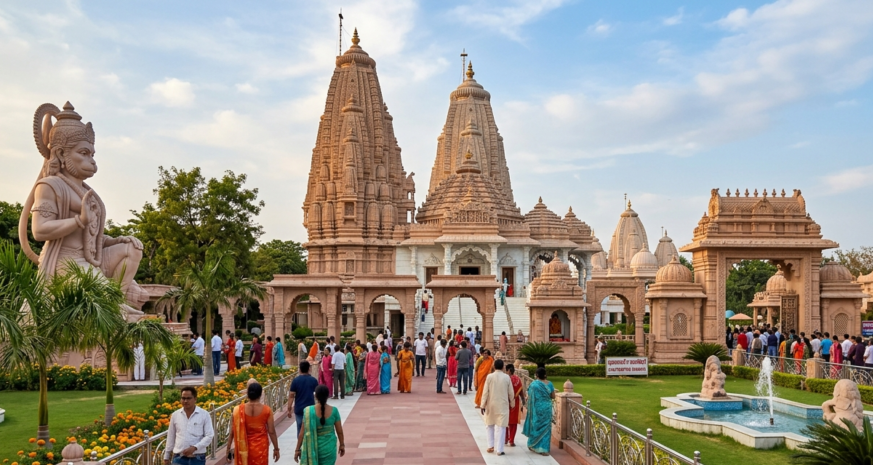
- Exterior :– The primary structural blocks of the temple are built utilizing ultra-premium Italian Marble and high-grade Makrana marble from Rajasthan, which infuses the entire complex with a brilliant, luminescent white aesthetic. The exterior facades feature towering, heavily detailed ‘Gopurams’ (gateway towers) and intricately sculpted stone pillars styled in accordance with classic Dravidian (South Indian) architectural traditions. Right at the auxiliary entrance of the compound stands a colossal, 101-foot-tall statue of Lord Hanuman, which serves as an iconic geographic landmark visible from miles away.
- Interior :– The complex houses several independent temples distributed across three major guarded enclosures.
- The Main Sanctum :– This hall protects a majestic, life-sized gold-plated idol of Goddess Katyayani. The inner doors of this main sanctum are opened for direct public entry exclusively during the holy twice-yearly festival of Navratri (Ashvin and Chaitra). Throughout the rest of the year, devotees offer prayers and view the magnificent deity through a massive, highly secure protective glass window panel.
- Other Shrines :– The adjacent marble halls house dedicated shrines for Lord Shiv-Parvati, Laxmi-Narayan, Radha-Krishna, Lord Ram-Sita, along with the sacred Samadhi shrine of Baba Sant Nagpal Ji and his historic living quarters, which preserve the personal items used by the saint. The interior ceilings are adorned with magnificent massive chandeliers and highly delicate marble patterns.
Travel Guide & Routes
- Ticket and Charges :– Entry into the entire Chhatarpur Temple complex and access for darshan across all internal shrines is completely Free for all visitors. No specialized VIP passes, registration fees, or hidden ticketing tariffs exist.
- Visiting Time :– The temple doors remain open to the public on all seven days of the week. The general operating hours are from 6:00 AM to 10:00 PM. While the main inner altars close briefly during mid-afternoon hours following the noon ritual prayers, the public courtyards remain accessible. During the festive days of Navratri, the temple remains open continuously for 24 Hours to manage the sea of devotees.
- How to Reach :–
- By Metro :– Traveling via the Delhi Metro network is the fastest and most seamless option. The nearest transit station is the ‘Chhatarpur Metro Station’, located on the Yellow Line. Upon exiting the terminal gates, the temple boundary is just a brief 500 meters away, easily covered via a 2-minute walk or by hopping onto a local e-rickshaw.
- By Bus & Auto :– Situated right on the central artery connecting Mehrauli with Gurgaon, the site is directly serviced by dozens of DTC bus routes. App-based cabs and local auto-rickshaws navigate to the venue effortlessly from any quadrant of Delhi.
- Photography Spots :– The base of the grand 101-foot Lord Hanuman statue, the soaring white marble entry Gopuram framed against the blue sky, and the branches of the ancient sacred ‘Kalpavriksha’ (wishing tree) within the courtyard are prime photography spots. Note that taking pictures of the deities inside the core prayer rooms is strictly prohibited.
- Local Flavors :– The outer periphery of the complex and the streets surrounding the metro station host excellent local food corners. Visitors can try fresh samosas, kachoris, crisp Bedmi Poori, and classic hot Delhi Chole Bhature. On special festival days, the community Langar Hall inside the complex serves highly nutritious, pure satvik meals to all visitors.
- Famous Markets :– For traditional Indian ethnic wear, brass prayer utensils, and local artifacts, visitors can check out the nearby historic Mehrauli Bazaar. For luxury labels, premium global shopping, and high-end dining, a quick two-station metro ride leads directly to Saket’s premium malls, including ‘Select CITYWALK’ and ‘DLF Avenue’.
Nearby Attractions in Detail :-
- Qutub Minar :– Situated just 4 kilometers away, this iconic UNESCO World Heritage Site is an absolute architectural masterpiece. Built using red sandstone and marble, it stands as the tallest brick minaret in the world, commissioned initially by Qutb-ud-din Aibak. The historic complex also houses the famous 4th-century rust-resistant Iron Pillar of Chandragupta II.
- Mehrauli Archaeological Park :– Adjacent to the Qutub Minar complex, this massive historical park protects over 100 ancient structures traversing centuries, including the grand Tomb of Ghiyas-ud-din Balban, the artistic Jamali Kamali Mosque, and the deep stepwell of Rajon ki Baoli, making it a dream destination for heritage walkers.
- Ahinsa Sthal :– Positioned atop a scenic hillock in Mehrauli, this tranquil Jain structural shrine features a majestic, single-rock carved granite statue of Lord Mahavira. The elevated platform offers breathtaking, sweeping panoramic views of the surrounding protected forest reserves and the distant Qutub Minar.
- Garden of Five Senses :– Located near Saket, this is a spectacular, architecturally designed modern public park. Sprawling across 20 acres, it features beautiful thematic rock carvings, solar-energy parks, expansive flower beds, and musical fountains designed to stimulate human senses.
Interesting Facts
- The temple courtyard preserves a highly revered, ancient wishing tree (Kalpavriksha). Traditional lore dictates that any devotee who ties a sacred thread, a piece of cloth, or glass bangles around its branches while making a silent prayer will have their wishes granted by the Goddess. Devotees often return to untie a thread once their prayers are fulfilled.
- The main gold-plated idol of Goddess Katyayani is adorned every single day with highly intricate, expensive silk sarees, handcrafted gold jewelry ornaments, and massive garlands composed of freshly plucked exotic flowers.
- During the Navratri festivals, the entire 70-acre complex is decorated with multi-colored lights on a scale that illuminates the night sky for miles around. The temple hosts over 100,000 visitors daily during these 9 days, managing massive community kitchen facilities.
- The complex features a dedicated royal ritual room termed the ‘Shayan Kaksh’ (Resting Chamber), which holds a solid silver bedstead, silver mirrors, and custom imperial furniture crafted for the ritual rest of the deity.
Important Questions and Answer :-
Question 1:- Which specific deity is worshipped at Chhatarpur Temple and who was its founder?
Answer:– The temple is dedicated to Goddess Katyayani, the celebrated sixth avatar of Goddess Durga. The sprawling complex was founded in 1974 by the revered ascetic saint, Baba Sant Nagpal Ji.
Question 2:– What is the most ideal time of the year to plan a visit to Chhatarpur Temple?
Answer:– While the temple is beautiful year-round, the ultimate time to experience its true grand spirit and divine atmosphere is during the twice-yearly festivals of Chaitra and Ashvin Navratri. For general visits, attending the early morning or evening musical aarti is highly recommended.
Question 3:– Are vehicular parking arrangements available within the Chhatarpur Temple complex?
Answer:– Yes, the temple authority operates a massive, highly organized, and completely secure free parking lot directly adjacent to the main compound gates to easily accommodate cars and two-wheelers.
Author’s Thoughts :-
Chhatarpur Temple is far more than a colossal assemblage of fine Italian marble; it stands as a deep spiritual anchor in the heart of South New Delhi, possessing an immediate calming effect the moment you cross its threshold. The soaring white Gopurams and the gentle aroma of incense wafting from its vast courtyards transport you far away from the chaotic hustle of city life. This Shakti Peeth, which grew from the singular, powerful resolve of Baba Sant Nagpal Ji, remains a monumental pillar of faith for millions of spiritual seekers. As a writer and avid traveler, I believe that if you wish to see how vibrant ancient Indian traditions remain in modern times, while witnessing breathtaking stone craftsmanship, taking a peaceful walk through the white marble pathways of Chhatarpur Temple is a deeply enriching experience.
“Basking in the pristine glow of pure Italian marble and the timeless grace of Goddess Katyayani, this sacred shaktipith remains a magnificent beacon of peace, illuminating the souls of all who enter its gates.”