
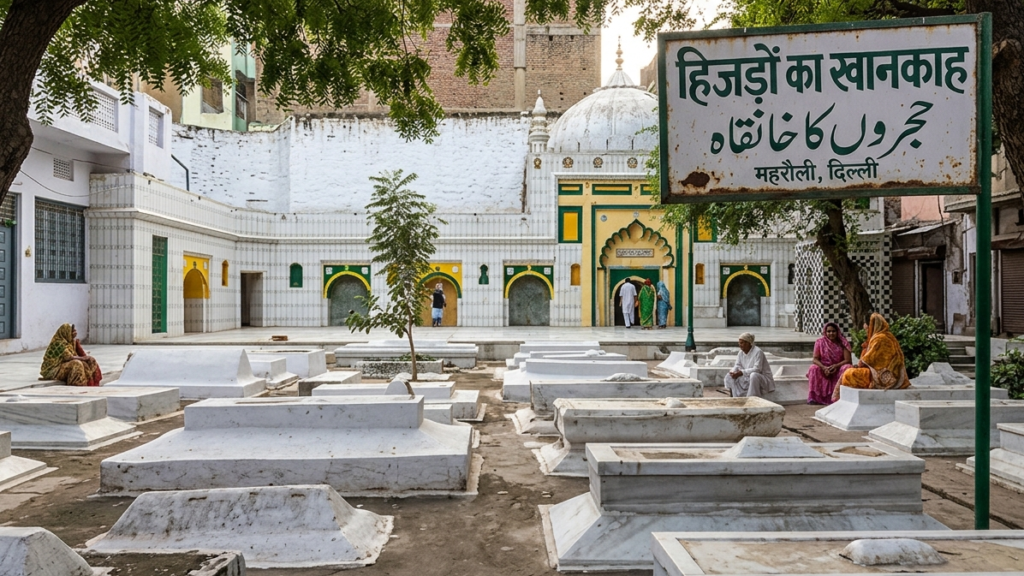
Hijron Ka Khanqah Delhi :- Complete History and Architecture
Located near the Qutub Minar complex in Mehrauli, Delhi, ‘Hijron Ka Khanqah‘ is one of the most unique, serene, and mysterious historical sites in the country. It is a place that very few people know about. The word ‘Khanqah‘ refers to a place of spiritual retreat or a monastery for Sufi saints. Built during the reign of the Lodi dynasty, this Sufi shrine and graveyard is exclusively reserved for the transgender (Eunuch/Hijra) community, making it a deeply sensitive and unique part of Indian history and culture.
Detailed History
The history of Hijron Ka Khanqah dates back to the 15th century (around the reign of the Lodi Dynasty, 1451-1526 AD). This sacred site was constructed under the influence of Sufi culture by the rulers or nobles of that era. In medieval India, especially during the Khilji, Tughlaq, and Lodi dynasties, the transgender community held a highly elevated and respectable position in royal courts. They served as vital pillars for the security of the royal harem, administration, and intelligence networks.
This Khanqah is primarily dedicated to a Sufi saint named ‘Miyan Saheb’, whom the transgender community considers their spiritual guru. It is believed that during the Lodi period, many individuals from the transgender community embraced a spiritual lifestyle under the influence of Sufi saints. Upon their death, they were buried at this very place. Since then, for centuries, this site has been maintained and managed by the transgender community of Old Delhi (Turkman Gate). Even today, members of the community visit this place for spiritual peace and to offer prayers.
Detailed Architecture
Situated amidst the narrow and bustling markets of Mehrauli, the architecture of Hijron Ka Khanqah is an excellent example of simplicity and tranquility. The detailed description of its exterior and interior structure is as follows.
Exterior Architecture :-
- Simple Entrance Gate :– The entrance to this Khanqah opens into a narrow alleyway in Ward No. 6 of Mehrauli. From the outside, it looks like an ordinary old building, making it difficult for passersby to guess the rich history hidden within.
- Lodi Period Style :– The exterior walls reflect the traditional architecture of the Lodi era, constructed using local stones and lime mortar. Upon crossing the entrance gate, a short narrow passage leads you to the main courtyard.
Interior Architecture :-
- Spacious and Serene Courtyard :– The moment you step inside, all the hustle and bustle of the Mehrauli market suddenly vanishes. Inside lies a large, open, and clean white marble courtyard where a deep sense of peace prevails.
- White Marble Tombs :– There are around 49 small and large tombs built within this courtyard. All these graves are constructed using bright white marble. These graves belong to the transgender individuals and Sufi saints who lived during the Lodi period.
- Main Shrine (Mazar of Miyan Saheb) :– At the western end of the courtyard lies the main mazar, believed to be the grave of ‘Miyan Saheb’. This mazar is built on a slightly raised platform and is held in high reverence.
- Religious Arch (Mehrab) :– Similar to a mosque, the western section features a prayer wall with a mehrab indicating the direction of the west (Mecca), where Sufi verses and prayers are recited.
Travel Guide & Routes :-
If you wish to visit Hijron Ka Khanqah to witness this unique and peaceful slice of Delhi’s history, the complete information regarding tickets, timings, and routes is provided below
- Ticket (Entry Fee) :– Entry here is completely Free. There is no ticket fee for either Indian or foreign tourists.
- Visiting Time :– The site remains open from 6:00 AM to 7:00 PM. A duration of 45 minutes to 1 hour is sufficient to explore and feel the tranquility of this place.
- Opening and Closing Days :– It remains open on all seven days of the week. However, special religious prayers are held by the community on specific religious occasions and festivals.
- Photography Spots :– Keeping in mind the sensitivity and religious importance of this place, photography is generally prohibited inside the premises, or requires special permission from the caretakers. The sunlight reflecting off the white marble graves and the quiet corners of the courtyard offer a profound sight.
- Local Food :– Mehrauli is known for its delicious street food and Mughlai cuisine. Near the Khanqah, you can relish excellent Kebabs, Korma, Biryani, and Old Delhi-style samosas served with mint chutney.
- Nearby Markets :– This place is located right inside the Mehrauli Main Market, which is famous for traditional clothes, utensils, and household items. Additionally, ‘Kalka Das Marg’ is located just a short distance away, housing several boutiques and handicraft shops.
How to Reach :-
- By Metro :– The nearest metro stations are ‘Qutub Minar’ and ‘Chhattarpur’ (Yellow Line). The distance from the metro station to Hijron Ka Khanqah is approximately 1.5 to 2 kilometers. From the station, you can easily take an e-rickshaw or an auto-rickshaw to reach the Khanqah located at Ward No. 6 in Mehrauli Market.
- By Bus :– Buses are available from every corner of Delhi to the Mehrauli Bus Terminal. The Khanqah is at a walking distance from the bus terminal.
- By Air :– The Indira Gandhi International Airport (IGI) is located approximately 12 kilometers away from here.
- By Rail :– It is about 18 kilometers away from New Delhi Railway Station and around 15 kilometers away from Hazrat Nizamuddin Railway Station.
Interesting Facts
- Exclusive Rights and Ownership :– This is perhaps the only historical site and graveyard in India whose ownership and management rest entirely with the transgender community.
- Tradition of Langar :– On religious festivals and special days, a large-scale Langar (free community kitchen) is organized here for the poor and needy, the expenses of which are borne entirely by the community itself.
- Belief in Answered Prayers :– Local residents and devotees believe that wishes made with a pure heart at the mazar of Miyan Saheb are always fulfilled. Not only transgender individuals but common people also come here to seek blessings.
- Unprecedented Tranquility :– Despite being located right in the middle of the extremely busy and noisy locality of Mehrauli Market, the absolute silence and calmness that greet visitors upon stepping into this compound leave everyone astonished.
Important Questions and Answer :-
Question 1:- Where is Hijron Ka Khanqah located?
Answer:– Hijron Ka Khanqah is located near Qutub Minar, in a narrow alley of Ward No. 6 within the Mehrauli Main Market area in South Delhi.
Question 2:– During which period was it built and to whom is it dedicated?
Answer:– It was built in the 15th century during the reign of the Lodi Dynasty. This place is primarily dedicated to the Sufi saint ‘Miyan Saheb’ and the spiritual transgender individuals of the Lodi era.
Question 3:– Are general tourists allowed to visit this place?
Answer:– Yes, general tourists and history enthusiasts are allowed to visit, but since it is a highly sacred and sensitive religious site, it is mandatory to maintain absolute decorum and follow local rules.
Question 4:– Is photography allowed inside Hijron Ka Khanqah?
Answer:– Commercial or general photography is not permitted inside the premises. If you wish to take photographs, it is necessary to obtain prior permission from the caretakers present there.
Author’s Thoughts
Hijron Ka Khanqah is not just a structure made of stone and marble; it is a symbol of a chapter of our history that connects a section of society—often marginalized from the mainstream—with respect and spirituality. Amidst the grand forts and mausoleums of Delhi, this small space highlights the depth of history where Sufism granted equal status to every human being. Moving away from the chaos of Mehrauli’s market into this white marble courtyard, the absolute silence compels you to reflect. If you want to experience an untouched and spiritual side of Delhi’s history, you must visit this place at least once while maintaining the utmost respect for its sanctity.
“Tucked away in the narrow alleys of Mehrauli, this white marble sanctuary has been narrating a unique tale of respect and Sufi devotion in the language of silence for centuries.”