
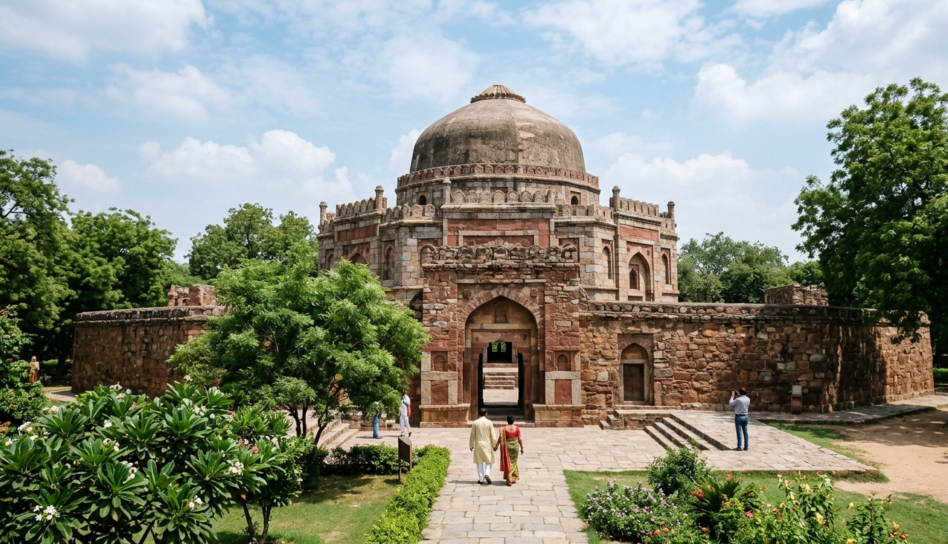
India’s First Islamic Mausoleum :- Sultan Garhi, Delhi
Hidden amidst the dense forests of the Vasant Kunj area in Delhi lies a priceless page of history that very few people know about. This is Sultan Garhi—which holds the proud distinction of being the very first Islamic mausoleum built in India. This place is unlike ordinary Mughal monuments; it resembles a fortified fortress and features an underground crypt inside, making it incredibly mysterious and unique. Let’s take an in-depth tour of this unmatched confluence of history and architecture.
Detailed History
The Sultan Garhi mausoleum was constructed in 1231 AD by Sultan Iltutmish of the Slave Dynasty (Mamluk Dynasty). Iltutmish built it in memory of his eldest and most beloved son, Prince Nasiruddin Mahmud. Prince Nasiruddin Mahmud was the governor of Bengal but met an untimely death during a military campaign in Assam.
Dejected by his son’s demise, Sultan Iltutmish constructed this grand and fortified tomb to bury his remains in Delhi. Since this was the first organized mausoleum built for a royal figure in India, it is considered a milestone in Indo-Islamic architecture. Today, local Hindu and Muslim communities visit this place with immense faith, revering it as the shrine of a saint (Peer Baba).
Detailed Architecture
The architecture of Sultan Garhi predates the typical Mughal or Khilji eras, displaying a robust fortress-like structure infused with early Indo-Islamic artistic influences.
- Exterior :– From the outside, it does not look like a conventional tomb but resembles a small, sturdy fortress made of red sandstone. It features circular bastions at all four corners, which were built for defensive purposes. The main entrance faces east and showcases a beautiful arched marble gateway engraved with inscriptions from the Holy Quran.
- Interior :– As you step through the main gateway, you enter a large open courtyard. Right at the center of this courtyard is an octagonal raised platform. Stone steps lead downward from this platform into an underground crypt (cave), where the main grave of Prince Nasiruddin Mahmud is located. The atmosphere inside the crypt is profoundly serene, cool, and mysterious. Interestingly, ancient pillars and stone materials from older Indian temples were reutilized in its construction.
Travel Guide & Routes :-
- Ticket :– Entry to the monument is completely Free.
- Visiting Time :– The complex is open from 06:00 AM to 06:00 PM on all days of the week.
- Photography Spots :– The unique octagonal platform, the steps leading into the mysterious underground crypt illuminated by flickering oil lamps, and the sweeping views of the surrounding dense forest from the fortress walls are excellent frames for photography.
- Local Taste :– The tomb is situated close to Vasant Kunj and Aerocity. Here, you can find a wide range of dining options, from upscale international cuisines to Delhi’s popular street food like Chole Bhature, Chaat, and sizzling Kebabs.
- Famous Market :– The nearby Mahipalpur Market and the luxury shopping malls of Vasant Kunj (such as Ambience and Promenade) offer excellent retail experiences.
How to Reach :–
- By Metro :– The nearest metro stations are Chhattarpur (Yellow Line) or Delhi Aerocity (Orange – Airport Express Line). From there, you can easily hire an auto-rickshaw, e-rickshaw, or cab to reach Sultan Garhi.
- By Bus :– Delhi Transport Corporation (DTC) buses plying towards Vasant Kunj Sector-C or Mahipalpur can drop you off close to the monument.
- By Train :– New Delhi Railway Station is roughly 15-18 kilometers away, with direct metro and cab connectivity available.
Nearby Attractions
- Qutub Minar Complex :– The iconic UNESCO World Heritage Site in Mehrauli, located just 15-20 minutes away.
- Mehrauli Archaeological Park :– A paradise for history buffs, housing dozens of ancient, forgotten monuments.
- Jahaz Mahal :– A beautiful historic palace situated near Mehrauli.
- Ahinsa Sthal :– A serene hillock featuring a massive statue of Lord Mahavira, offering panoramic views of the surroundings.
Interesting Facts
- The name ‘Sultan Garhi‘ literally translates to ‘Sultan of the Cave‘. It earned this title because the prince’s grave is situated inside an underground crypt.
- The most exceptional feature of this historic tomb is its living religious harmony. Every Thursday, people from both Hindu and Muslim communities gather here to light lamps, tie sacred threads, and pray for wishes.
- Newlywed couples, regardless of their religion, still visit the tomb to seek blessings from the resident saint, keeping this ancient monument deeply integrated into local culture.
Important Questions and Answer :-
Question 1:– Which is the first Islamic tomb built in India?
Answer:- ‘Sultan Garhi’ is the first organized Islamic mausoleum in India, constructed in Delhi in the year 1231 AD.
Question 2:– Who built Sultan Garhi and in whose memory?
Answer:- It was built by Sultan Iltutmish in memory of his eldest son, Prince Nasiruddin Mahmud.
Question 3:– What makes the architecture of Sultan Garhi unique?
Answer:- Its unique features include a fortified, fortress-like exterior with octagonal bastions and an underground burial crypt located at the center of its open courtyard.
Author’s Thoughts
Sultan Garhi is one of those timeless monuments of Delhi that has been somewhat overshadowed by modern urban developments. Stepping into this secluded and silent complex brings a unique sense of spiritual peace. This structure is not just a composition of brick and stone; it stands as a father’s profound grief and love for his departed son. If you wish to witness the untold and raw history of Delhi, a visit to this ancient ‘Sultan of the Cave’ is an absolute must.
“A father’s grief etched into ancient stone, still echoes through the silent, subterranean caves of Sultan Garhi.”