
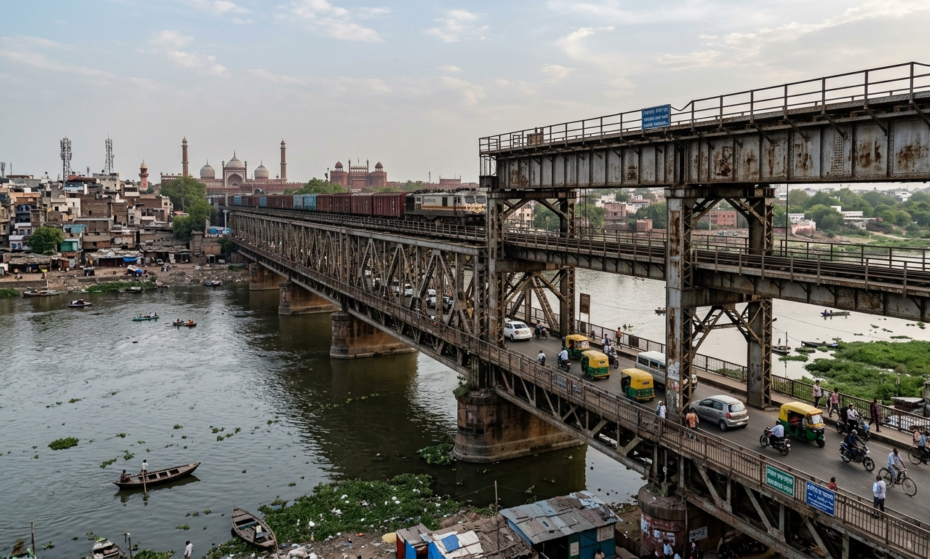
The Historic Heritage of Delhi :- Lohe Ka Pul (Old Yamuna Bridge)
Delhi is not just a city of modern skyscrapers; it cradles centuries of profound history within its heart. The ‘Lohe Ka Pul’ (Bridge No. 249), built across the Yamuna River, is one such priceless and living heritage of Delhi. This bridge is not only a masterpiece of engineering but also a historical conduit that connected Delhi to the rest of India. In this blog, we will explore the history, architecture, and every minor detail associated with this iconic bridge.
Detailed History
The history of the Iron Bridge is deeply intertwined with the British era and the advent of the Indian Railways.
- Purpose of Construction :– In the 1850s, when the East India Company decided to lay a railway line from Calcutta (now Kolkata) to Delhi, crossing the turbulent Yamuna River was the biggest challenge. The blueprint for this bridge was drawn up specifically to overcome this obstacle.
- Construction Period :– The construction of this bridge began in the year 1863 and was fully completed in 1866.
- Inauguration and the First Train :– In 1866, the bridge was officially opened for traffic. The first train to pass through this bridge was dispatched from Calcutta towards Delhi, directly connecting Delhi with the eastern parts of the country.
- Historical Significance :– To further fortify the structure, modifications were made in 1913 to convert it into a ‘double line’ (dual railway tracks). This bridge stands as a silent witness to the era right after the Revolt of 1857 and has played a monumental role in the modernization of Delhi.
Detailed Architecture :-
Lohe Ka Pul is globally renowned for its unique and robust engineering. Even after the passage of more than 150 years, this bridge remains resilient enough to handle modern traffic loads.
- Engineering Marvel :– It is a ‘Truss Bridge’ constructed entirely by interlocking heavy and sturdy iron girders. No concrete girders were used in its fabrication; instead, pure iron bars were fastened together using rivets.
- Double-Decker Design :– The most striking feature of this bridge is its two-tiered structure:
- Upper Deck :– The upper tier houses the railway tracks, where trains still pass through at a regulated, slow speed.
- Lower Deck :– The lower tier is designated for road transport, used by small vehicles, cycles, e-rickshaws, and pedestrians.
- Length and Pillars :– The total length of the bridge is over 800 meters. To support it amidst the river, massive piers made of stone and brick were erected, which effortlessly withstand the heavy flow of water.
Travel Guide & Routes :-
If you wish to witness this historical bridge up close and plan a visit, the following information will be highly useful.
- Tickets :– There is no entry fee or ticket required to view or pass through Lohe Ka Pul. It is completely Free.
- Visiting Time :– The bridge remains accessible 24 hours a day. However, for safety and optimal photography, the best time to visit is in the morning from 6:00 AM to 9:00 AM and in the evening from 4:30 PM to 6:30 PM (during sunset).
- How to Reach :–
- By Metro :– The nearest metro stations are ‘Chandni Chowk’ (Yellow Line) and ‘Red Fort’ (Violet Line). From there, you can easily take an e-rickshaw or an auto-rickshaw to reach the bridge.
- By Road :– You can board an auto, cab, or local bus directly from Old Delhi Railway Station or the Kashmere Gate ISBT. It is situated very close to the Old Delhi Railway Station.
Photography Spots
For photographers and vloggers, this location offers an incredible vintage canvas, provided you choose the right angles and timings.
- Yamuna Ghat :– The ghats located right beneath the bridge offer a complete view of the structure along with its reflection in the river water. The scenery is breathtaking during the early morning hours.
- The Passing Train Shot :– When a train passes slowly over the upper deck, capturing the windows and wheels through the geometric iron girders creates a highly vintage and cinematic shot.
- Siberian Birds (In Winters) :– If you visit during the winter season (November to February) in the morning, thousands of migratory Siberian birds flying with the bridge in the backdrop will add absolute magic to your photographs.
Local Food & Famous Markets
Since Lohe Ka Pul is located in close proximity to Old Delhi, you can relish legendary culinary delights and enjoy traditional shopping nearby.
- Local Food :–
- Near the bridge and around Old Delhi, you can feast on the famous Bedmi Poori-Halwa, Chole Bhature, and piping hot Jalebis.
- Additionally, do not miss out on the delicious paranthas at the nearby Paranthe Wali Gali and the tangy street chaat of Chandni Chowk.
- Famous Markets :–
- Chandni Chowk :– Globally renowned for textiles, traditional clothing, and bridal lehengas.
- Chor Bazaar and Kabadi Bazaar :– These markets set up very close to the bridge area, offering a variety of secondhand goods and antique items.
- Meena Bazaar :– Located near the Red Fort, this historic market is famous for traditional items, souvenirs, and handicrafts.
Nearby Attractions
Along with your visit to Lohe Ka Pul, you can also explore these famous historical and religious landmarks situated nearby.
- Red Fort (Lal Qila) :– Located just about 1.5 to 2 kilometers away from the bridge.
- Salimgarh Fort :– This ancient fort stands right next to the bridge and carries a distinct historical significance of its own.
- Marghat Wale Baba Hanuman Temple :– Situated right next to the bridge, this is a highly revered and ancient temple that attracts a large number of devotees.
- Jama Masjid :– The pride of Old Delhi, located just a short drive or rickshaw ride away.
Interesting Facts :-
- A Bridge Without Welding :– No modern welding techniques were used in the construction of this entire bridge; the whole structure was assembled by heating and hammering heavy iron rivets into place.
- The Indicator of Floods :– Whenever the water level of the Yamuna River rises in Delhi, the government considers the water level marked on ‘Lohe Ka Pul’ as the standard benchmark. The danger mark designated here serves as the official flood warning for the entire city.
- A Cinema Favorite :– Due to its vintage aesthetic and suspenseful look, this bridge has been featured in several Bollywood movies and music videos.
- Defying Age :– Despite being over 160 years old, dozens of passenger and freight trains still safely cross over its tracks every single day.
Important Questions and Answer :-
Question 1:– When was Delhi’s Lohe Ka Pul built?
Answer:– The construction of Delhi’s Iron Bridge started in 1863 and it was fully completed and opened for use in 1866.
Question 2:– Do trains still run on Lohe Ka Pul today?
Answer:– Yes, adhering to strict safety protocols, trains still pass over the upper deck of the bridge at a highly restricted, slow speed (around 20-30 km/h).
Question 3:– Which is the nearest metro station to Lohe Ka Pul?
Answer:– The nearest metro stations are ‘Chandni Chowk’ (Yellow Line) and ‘Red Fort’ (Violet Line).
Question 4:- Is there any entry fee to visit this bridge?
Answer:– No, it is an active public transport bridge, so there is no ticket or entry fee required to see or cross it.
“Withstanding the relentless waves of time and the fierce currents of the Yamuna against its chest, Delhi’s historic Iron Bridge stands as a living bridge between the unparalleled craftsmanship of yesteryears and the rapid pace of today.”