
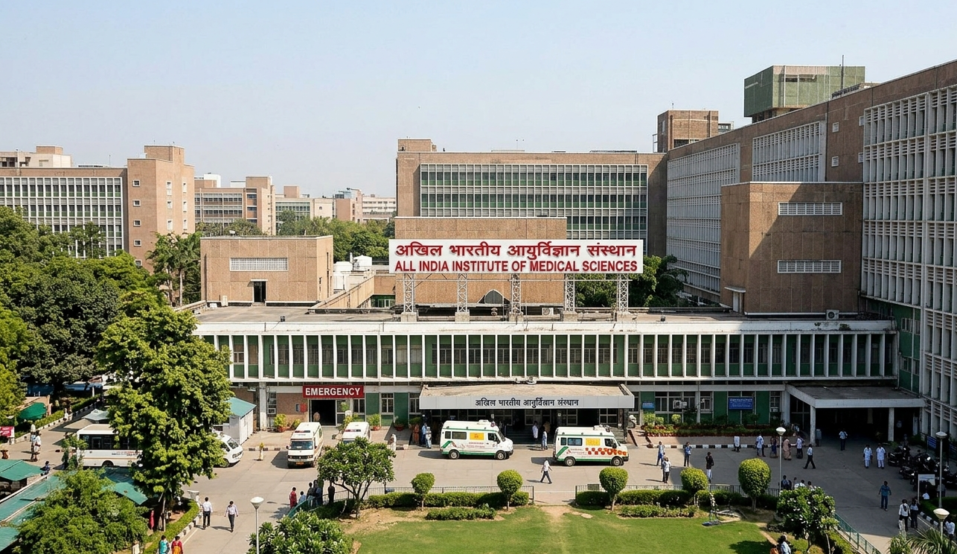
All India Institute of Medical Sciences (AIIMS), Delhi :- India’s Premier Temple of Medicine and Lifesaving Heritage
Detailed History
The All India Institute of Medical Sciences, globally renowned as AIIMS, Delhi, is not just a hospital but the brightest star in India’s healthcare firmament. The history of its establishment is deeply intertwined with the nation-building and visionary outlook of independent India. Post-independence, the country was in dire need of an institution that could not only provide world-class medical treatment to the masses but also train high-caliber doctors and researchers indigenously.
With this noble objective, AIIMS Delhi was established in 1956 as an autonomous institution through a special Act of Parliament. The conceptualization and foundation of this premier institute were driven by the tireless efforts of India’s first Prime Minister, Pandit Jawaharlal Nehru, and the country’s first female Health Minister, Rajkumari Amrit Kaur. Rajkumari Amrit Kaur played a monumental role in spearheading its development, even securing crucial international financial aid from the Government of New Zealand and the Rockefeller Foundation. Sprawling across a massive land mass near Safdarjung, this campus has consistently broken new ground in medical science. Today, it stands as the ultimate ray of hope and the ‘Mecca of Medicine‘ for millions of poor and wealthy patients coming from every corner of India.
Detailed Architecture
Exterior Architecture :-
The sprawling campus of AIIMS Delhi extends over 115 acres, and its exterior architecture is a magnificent example of the Modernist architectural style blended with post-colonial functionality. The main administrative and Outpatient Department (OPD) blocks are constructed using a light cream and grey concrete-sandstone finish, presenting a perfect balance of simplicity and structural integrity. The exterior facade features massive concrete louvers and geometric jaalis (screens), strategically designed to block harsh direct sunlight while keeping the interiors naturally cross-ventilated. The main building front facade looks exceptionally grand with its sweeping semi-circular window lines and elevated blocks. Over the decades, cutting-edge new wings like the Cardio-Thoracic Centre (CTC), Neurosciences Centre, and the state-of-the-art New OPD block have been added, boasting contemporary glass curtains and modern sleek structural contours.
Interior Architecture :-
The internal layout of AIIMS is massive, meticulously organized, and divided into dedicated specialized zones. Stepping into the main wing reveals an immense central reception lobby, from which wide, high-ceilinged corridors branch out toward various inpatient wards. The floors are laid with heavy-duty mosaic and polished granite tiles designed to withstand the immense wear and tear of massive daily footfalls. Simplicity and maximum spatial utility remain the core focus of its older blocks, such as the famous Rajan Babu Block and the main central library. In contrast, the newer interior wings house state-of-the-art Intensive Care Units (ICUs), ultra-advanced modular Operation Theatres (OTs), and fully digitized diagnostic laboratories. To manage the massive influx of people daily, wide waiting halls and highly scientific ventilation systems are integrated throughout. Underground pathways and connecting ramps are smartly mapped across the campus for the seamless transport of patients, students, and staff.
Travel Guide & Routes
Whether you are visiting AIIMS Delhi for medical consultation, academic research, or informational purposes, please refer to this comprehensive guide.
- Ticket and Registration Fee :– General entry into the campus is entirely Free. For medical consultations, the registration card (OPD Parche) fee is a nominal ₹10, while major emergency and basic healthcare services are offered completely free of charge.
- Timings (OPD & Emergency) :–
- OPD Registration Timings :– Generally from 08:00 AM to 11:30 AM (Timings may vary slightly across specialized departments).
- Emergency Services :– Operates round-the-clock, 24/7.
- Opening and Closing Days :– Regular OPD consultations operate from Monday to Saturday (Saturdays are half-days). Regular OPDs remain closed on Sundays and national holidays, but the Emergency and Casualty departments remain fully operational at all times.
- How to Reach :–
- By Metro :– The most efficient and smooth way to reach the hospital is via the Delhi Metro. The nearest station is the ‘AIIMS’ Metro Station, located on the Yellow Line. The metro exits lead directly to the gates of the AIIMS medical complex.
- By Bus :– AIIMS is a major landmark transit stop in Delhi. Situated at the intersection of the Ring Road and Aurobindo Marg, it is heavily connected by Delhi Transport Corporation (DTC) buses coming from all directions (e.g., Anand विहार, Dhaula Kuan, Uttam Nagar, Kashmiri Gate).
- By Taxi/Auto :– You can board a prepaid cab, auto-rickshaw, or an e-rickshaw directly from New Delhi Railway Station or Indira Gandhi International Airport. Free electric shuttle carts run within the campus premises to assist patients in moving between blocks.
Photography Spots, Local Food, and Famous Markets
Photography Spots :-
- The Iconic AIIMS Emblem :– Photographing oneself next to the grand, golden AIIMS insignia at the main entrance gate is a matter of absolute pride for doctors, students, and medical researchers visiting from around the globe.
- Central Lawns and Fountain :– The expansive green lawns facing the main administrative block with its gushing fountain provide a brilliant perspective for architectural photography.
- The Glass Facade of the New OPD Block :– The modern, towering glass architecture of the newly constructed outpatient block provides a sleek, futuristic backdrop. (Note: Photography inside active clinical wards, emergency rooms, and of patients is strictly prohibited due to privacy regulations.)
Local Food
There are multiple clean, economical, and highly regulated dining facilities within and around the AIIMS campus.
- In-house AIIMS Canteens & IRCA Canteen :– Strategically placed inside the campus, these canteens serve highly affordable, fresh vegetarian thalis, upma, crisp dosas, samosas, and hot tea/coffee to staff and patient relatives.
- Safdarjung Enclave Food Outlets :– Located right across the street, the small eateries here serve fantastic paranthas, kachoris, quick rolls, and traditional North Indian meals.
- South Extension Eateries :– Located barely 1–2 km away, South Ex features premium cafés, multi-cuisine diners, and authentic South Indian and Mughlai restaurants.
Famous Markets Nearby :-
- INA Market & Dilli Haat :– Located just one metro station away. INA is famous for fresh exotic produce and spices, while the open-air food and craft bazaar ‘Dilli Haat’ sits right across, showcasing traditional Indian handicraft handlooms and ethnic food stalls.
- South Extension Market :– One of Delhi’s oldest and most upscale high-street shopping arcades, renowned for premium designer wear, wedding boutiques, and luxury jewelry showrooms.
- Sarojini Nagar Market :– Famous across the country as the ultimate budget-friendly flea market for trendy apparel, footwear, and street accessories, situated very close to the AIIMS vicinity.
Interesting Facts :-
- Unbeaten Academic Rank :– AIIMS Delhi has consistently maintained its top spot as the No. 1 Medical Institute in India according to the National Institutional Ranking Framework (NIRF) for consecutive decades.
- Scrap-to-Art Inside Campus :– The inner lawns of the medical campus feature beautiful modern sculptures made out of condemned medical machinery parts and crane junk, advocating for eco-friendly recycling.
- World Record in Cost-Effective Healthcare :– Highly complicated medical procedures—such as open-heart surgeries, multi-organ transplants, and advanced neurosurgeries—are performed here at just 5% to 10% of the costs charged by private healthcare corporations.
- Among the World’s Busiest Hospitals :– The OPD and Emergency departments of AIIMS Delhi collectively handle over 10,000 new patients every single day, making it one of the most heavily frequented medical centers on the globe.
Important Questions and Answer :-
Question 1:– When and by whom was AIIMS Delhi established?
Answer:- AIIMS Delhi was established in 1956 through a special Act of Parliament. India’s first Prime Minister Jawaharlal Nehru and the first Health Minister Rajkumari Amrit Kaur played the foundational roles in setting it up.
Question 2:- What is the registration fee for a general OPD consultation at AIIMS Delhi?
Answer:- The registration fee to secure an OPD card for consultation with a doctor at AIIMS is a nominal ₹10.
Question 3:– Which is the nearest metro station to AIIMS Delhi?
Answer:- The nearest station is the ‘AIIMS’ Metro Station, situated directly on the Yellow Line of the Delhi Metro network.
Question 4:- Is the AIIMS OPD open on Sundays?
Answer:- No, routine OPD consultations are closed on Sundays and national holidays. However, the Emergency and Casualty medical units remain open 24/7 for critical cases.
Question 5:- Is there any entry ticket required to enter the AIIMS campus?
Answer:- No, general entry into the AIIMS campus does not require any admission ticket. Only standard medical registration charges apply for receiving healthcare services.
S“Synonymous with affordable world-class healthcare and unwavering trust, AIIMS Delhi stands as a beacon of hope where millions of lives find a fresh lease of health and a brighter tomorrow.”