
Detailed History
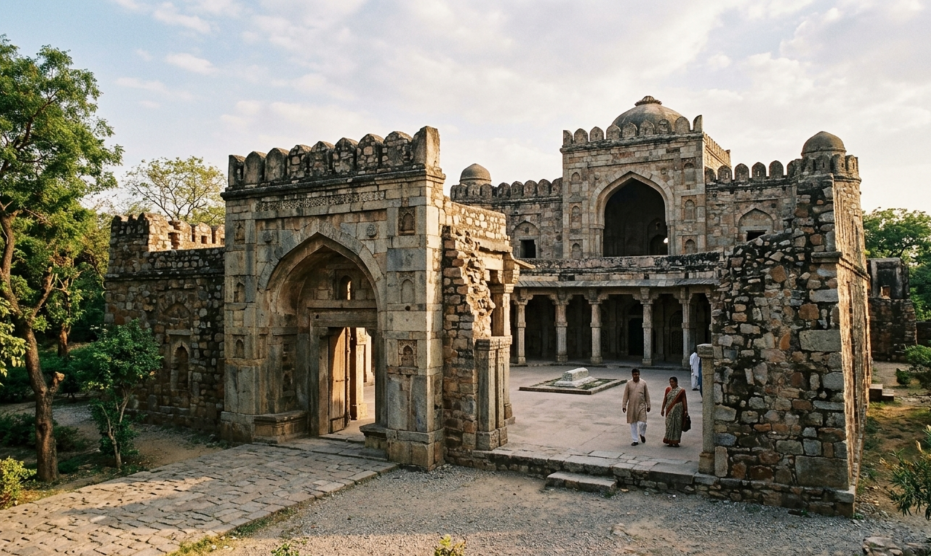
Located in the Vasant Kunj area of Delhi, Sultan Garhi is considered the first Islamic mausoleum in India. This historical monument was built in 1231 AD by Sultan Iltutmish of the Slave Dynasty in memory of his eldest son and heir apparent, Prince Nasiruddin Mahmud. Prince Nasiruddin Mahmud was the governor of Awadh and died in Bengal during a military campaign against the Mongols. Deeply grieved by the untimely demise of his beloved and capable son, Sultan Iltutmish constructed this grand mausoleum in Delhi. The word ‘Garhi’ means ‘fort’, and since this tomb resembles a small fortress, it is locally known as ‘Sultan Garhi’ or ‘The King’s Fort‘. From the perspective of history and architecture, this site marks the beginning of the monumental tomb building style (Mausoleum Architecture) in India.
Detailed Architecture
The architecture of Sultan Garhi is unique and exhibits a magnificent blend of ancient Indian and Islamic styles. From the outside, it projects the appearance of a sturdy military fort, complete with circular bastions at its four corners.
Exterior :–
The monument is primarily constructed using grey quartzite stones. Its massive entrance gateway features exquisite white marble work. The main gateway incorporates ancient Turkish style arches along with pillars and stones showcasing Hindu temple architecture, which were likely sourced from the ruins of older pre-existing structures in the vicinity at that time.
Interior :–
Upon entering the monument, one steps into a large, open courtyard. Right in the center of this courtyard lies a unique octagonal plinth. Beneath this platform is an underground crypt (tahkhana) that houses the actual grave of Prince Nasiruddin Mahmud. Narrow stairs lead down into this crypt. On the western side of the courtyard stands a mosque wall (Qibla) featuring beautiful marble mihrabs and carved ancient pillars indicating the direction of prayer.
Travel Guide & Routes :-
All the essential details for your visit to Sultan Garhi are listed below to ensure a smooth and well-organized trip.
- Ticket and Entry Fee :– The entry fee for Indian citizens is approximately ₹15 to ₹20. For foreign tourists, the fee is approximately ₹200 to ₹250. (Digital payment facilities are available).
- Visiting Time :– The monument remains open on all days of the week. The opening time is 7:00 AM and the closing time is 6:00 PM.
- Photography Spots :– The top of the octagonal platform, the stairs leading down to the underground crypt, and the ancient circular bastions at the four corners are excellent spots for photography. The ancient walls and pillars offer a beautiful vintage backdrop for portraits.
- Local Flavors :– Near Sultan Garhi, in the markets of Vasant Kunj and Mehrauli, you can savor excellent Delhi street food such as chole bhature, chaat, and rich Mughlai dishes like kebabs and korma.
- Famous Markets :– For shopping, you can visit the nearby Vasant Kunj malls (Ambience Mall and DLF Promenade), or explore the local Mehrauli market and Chhattarpur market for a traditional shopping experience.
- Nearby Attractions :– Located close to Sultan Garhi are the Qutub Minar Complex, Mehrauli Archaeological Park, Jahaz Mahal, and the famous Chhattarpur Temple.
How to Reach :–
- By Metro :– The nearest metro stations to Sultan Garhi are ‘Chhattarpur’ (Yellow Line) and ‘Vasant Vihar’ (Magenta Line). From the metro station, you can easily take an auto-rickshaw or an e-rickshaw to reach Sultan Garhi directly.
- By Road :– The monument is situated on the Mehrauli-Mahipalpur Road, near Sector-B Pocket-2 of Vasant Kunj. You can easily reach here from any part of Delhi using cabs, autos, or DTC bus services.
Interesting Facts :-
- Sultan Garhi holds the official distinction of being the very first Islamic tomb (Mausoleum) built in India.
- This monument is revered as a sacred site by both local Hindu and Muslim communities. Prince Nasiruddin Mahmud is worshiped here as ‘Peer Baba’, and people visit the shrine to make wishes.
- The octagonal shape of the central structure was a highly rare and unique architectural experiment during that era.
- Descending into the underground crypt evokes a mysterious and peaceful ambiance, completely detached from the hustle and bustle of Delhi.
Important Questions and Answer :-
Question 1:- Who built Sultan Garhi and in whose memory?
Answer:- Sultan Garhi was built by Sultan Iltutmish of the Slave Dynasty in 1231 AD in memory of his eldest son, Prince Nasiruddin Mahmud.
Question 2:– Why is Sultan Garhi called ‘India’s first tomb’?
Answer:- Prior to this, Muslim rulers in India had not constructed large, independently dedicated mausoleums to bury the deceased. It was Iltutmish who initiated this grand tradition.
Question 3:– Are there any strict rules or restrictions for entering Sultan Garhi?
Answer:- Since it is also treated as a religious or Sufi site (the shrine of a Peer), visitors are advised to dress modestly and cover their heads when entering the crypt or the main shrine area. Additionally, you may be required to remove your footwear before entering the core complex.
Author’s Thoughts :-
Sultan Garhi is not merely a structure of stones and arches; it is a silent expression of a father’s deep love and profound grief for his son, etched forever in the pages of history. Away from the dense crowds of famous spots like the Qutub Minar, this first tomb of Delhi offers a highly unique and mystical experience for history enthusiasts and peace seekers alike.
“Hidden in the silent alleyways of history, Sultan Garhi still narrates the tale of India’s earliest architectural grandeur.”