
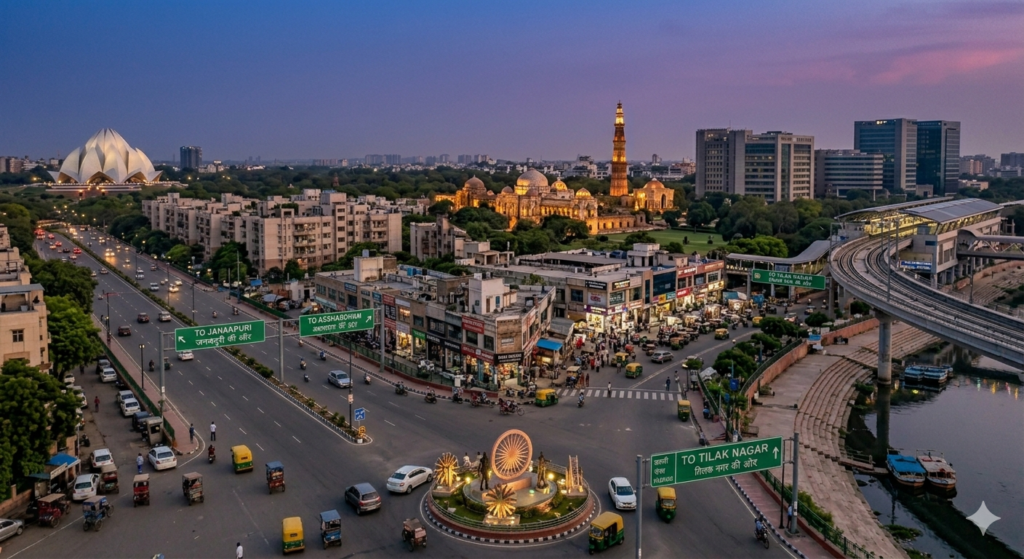
West Delhi :- The Dynamic Epicenter of Vibrant Culture, Commercial Zeal, and Culinary Delights
West Delhi is a powerhouse of boundless energy, large-hearted residents, sprawling commercial enterprises, and an incredibly rich food culture. The region stands as a living testament to the resilient Punjabi heritage and the remarkable success stories of families who resettled here post-partition. A fascinating blend of premium shopping malls, tightly packed wholesale alleys, and affluent residential enclaves makes this quadrant the most colorful and spirited half of the capital.
Detailed History :-
The modern history of West Delhi is profoundly linked to the aftermath of the 1947 partition of India. Following independence, the government established extensive residential colonies to rehabilitate thousands of displaced families arriving from West Punjab and Sindh (now in Pakistan). These settlements laid the groundwork for neighborhoods like Rajouri Garden, Tilak Nagar, Patel Nagar, Punjabi Bagh, and Kirti Nagar.
Driven by sheer industriousness, the early inhabitants set up small retail shops and enterprises which, over the decades, evolved into some of Asia’s most prominent commercial marketplaces. Thus, West Delhi transitioned seamlessly from a series of refugee colonies into one of the wealthiest, economically robust, and culturally influential zones of the National Capital Territory. Post-2000, the arrival of the Delhi Metro blue line revolutionized its infrastructure, converting it into a premier modern lifestyle destination.
Detailed Architecture :-
The architectural profile of West Delhi is intensely pragmatic, heavily prioritizing premium residential layouts and high-density commercial complexes, characterized by contemporary and bold modern designs.
- Affluent Mansions & Residential Layouts :– Upscale sectors like Rajouri Garden, Punjabi Bagh, and Paschim Vihar feature opulent, multi-story independent bungalows. These properties showcase cutting-edge modern facades, utilizing extensive structural glass, minimalist concrete geometry, and premium stone claddings.
- Commercial Plazas & Retail Hubs :– The ‘District Centre‘ in Janakpuri remains an iconic milestone of brutalist-inspired commercial architecture, housing massive multi-story office towers. In sharp contrast, the commercial enclave at Shivaji Place (Rajouri Garden) boasts upscale retail malls constructed with sleek glass curtains and massive structural steel arches, encapsulating the region’s cosmopolitan shift.
- Religious & Communal Landmarks :– The grand historic Gurudwaras (such as those in Tilak Nagar and Rajouri Garden) display traditional Indian structural motifs blended with pristine white marble masonry and gilded domes.
Travel Guide & Routes :-
- Tickets & Entry Fees :– Entry to all prominent street markets, retail malls, high streets, and recreational spaces (like the District Park) across West Delhi is completely free of charge. No ticketing or advance booking is required for exploration.
- Visiting Time :– Main retail high streets and shopping malls generally remain active from 11:00 AM to 10:00 PM. For food lovers, the absolute best time to experience the bustling street food alleys is between 08:00 PM and 11:00 PM. Note that several central markets in Tilak Nagar and Rajouri Garden remain partially closed on Wednesdays for weekly maintenance.
- How to Reach :–
- By Metro :– The Delhi Metro’s ‘Blue Line’ and ‘Pink Line’ serve as the definitive transit arteries for the region. The principal interchange and high-footfall hubs include ‘Rajouri Garden’ (Blue/Pink intersection), ‘Janakpuri West’, ‘Tilak Nagar’, and ‘Uttam Nagar’ metro stations.
- By Road :– West Delhi enjoys seamless vehicular access via the Ring Road, Najafgarh Road, and Jail Road grids. The Indira Gandhi International Airport (IGI) is remarkably accessible via the Dhaula Kuan transit corridor, requiring a mere 20-to-30-minute drive. Local transport infrastructure includes thousands of app-based cabs, auto-rickshaws, and e-rickshaws.
- Photography Spots :– The vibrant neon facades of the Rajouri Garden entertainment strip, the geometric plazas of Janakpuri District Centre, the grand central atrium of Pacific Mall, and the beautifully designed alfresco seating zones along Punjabi Bagh’s Club Road offer great backdrops.
- Local Flavors :– West Delhi is an absolute paradise for food connoisseurs. The famous ‘Jail Road Food Street‘ is globally renowned for inventive variations of Tanduri Momos, grilled Soya Chaps, and skewered Kebab platters. Iconic local institutions like Prem Di Hatti in Rajouri Garden offer legendary Chhole Bhature, while the area’s rich, authentic Butter Chicken, Tandoori Chicken, and crisp Tilak Nagar Chaats remain unmatched.
- Famous Markets :– ‘Rajouri Garden Market’ (highly sought-after for luxury bridal trousseaus, designer apparel, and fast-fashion footwear), ‘Tilak Nagar Market’ (famous for traditional ethnics and wedding accessories), and ‘Kirti Nagar Market’ (Asia’s absolute largest dedicated furniture and interior decor hub).
Interesting Facts :-
- The ‘Kirti Nagar Furniture Market’ is celebrated as Asia’s largest dedicated interior decor market, accommodating everything from artisanal wood carvings to premium imported luxury home fittings under one localized network.
- The Janakpuri District Centre was originally conceptualized as an architectural experiment in high-density, multi-use open-air public commercial zoning in Delhi.
- Due to its hyper-energetic lifestyle, entrepreneurial drive, and dominant Punjabi subculture, West Delhi is often affectionately called the absolute soul of “Dilwalon ki Delhi.”
Important Questions and Answer :-
Question 1:- Which is the premier destination for home interior and furniture shopping in West Delhi?
Answer:- The ‘Kirti Nagar Market‘ is the ultimate destination for home furniture, corporate interior decor, and customized wood architectural fittings. It offers an expansive inventory ranging from highly economical options to bespoke, top-tier international luxury design studios.
Question 2:- What makes Jail Road highly famous among food enthusiasts?
Answer:- Jail Road (specifically the commercial stretch running towards Hari Nagar) acts as West Delhi’s ultimate culinary street. It features a dense concentration of specialized food vendors and restaurants renowned for avant-garde street eats, particularly specialized tandoori platters, kebabs, and gourmet fusion snacks.
Question 3:- Is Rajouri Garden strictly limited to retail shopping?
Answer:- Not at all. While Rajouri Garden is a major hub for luxury wedding wear and designer garments, it also serves as one of Delhi’s most explosive nightlife and café hubs, packing an incredible density of premier lounges, gastropubs, and upscale rooftop bars.
Author’s Thoughts :-
To me, West Delhi represents the ultimate triumph of the resilient human spirit. The inspiring trajectory of families who arrived here post-partition with next to nothing and built absolute commercial empires is the true defining ethos of this soil. The instant warmth, booming laughter, and raw communal energy you experience while navigating these lively avenues are thoroughly infectious. The food here isn’t just about culinary technique; it is a direct expression of deep hospitality. If you wish to look beyond historic monuments and truly experience a living, breathing culture that celebrates life with immense fervor, West Delhi is your definitive destination.
“West Delhi is a magnificent urban chronicle of resilience transforming into opulence, where every corner throbs with deep familial warmth and an unyielding entrepreneurial fire.”