
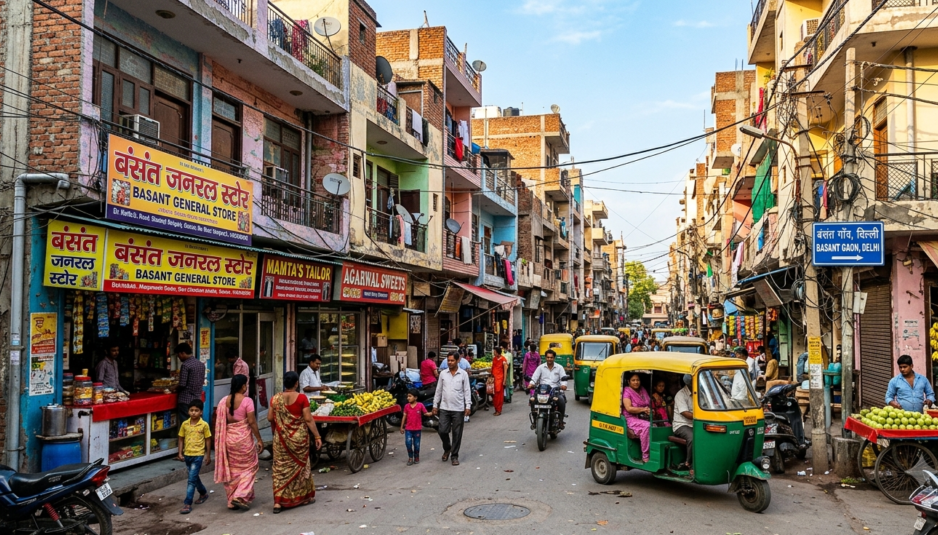
Basant Gaon :- A Hidden Historical and Cultural Enclave in the Heart of Delhi
Amidst the chaotic rush of Delhi’s urban life, concrete jungles, and glittering mall culture, there lies a quiet corner where time seems to have slowed down. Located right adjacent to the posh locality of Vasant Kunj in South Delhi, ‘Basant Gaon’ is a historical and cultural treasure trove. In this blog, we will navigate through the narrow alleys of this ancient village, exploring its glorious history, unique architecture, and vibrant community life. Let us get up close and personal with this untouched facet of Delhi.
Detailed History
The history of Basant Gaon dates back centuries, with direct links to the Delhi Sultanate, particularly the Tughlaq and Lodhi periods. According to local folklore and historical remnants, this village once served as a sanctuary for Sufi saints and mystics. The village earned its name ‘Basant’ (Spring) due to its historically serene atmosphere and lush surroundings during the season.
It is believed that this region held religious and cultural significance since the era of the great 14th-century Sufi saint, Hazrat Nizamuddin Auliya. The presence of several ancient tombs, mosques, and stepwells (baolis) around the village stands as a testament to the fact that this area was once a favored retreat for Delhi’s rulers and aristocrats. The village maintained its distinct cultural identity through the Mughal and British eras and has managed to protect its roots despite rapid modern urbanization.
Detailed Architecture :-
The architecture of Basant Gaon offers a fascinating contrast, blending medieval Indian elements with modern rural Delhi structures.
- Exterior Architecture :– Upon entering the village, you are greeted by narrow, winding lanes. The use of traditional ‘Lahori bricks’ and local ‘Grey Quartzite’ stones can still be spotted in the older remnants. The domed structures of ancient mosques and tombs near the village entrance display classic Sultanate-era architecture. While the walls bear the weathered marks of time, their structural integrity remains intact.
- Interior Architecture :– The traditional houses inside the village feature a central courtyard (Aangan), which serves as the primary source of air and natural light. Beautifully carved wooden doors and vintage windows (jharokhas) are still preserved in a few ancestral homes. In contrast, the interiors of the ancient shrines and small mosques reflect absolute simplicity and peace, featuring elegant arches and tall pillars that showcase the grandeur of bygone craftsmanship.
Travel Guide & Routes :-
If you are planning a visit to Basant Gaon, here is all the essential travel information arranged in a seamless, sequential block.
- Ticket :– Entry to Basant Gaon and the historical ruins located within its vicinity is completely Free.
- Visiting Time :– You can visit anytime between 06:00 AM to 07:00 PM. However, the morning and late afternoon hours are highly recommended to experience the local lifestyle comfortably.
- Opening & Closing Time :– The public areas of the village remain accessible 24/7, but the ideal time to explore the historical monuments and shrines is from sunrise to sunset.
- How to Reach :–
- By Metro :– The nearest metro stations are ‘Vasant Vihar’ or ‘Munirka’, both located on the Magenta Line. From there, you can easily take an auto-rickshaw or an e-rickshaw to reach Basant Gaon.
- By Bus :– Several DTC buses plying via the Outer Ring Road and Vasant Kunj Marg will drop you at the ‘Basant Gaon’ or ‘Vasant Kunj Sector-A’ bus stop, which is within short walking distance from the village.
- By Road/Cab :– You can drive down or book an Ola/Uber cab directly by setting the destination to ‘Basant Gaon, Vasant Kunj’. Due to the narrow lanes inside the village, it is highly recommended to park your vehicle on the main road.
Photography Spots, Local Flavors, and Famous Markets
- Photography Spots :–
- The narrow, vibrant streets where modern lifestyle meets historical ruins in a single frame.
- The domed roof and weathered walls of the ancient Sultanate-era tomb located at the heart of the village.
- The intricately carved wooden doorways of the older ancestral residential houses.
- Local Flavors :– Around Basant Gaon, you can savor authentic Delhi street food. The piping hot samosas, kachoris, chole bhature, and traditional tea served in clay cups (kulhad chai) are local favorites. Since it is situated next to Vasant Kunj, premium cafes and multi-cuisine restaurants are also just a stone’s throw away.
- Famous Market :– The village houses its own local market catering to daily needs. However, if you are looking for high-end shopping, the nearby ‘Vasant Lok Community Centre’ and the iconic ‘Vasant Kunj Malls’ (DLF Promenade, Ambience Mall) offer some of the best shopping and dining experiences in Delhi.
Nearby Attractions :-
After exploring Basant Gaon, you can extend your itinerary by visiting these prominent nearby tourist spots.
- Jahanpanah City Forest :– A lush green expanse perfect for nature lovers and history enthusiasts.
- Qutub Minar :– This iconic UNESCO World Heritage Site is located just a 15-20 minute drive away.
- Mehrauli Archaeological Park :– Home to over a hundred historical monuments scattered across a peaceful parkland.
- Deer Park & Hauz Khas Village :– A fantastic combination of nature, deer sightings, medieval lake ruins, and trendy cafes.
Interesting Facts :-
- Basant Gaon is one of Delhi’s unique ‘Urban Villages‘ that has fiercely protected its rural heritage and historical charm right next to upscale modern high-rises.
- Some of the historical ruins within the village are not formally protected by the Archaeological Survey of India (ASI), yet the local community informally respects and protects their presence.
- The premium locality of Vasant Kunj derives its name partly from this ancient ‘Basant Gaon’ and its neighboring locality, Vasant Vihar.
Important Questions and Answer :-
Question 1:- Is it safe to explore Basant Gaon alone?
Answer:- Yes, Basant Gaon is a peaceful, well-inhabited residential area and is perfectly safe for solo travelers. The locals are warm, welcoming, and helpful.
Question 2:- What is the best season to visit Basant Gaon?
Answer:- The best time to visit is during the winter months, from October to March, when Delhi’s weather is pleasant and ideal for walking tours.
Question 3:– Is photography allowed inside the historical structures?
Answer:- Yes, photography using mobile phones and basic digital cameras is completely permitted without any charges.
Author’s Perspective :-
In my view, Basant Gaon is not just an urban village; it is a living museum tucked inside a booming metropolis. The coexistence of ancient ruins alongside ultra-modern malls serves as a beautiful reminder of Delhi’s multi-layered existence. Walking through these alleys feels like reclaiming a piece of history that is slowly fading from public memory. It is crucial for both the authorities and travelers to pay more attention to these hidden enclaves to ensure that the rapid wave of urbanization doesn’t completely erase our rich cultural roots.
S“Beyond the textbook pages, the true soul of Delhi breathes quietly in its narrow lanes and forgotten urban villages.”