
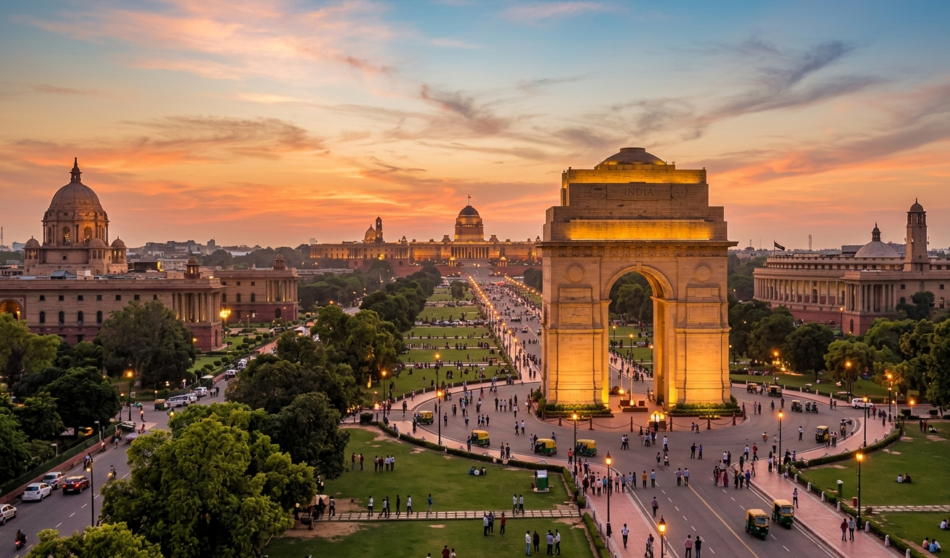
Delhi :- The Threshold of History and the Confluence of Modern India
Delhi is not just a city; it is a living document of centuries-old history, diverse cultures, and modern progress. Situated on the banks of the Yamuna River, it is the political and cultural heart of India.
Detailed History
The history of Delhi begins with ‘Indraprastha‘ from the Mahabharata era. In the medieval period, it was the capital for Prithviraj Chauhan, the Delhi Sultanate, and later the Mughal Empire. Shah Jahan established ‘Shahjahanabad‘ (Old Delhi) here. Later, the British moved their capital from Calcutta to Delhi in 1911 and built ‘New Delhi’. In 1992, it was granted the special status of the National Capital Territory (NCR).
Detailed Architecture
Delhi’s architecture reflects three distinct eras.
- Mughal Architecture :– Magnificent use of red sandstone and marble in the Red Fort, Humayun’s Tomb, and Jama Masjid.
- British (Lutyens) Architecture :– India Gate and Rashtrapati Bhavan, blending European and Indian styles.
- Modern Design :– The Lotus Temple (flower-shaped) and the grand carvings of Akshardham Temple are marvels of modern engineering.
Top Attractions and Points of Interest :-
- Red Fort :– A UNESCO World Heritage site and the center of Mughal power. The tricolor is hoisted here every Independence Day.
- Qutub Minar :– The world’s tallest brick minaret. Nearby, the Iron Pillar remains a mystery for scientists due to its rust-resistance.
- India Gate :– A war memorial dedicated to the martyrs of WWI, featuring the eternal ‘Amar Jawan Jyoti’.
- Akshardham Temple :– One of the largest Hindu temples in the world, famous for its architecture and water show.
- Lotus Temple :– A Baha’i House of Worship known for its lotus-like structure and peaceful atmosphere.
Travel Guide & Routes
- How to Reach :–
- By Air :– Indira Gandhi International Airport connects to all major global cities.
- By Rail :– New Delhi, Old Delhi, and Hazrat Nizamuddin are the primary railway stations.
- Metro :– Delhi Metro is the most convenient way to reach every corner of the city.
- Tickets & Timings :– Entry to monuments like Red Fort is approx. ₹35-50 for Indians. Timings: 9:00 AM to 6:00 PM (Some monuments are closed on Mondays).
- Local Taste :– Parathas of ‘Paranthe Wali Gali’, Nihari in Old Delhi, and famous street food like Golgappe and Chole-Bhature.
- Famous Market :– Chandni Chowk for traditional goods, Connaught Place for brands, and Janpath for handicrafts.
- Photography Spots :– Humayun’s Tomb, Agrasen ki Baoli, and Lodhi Gardens.
Interesting Facts
- Delhi is the second most populated city in the world.
- The ‘Khari Baoli‘ market is Asia’s largest wholesale spice market.
- Delhi operates one of the world’s largest eco-friendly CNG bus fleets.
Important Questions and Answer :-
Question 1:- Why is New Delhi called ‘Lutyens Delhi’?
Answer:- Because it was designed by the British architect Edwin Lutyens.
Question 2:- Which is the oldest fort in Delhi?
Answer:- ‘Purana Qila‘ (Old Fort) is considered one of the most ancient, linked to the era of the Pandavas.
Question 3:- When did the Delhi Metro start?
Answer:- Its first commercial service began on December 24, 2002.
Question 4:- What is the state bird of Delhi?
Answer:- The House Sparrow is the state bird of Delhi.
Question 5:- What is the best time to visit Delhi?
Answer:- From October to March, when the weather is pleasant for sightseeing.
Author’s Thoughts :-
Delhi is a city that never sleeps. Even in its chaos, there is a sense of belonging. If you wish to witness India’s glorious past and shining future together, you must wander through the lanes of Delhi.
“The dust of history and the glitter of modernity, both are called Delhi.”