
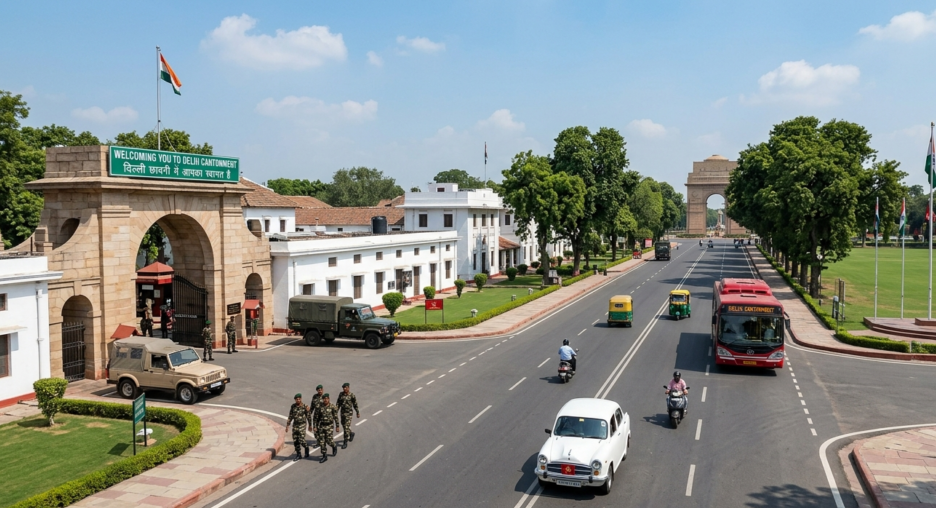
Delhi Cantt :- A Legacy of Military Valor, Rich History, and the Capital’s Cleanest Green Haven
Enfolded in the western reaches of New Delhi, Delhi Cantonment—universally recognized as ‘Delhi Cantt’—is far more than a routine military base. It stands as a living, breathing monument to the iron discipline, unyielding courage, and glorious historical evolution of the Indian Armed Forces. Spanning a massive, highly organized layout of over , this premier district serves as a key base for major army regiments, high-level administrative headquarters, and prestigious military institutions. Characterized by spotless avenues, expansive institutional forests, an absolute absence of urban pollution, and strict garrison codes, Delhi Cantt stands proud as the safest, cleanest, and most ecologically preserved enclave in the National Capital Territory.
Detailed History :-
The historical foundations of Delhi Cantt are deeply embedded in the grand geopolitical and military developments of the British Colonial era. The cantonment was officially established in the year 1914 by the British Indian Army. Following the outbreak of the First World War, British military strategists recognized an urgent, long-term requirement to construct a high-capacity, sophisticated garrison base near the newly planned imperial capital (Lutyens’ Delhi) to guarantee instant tactical deployment and territorial security. Consequently, a vast, strategically isolated tract of land well away from the congestion of Old Delhi was selected.
Upon India attaining independence in 1947, the entire estate was seamlessly handed over to the sovereign Indian Army. Ever since, Delhi Cantt has functioned as a vital nerve center for national defense operations. It holds critical commands of the Army’s Western theater, the legendary Rajputana Rifles Regimental Centre (RRRC), the elite Army Hospital (Research & Referral), and the prestigious National Defence College. The territory acts as a solemn sanctuary preserving the grand memories and heroic tales of the nation’s fallen soldiers.
Detailed Architecture :-
The architectural landscape of Delhi Cantt offers an imposing display of traditional British Garrison Architecture blended elegantly with modern Indian military infrastructure.
- Colonial Barracks and Stately Bungalows :– The older strategic sectors of the cantonment proudly preserve early 20th-century army barracks engineered with exposed red-brick masonry and robust sandstones. The residential bungalows earmarked for high-ranking flag officers exhibit classical colonial elements, featuring soaring pillars, deep wrap-around verandahs, and classic sloping tiled roofs designed to withstand weather extremes.
- Regimental Centers and Officers’ Messes :– The grand administrative headquarters and dining messes of legacy regiments are meticulously designed, incorporating structural aesthetics from Rajput, Sikh, and Mughal architectural traditions. The monumental gateways of these compounds are flanked by functional vintage artillery pieces, decommissioned battle tanks, and manicured war shrines, lending a powerful, solemn character to the surroundings.
- Contemporary Military Infrastructure :– The modern administrative wings, housing estates, and the expansive Base Hospital feature functionalist modern concrete architecture, prioritizing multi-tier structural security, optimal resource management, and eco-friendly specifications.
Travel Guide & Routes :-
- Tickets & Entry Fees :– Exploring the common public roads, open parks, and retail zones of Delhi Cantt is completely free of charge. No access ticketing system applies. However, entry into core tactical zones, active regiment barracks, and operational command offices is strictly restricted to military personnel and authorized passes.
- Visiting Time :– The most refreshing hours to travel along the public avenues and retail districts of Delhi Cantt are from 07:00 AM to 10:00 AM and from 04:30 PM to 08:30 PM. Due to rigorous garrison security protocols, non-resident vehicle profiling and checks are intensified across all checkpoints after dark.
- How to Reach :–
- By Metro :– The Delhi Metro network’s ‘Pink Line’ offers dedicated transit via the ‘Delhi Cantt’ station. Additionally, the ‘Sadar Bazar Cantt’ and ‘Dashrath Puri’ stations on the ‘Magenta Line’ provide immediate access to the commercial and residential hubs of the base.
- By Rail :– The Delhi Cantonment Railway Station (DEC) is a highly important rail hub in the capital. It serves as a prime terminal stop for premium semi-high-speed trains like the Vande Bharat Express, alongside major express trains arriving from Rajasthan, Gujarat, and Haryana.
- By Road :– Delhi Cantt is directly linked to the Ring Road network, Mahatma Gandhi Marg, and the critical Dhaula Kuan multi-tier flyover. The roads are remarkably wide and completely free of potholes. On-demand app-based cabs and local auto-rickshaws operate smoothly across the public sectors.
- Photography Spots :– The beautifully preserved vintage tanks and artillery pieces mounted at major traffic circles, the stately exterior brickwork of the Rajputana Rifles Museum, and the scenic, sun-dappled lanes lined with ancient trees. (Strict Warning: Photography or videography targeting active armed guards, barricades, or defense buildings is strictly prohibited by federal law).
- Local Flavors :– The ‘Sadar Bazar’ of Delhi Cantt is highly sought-after for local North Indian food. It is famous for its crispy hot samosas, traditional Bengali sweets, and premium Chhole Bhature. Furthermore, the open food stalls near the army transit canteens serve highly rated, authentic South Indian idlis and dosas.
- Famous Markets :– ‘Sadar Bazar (Delhi Cantt)’ is the definitive, multi-generational market hub of the district. It is highly specialized in supplying authentic military gear, tactical boots, ceremonial badges, and outdoor apparel alongside daily lifestyle utilities and textiles.
Interesting Facts :-
- The Rajputana Rifles Regimental Centre Museum situated here stands as one of India’s richest military archives, preserving an incredible repository of heritage weaponry, historical battlefield maps, and gallantry medals dating back to 1750.
- Delhi Cantt often surfaces in pop culture and internet urban legends for fictional “haunted stories.” However, military patrols and long-time residents dismiss these as mere rumors; the district is globally one of the most secure, disciplined, and peaceful urban sectors.
- The cantonment implements incredibly strict environmental conservation laws; unauthorized tree pruning or felling attracts severe court-martial or legal penalties, keeping the local ambient temperature consistently 1 to 2 degrees cooler than neighboring commercial zones.
Important Questions and Answer :-
Question 1:– Is it convenient for general train passengers to access app-based cabs from Delhi Cantt Railway Station?
Answer:- Yes, the Delhi Cantt Railway Station features a dedicated, highly secure terminal exit with round-the-clock availability of prepaid auto-rickshaws and app-based cabs like Uber and Ola. Thanks to vigilant military policing, the terminal is highly rated for passenger safety and hassle-free transit.
Question 2:– How does the Sadar Bazar of Delhi Cantt differ from the mainstream Sadar Bazar of Old Delhi?
Answer:- The mainstream Sadar Bazar in Old Delhi is a massive, hyper-congested wholesale commercial market serving the entire north India. Conversely, the Sadar Bazar in Delhi Cantt is a clean, well-spaced garrison marketplace designed strictly for retail utilities, domestic supplies, and specialized military outfitting.
Question 3:– What historical status does the Rajputana Rifles hold within the Indian Army structure?
Answer:- The Rajputana Rifles stands as the absolute oldest rifle regiment in the Indian Army, initially raised under the British presidency armies. The regiment holds an illustrious combat record, having participated with immense valor in both World Wars, post-independence conflicts, and the critical high-altitude battles of the 1999 Kargil War.
Author’s Thoughts :-
From my perspective, Delhi Cantt represents a brilliant, highly disciplined side of the capital city that offers a refreshing escape into a world governed by order and structural integrity. Driving through its emerald canopies while watching smart soldiers in uniform under the shadow of the national flag evokes an immediate sense of respect and patriotic pride. It exists as a pristine oasis amidst the hyper-active urban sprawl of Delhi. For travelers wanting a peaceful evening drive, a look into India’s rich military heritage, or just a quiet walk down immaculate sidewalks, Delhi Cantt stands out as an exceptional, highly rewarding experience.
“Delhi Cantt stands as an exceptional monument to India’s military discipline and environmental preservation, where the proud steps of our soldiers safeguard a pristine, emerald sanctuary in the heart of the capital.”