
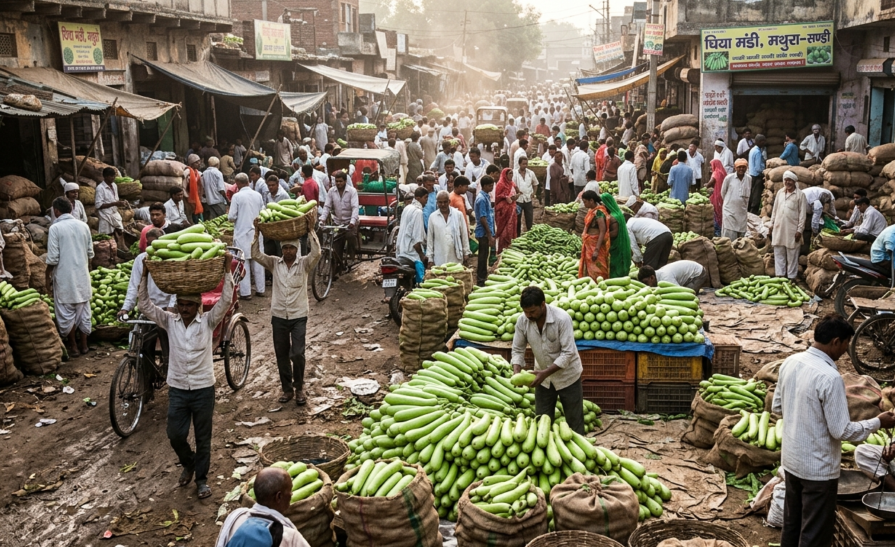
Ghiya Mandi, Mathura :- Hub of Rich History, Wholesale Trade, and Heritage Braj Culture
Located near the historic Holi Gate and the sacred banks of the Yamuna River in Mathura, Uttar Pradesh, Ghiya Mandi is one of the oldest, most famous, and bustling market areas of the city. Situated in the heart of Lord Krishna’s holy land, this market is not merely a trading hub for fresh produce and groceries, but also a vital center of Mathura’s traditional lifestyle, heritage architecture, and commercial legacy.
Rooted deep in the historical fabric of Mathura, Ghiya Mandi reflects the authentic spirit of the old city, offering visitors an immersive glimpse into local trade, everyday life, and traditional Braj flavors.
Detailed History
The history of Ghiya Mandi dates back several centuries. During the Mughal, Maratha, and British eras, when trade was primarily conducted via the Yamuna waterway, this area near the riverbanks emerged as a central trading outpost. Originally named ‘Ghiya’ (bottle gourd/vegetable), the market began as a dedicated wholesale hub for fresh agricultural produce.
Over time, as Mathura expanded, Ghiya Mandi evolved from a simple vegetable market into a diverse wholesale and retail hub. Today, alongside fresh produce, it houses merchants selling groceries, dry fruits, devotional items, brassware, traditional attire, and household goods. The narrow lanes and aged structures of Ghiya Mandi stand as living testaments to Mathura’s enduring mercantile heritage.
Detailed Architecture
Ghiya Mandi presents a classic showcase of Old City / Braj Market Architecture.
- Exterior Architecture :– Entering Ghiya Mandi evokes the charm of old heritage quarters like Old Delhi’s Chandni Chowk or Varanasi’s ancient alleys. The narrow, winding lanes are flanked by multi-story ancestral havelis and heritage buildings. Key architectural features include carved wooden doorways, overhanging balconies (jharokhas), and traditional iron lattice work.
- Interior Architecture :– Inside the market shops, merchants still operate out of traditional floor-seated setups (gaddis). The lanes seamlessly blend commercial shops with small neighborhood shrines, leading directly toward the historic ghats of the Yamuna River, such as Vishram Ghat and Bengali Ghat.
Nearby Attractions
- Holi Gate :– The historic entry gate of Mathura city, located just a short walking distance from Ghiya Mandi.
- Vishram Ghat :– The most sacred Yamuna riverbank in Mathura where Lord Krishna rested after defeating Kansa (approx. 500 meters away).
- Dwarkadhish Temple :– Mathura’s grand and iconic temple situated within walking distance.
- Chowk Bazaar & Chhatta Bazaar :– Neighboring historic markets famous for traditional handicrafts and clothing.
Travel Guide & Routes
- Market Timings :–
- Wholesale Vegetable & Grocery Trade :- Early morning 06:00 AM to 12:00 PM.
- General Retail & Shops :- 10:00 AM to 09:00 PM (some shops may remain closed on Sundays).
- Entry & Access :– Public access to the market is free.
- How to Reach :–
- By Road :– Ghiya Mandi is located right next to Holi Gate in central Mathura. E-rickshaws, auto-rickshaws, and cycle rickshaws run frequently from Mathura Bus Stand (approx. 2-3 km) to Holi Gate.
- By Rail :– The nearest major station is Mathura Junction (MTJ), located approximately 2.5 to 3 kilometers away. Auto-rickshaws and e-rickshaws reach Holi Gate / Ghiya Mandi in about 10-15 minutes.
- By Air :– The nearest airports are Pandit Deen Dayal Upadhyay Airport in Agra (approx. 60 km) and Indira Gandhi International Airport in New Delhi (approx. 150 km).
Photography Spots
- Bustling Alleyways (Street Photography) :– Capturing the vibrant morning hustle, colorful produce stalls, and traditional merchants.
- Heritage Haveli Architecture :– Close-up frames of vintage wooden doors, carved balconies, and old-world urban structures.
- Holi Gate Entrance Approach :– Wide perspectives of the historic market entryway near Holi Gate.
Local Flavors & Famous Markets
- Local Flavors :– The lanes around Ghiya Mandi offer some of Mathura’s most authentic street food. Savor piping-hot Kachoris with spicy Aloo Sabzi, Bedmi Poori, Samosas, crisp Jalebis, and the famous Mathura Peda, Rabri, and rich Kulhad Lassi.
- Famous Markets :– Ghiya Mandi itself is a wholesale hub for dry fruits and groceries. Adjoining markets like Chhatta Bazaar offer brass idols and deity dresses, while Chowk Bazaar is known for traditional textiles.
Interesting Facts
- Historic Yamuna Link :– Positioned close to the Yamuna ghats, Ghiya Mandi historically received goods directly transported along riverine trade routes.
- Evolution of Commerce :– Though named ‘Ghiya Mandi’ after vegetables, it has transformed into a comprehensive wholesale hub for dry fruits, spices, and household essentials.
- Pedestrian-Friendly Experience :– Due to its narrow heritage alleys, four-wheeled motor vehicles are restricted, making it ideal for walking tours through old Mathura.
- Gateway to Dwarkadhish Temple :– The market alleys serve as a primary walking route leading pilgrims directly to Dwarkadhish Temple and Vishram Ghat.
Important Questions and Answer :-
Question 1:– Where is Ghiya Mandi located in Mathura?
Answer:– Ghiya Mandi is located in the old city area near Holi Gate, close to Dwarkadhish Temple and Vishram Ghat.
Question 2:- Can I drive a car inside Ghiya Mandi?
Answer:– No, the lanes are narrow and densely populated. It is best to park your vehicle near Holi Gate parking areas and explore on foot or via e-rickshaw.
Question 3:- How far is Ghiya Mandi from Mathura Junction Railway Station?
Answer:– It is located approximately 2.5 to 3 kilometers from Mathura Junction Railway Station.
Author’s Thoughts
”The true essence of Mathura lies not only in its grand shrines but also within its historic lanes and traditional bazaars like Ghiya Mandi. The aroma of fresh kachoris, the lively banter of merchants, and the ancient architecture offer an authentic window into the everyday life of Braj. Exploring Ghiya Mandi on foot is a delightful journey into Mathura’s living history.”
“Ghiya Mandi stands as a vibrant beacon of traditional commerce, ancient architecture, and timeless culture in the heart of Mathura.”