
Detailed History
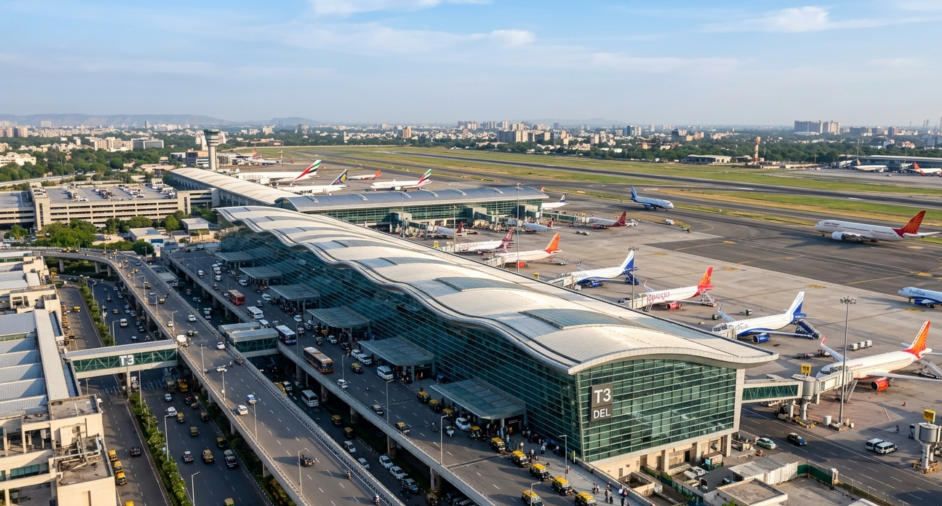
Indira Gandhi International Airport (IGIA), commonly known as IGI Airport, is the primary aviation gateway to India’s capital, Delhi, and the wider National Capital Region (NCR). Spanning over an immense area of approximately 5,106 acres, it stands as the largest and busiest airport in India. The airport was named in honor of the former Prime Minister of India, Smt. Indira Gandhi.
The roots of this airport trace back to the British colonial era. It was originally established as ‘Palam Airport‘ and operated as a strategic airbase for the Royal Air Force during World War II. Following India’s independence, the operations were handed over to civil aviation. As air traffic expanded rapidly in the capital, the capacity of Palam Airport proved insufficient. Consequently, with the inauguration of a new international terminal (now Terminal 2) in 1986, the airport was renamed ‘Indira Gandhi International Airport’. The year 2010 marked a watershed moment with the launch of the world-class Terminal 3 (T3), redefining the landscape of Indian civil aviation. Today, IGIA is globally ranked among the top airports, seamlessly handling millions of domestic and international travelers annually.
Detailed Architecture :-
The architectural layout of IGI Airport represents a breathtaking synthesis of cutting-edge modern engineering and deep-rooted Indian cultural heritage.
- The Architecture of Terminal 3 (T3) :– As the largest passenger terminal at the airport, T3 boasts a grand steel and glass framework. The most iconic highlight inside the terminal is the monumental “Hasta Mudras” (Hand Gestures) display mounted on the wall of the immigration hall. Crafted beautifully from copper, these giant sculptures depict traditional Indian dance and yoga mudras, welcoming global travelers with India’s ancient heritage.
- Interior Layout and Aesthetics :– The interiors are strategically engineered to maximize the inflow of natural light. Premium carpets, soaring pillars, and sophisticated ambient ceiling lights give the entire terminal a lavish, seven-star resort appearance. The layout incorporates massive departure and arrival lounges, world-class retail outlets, extensive duty-free zones, and premium wellness spas.
- Runways and the ATC Tower :– IGIA distinguishes itself as India’s first airport to feature four operational runways. The striking Air Traffic Control (ATC) tower stands as an architectural marvel of structural design, ensuring the flawless coordination of high-density flights.
- Photography Spots :– The immigration hall at Terminal 3, featuring the spectacular copper Mudras, is the most celebrated photography spot. Additionally, the sweeping skyline view outside the departure gates, the vertical indoor gardens, and the brilliantly lit luxury retail facades provide stunning backdrops for travelers.
Travel Guide & Routes :-
- Ticket & Entry :– Entry inside the terminal buildings is strictly restricted to passengers holding a valid air ticket and official identification (Passport/Aadhaar card). However, those accompanying passengers can access the visitor’s lounge at Terminal 3 by purchasing a visitor entry ticket.
- Visiting Time :– As a critical international aviation hub, IGI Airport operates 24 hours a day, 7 days a week, and 365 days a year.
- How to Reach :–
- By Metro :– The fastest and most seamless way to travel is via the Delhi Metro Airport Express Line (Orange Line). This dedicated high-speed line connects New Delhi Railway Station directly to Terminal 3 (Airport Metro Station) in just about 20 minutes. For Terminal 1, travelers can use the Terminal 1 IGI Airport Metro Station on the Magenta Line.
- By Cab/Auto :– Travelers can easily hail on-demand app cabs (Ola/Uber) or book prepaid taxis (Meru/Mega Cabs) from anywhere in the NCR, driving straight down National Highway 48 (NH-48) to reach the respective terminals.
- By Bus :– Delhi Transport Corporation (DTC) runs premium, air-conditioned electric ‘Airport Shuttle’ buses connecting major transit points like Kashmere Gate ISBT and Anand विहार directly to the airport terminals.
- Nearby Attractions :– Aerocity (famous for its high-end luxury hospitality, fine dining, and transit lounges), Cyber Hub (Gurugram), Qutub Minar, and the premium shopping malls of Vasant Kunj (Ambience Mall).
- Local Flavors & Famous Markets :– The airport corridors boast global food courts featuring well-known brands alongside traditional Indian culinary choices. Just outside the terminals lies Worldmark at Aerocity, a premium destination hosting fine-dining restaurants, chic cafes, and bars. For retail indulgence, the inside Duty-Free zones are highly famous for premium international perfumes, cosmetics, luxury goods, and chocolates.
Interesting Facts :-
- IGI Airport is one of the elite international airports globally to run entirely on renewable energy, utilizing a combination of on-site solar power plants and off-site hydroelectricity.
- Terminal 3 ranks among the largest passenger terminals in the world and was constructed in a record timeframe to open ahead of the Commonwealth Games 2010.
- The airport has been frequently recognized as the “Best Airport in India and Central Asia” by prestigious global organizations like Skytrax and Airports Council International (ACI).
Important Questions and Answer :-
Question 1:– How many terminals are operational at Delhi Airport and how can one transfer between them?
Answer:- There are three main operational terminals—Terminal 1 (T1), Terminal 2 (T2), and Terminal 3 (T3). Terminals 2 and 3 are situated within walking distance of each other, while Terminal 1 is located further away and is connected via a complimentary shuttle bus service provided by the airport for transit passengers.
Question 2:– How much time does the Airport Express Metro take to reach T3 from central Delhi?
Answer:- The high-speed Airport Express Line takes exactly 19 to 20 minutes to reach Terminal 3 from the New Delhi Railway Station metro hub.
Question 3:– Are there resting facilities available for passengers transiting overnight inside the airport?
Answer:- Yes, inside Terminal 3, passengers can access premium transit hotels, state-of-the-art sleeping pods available on an hourly basis, and luxury international lounges in both domestic and international departure wings.
Author’s Thoughts :-
IGI Airport is not merely a transit point for flights; it is a magnificent mirror reflecting a modern, aspirational India. The moment international travelers step off their aircraft, the spectacular architecture and the serene copper Mudras bridge the gap between India’s historical roots and its futuristic ambitions. The exceptional cleanliness, efficient management, and technological integrations make every Indian proud. It stands as a vibrant space that turns long layovers into memorable cultural experiences right at the heart of the capital.
“The majestic structures and endless runways of IGI Airport stand as a testament to a rising nation, gracefully holding on to its cultural soul while taking giant leaps into the global skies.”