
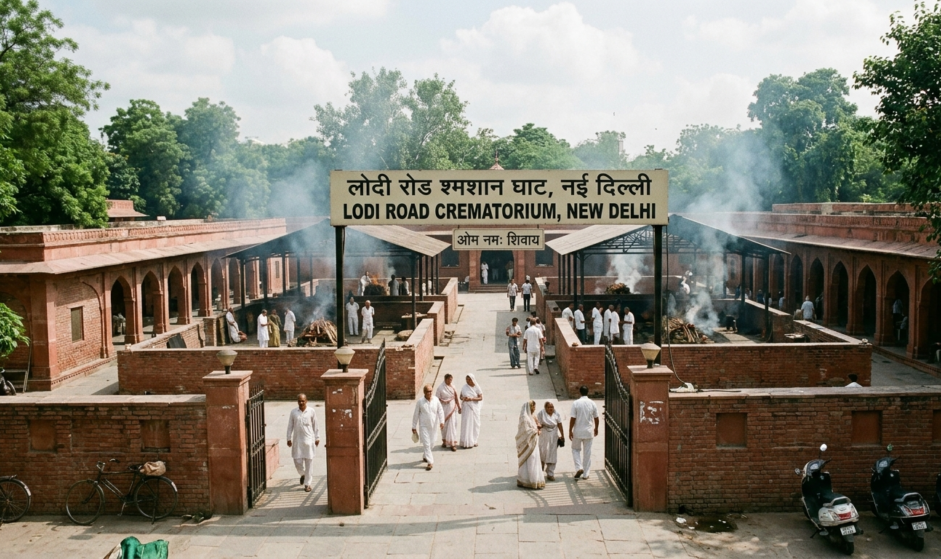
Lodhi Road Crematorium, Delhi :- A Symbol of Life’s Impermanence, Peace, and the Ultimate Truth
Detailed History
The Lodhi Road Crematorium is one of the oldest, most prominent, and highly organized cremation grounds in New Delhi. Nestled within the serene and secure parameters of Lutyens’ Delhi, this solemn institution is far more than a conventional funeral site; it stands as a silent chronicler of modern Indian history and human emotions. The primary objective behind its establishment was to provide a dignified, structured, and peaceful final rites facility for the citizens of the beautifully planned capital city.
For decades, this sacred ground has been the final resting place for some of India’s most eminent political stalwarts, legendary freedom fighters, celebrated artists, industrialists, and intellectuals. From the apex leadership of the nation to common citizens, final rites are performed here with deep adherence to traditional protocols and utmost respect. In modern times, the facility transitioned beautifully into an eco-conscious space, becoming one of the first major crematoriums in Delhi to implement large-scale CNG and electric cremation systems, setting a benchmark for sustainable practices across the country.
Detailed Architecture :-
The architectural design of the Lodhi Road Crematorium is conceptualized with immense sensitivity, focusing on minimalism, profound quietude, and comforting aesthetics to support grieving families.
- Exterior Architecture :– The entrance and outer boundary of the crematorium are constructed using heavy, understated natural stone masonry. Upon entering, visitors step into a vast, beautifully landscaped open-green area shaded by massive, legacy trees. The design purposefully avoids a grim or intimidating look, presenting an layout that mirrors a quiet memorial park or meditation center. The wide lawns and protective waiting sheds emphasize a deep harmony with nature.
- Interior Architecture :– The indoor floor plan is meticulously divided into functional, streamlined zones. The traditional wood-based cremation platforms feature high, vaulted concrete canopies designed to efficiently route smoke upwards away from visitors. In contrast, the CNG and electric furnace wings are characterized by pristine, clinical cleanliness and advanced tech-driven operations. The central Prayer Hall features high ceilings and simple white walls, carefully crafted to generate an atmosphere of quiet contemplation and shared solace during memorial services.
Travel Guide & Routes :-
Situated in the geographical heart of Central Delhi, reaching the Lodhi Road Crematorium is exceptionally convenient. Here is the essential visitor and operational guide.
- Entry/Service Fee :– There is no fee to enter the public or waiting areas of the complex. However, for performing cremations and associated religious rituals, a standardized, nominal fee fixed by the Municipal Corporation of Delhi (MCD) is charged based on the medium chosen (Wood, CNG, or Electric).
- Timings :– The crematorium is operational for conducting final rites from 07:00 AM to 06:00 PM daily. However, timings can be adjusted dynamically under special or urgent administrative circumstances.
- How to Reach :–
- By Metro :– The absolute closest metro gateway is the ‘Jawaharlal Nehru Stadium’ (JLN Stadium) Metro Station, located on the Violet Line. The crematorium is situated within short walking distance from the station gates. The ‘Lodhi Colony’ and ‘Khan Market’ stations are also nearby.
- By Bus :– Given its prime location on Lodhi Road, an extensive network of DTC buses (such as route numbers 522 and 47A) stop directly at the Lodhi Road Flyover and adjacent bus bays.
- By Auto/Cab :– Due to its central placement in the capital, app-based taxi aggregators and local auto-rickshaws offer direct, hassle-free navigation to the gates from any part of the NCR.
Nearby Attractions :-
- Lodhi Garden :– Located just a brief drive away, this historic heritage park houses the grand 15th-century architectural tombs and mosques of the Sayyid and Lodhi dynasties.
- Humayun’s Tomb :– A majestic UNESCO World Heritage Site showcasing the peak of early Mughal garden architecture, located a short distance away.
- Hazrat Nizamuddin Aulia Dargah :– One of the world’s most sacred Sufi shrines, renowned for its timeless history and soul-stirring evening Qawwali sessions, situated nearby.
- India Gate :– The iconic national war memorial and central boulevard of New Delhi, easily accessible via a direct road link.
- Jawaharlal Nehru Stadium :– A massive, world-class sports complex and cultural event venue located right opposite the crematorium area.
Management, Peace, and Lifestyle Guide :-
- Serene Zones :– The internal ‘Smriti Upvan’ (Memorial Garden) and the shaded seating corridors surrounding the prayer hall offer peaceful alcoves for visitors to sit in silence, gather their thoughts, and find composure.
- Local Logistics :– The outer perimeter of the complex features well-regulated vendor stalls providing fresh flowers, traditional ceremonial garlands, and all essential materials required for final rites. The interiors feature clean drinking water stations and comfortable seating.
- Administrative Standard :– Being located in the Lutyens’ zone, the security, sanitation, maintenance, and administrative protocols of this crematorium are managed at an exceptionally high standard compared to conventional city grounds.
Interesting Facts :-
- The Lodhi Road facility pioneered the green cremation movement in the national capital by being an early adopter of advanced, emission-controlled CNG and electric furnace technologies.
- The entire tracking, registration, and documentation system of the crematorium has been largely digitalized, streamlining the process of obtaining official cremation certificates for families.
- The campus preserves several centuries-old indigenous trees that create a thick, natural canopy, filtering out urban noise and offering cooling shade even during peak summer days.
- Because it serves as the primary final rites ground for Lutyens’ Delhi, it has hosted the state funerals and last journeys of numerous national leaders, iconic authors, and global Indian thinkers.
Important Questions and Answer :-
Question 1:– What are the different types of cremation facilities available at Lodhi Road?
Answer:- The crematorium provides the choice between traditional wood-log pyres, modern eco-friendly Compressed Natural Gas (CNG) chambers, and automated electric furnaces.
Question 2:– Which is the nearest metro station to access the crematorium?
Answer:- The ‘Jawaharlal Nehru Stadium’ (JLN Stadium) Metro Station on the Violet Line is the closest, located just a stone’s throw away from the main entrance.
Question 3:– Does the facility provide storage options for the mortal remains (ashes) post-cremation?
Answer:- Yes, the crematorium is equipped with secure, dedicated locker facilities where families can safely store the sacred ashes until they schedule the immersion rituals.
Author’s Thoughts :-
The Lodhi Road Crematorium stands as a profound, quiet sanctuary amidst the relentless hustle of New Delhi and the political corridors of Lutyens’ zone, gently reminding us of life’s ultimate truth. There is an inexplicable, grounding peace in the absolute stillness of this space, punctuated only by the rustling of ancient leaves. Watching the final farewells here puts the entirety of human existence into perspective—reminding us that all worldly power, prestige, wealth, and ego eventually dissolve into the same earth. It is a space that silently commands us to live our daily lives with greater kindness, humility, and love.
“The Lodhi Road Crematorium is that final destination where every journey ends, and all worldly noise dissolves into absolute peace.”