
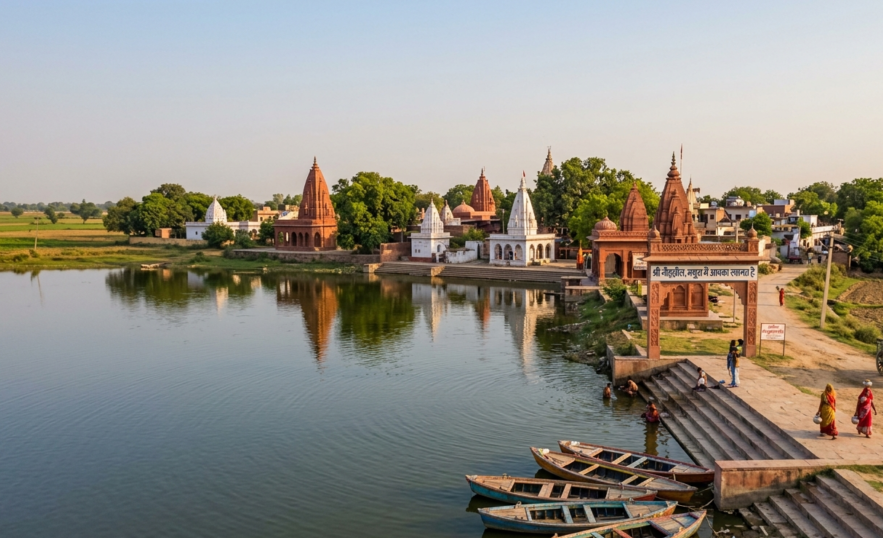
Naujhil, Mathura :- Historical Background and Cultural Heritage
Situated in the northern sector of the Mathura district in Uttar Pradesh, Naujhil is an ancient, historic, and culturally vibrant town in the Braj region. Positioned near the Yamuna River and adjacent to the Yamuna Expressway, Naujhil is celebrated for its deep-rooted mythological heritage, Jat warrior architecture, freedom struggle legacy, and rustic Braj traditions.
Detailed History
The history of Naujhil stretches back into antiquity. Local traditions state that the town earned its name from nine historic natural lakes (‘Nau Jheel’) that once formed an extensive rainwater harvesting and agricultural support system across the region. As part of the sacred Braj circle, the surrounding landscape is closely associated with regional folklore and pastoral traditions.
Historically, during the medieval era and the 18th century, Naujhil developed into a powerful administrative and military center under Tomar-Jat chieftains. The earthen ramparts and fort mounds of Naujhil bear witness to centuries of regional defense against Mughal and foreign forces. During the Indian Rebellion of 1857, Naujhil emerged as a fierce hotbed of anti-colonial resistance, where local agrarian communities actively challenged British authority. Today, Naujhil stands as an important block headquarters and trade hub in northern Mathura.
Detailed Architecture
The architectural heritage of Naujhil reflects a combination of classic North Indian rural design, medieval fortification structures, and traditional Braj residential layouts.
- Exterior Architecture :– The older sections of Naujhil feature traditional brick structures, arched entry gateways (dwaras), and historic havelis. The elevated mounds of the historic Naujhil Fort display ruined mud-and-stone ramparts. Local shrines feature traditional North Indian temple architecture with carved sandstone arches and ornamental spires (shikharas).
- Interior Architecture :– Houses and historical temples in Naujhil are centered around open courtyards (aangans), promoting natural lighting and airflow. The inner sanctums of local shrines house finely polished marble altars, detailed stone carvings, and traditional devotional artwork.
Nearby Attractions
- Jhadi Hanuman Mandir :– A highly revered ancient Hanuman shrine located in the Naujhil sector, drawing devotees from across the region.
- Vankhandi Mahadev Temple :– A historic Lord Shiva temple in Naujhil known for its peaceful spiritual environment and annual fairs.
- Moha Jheel :– A serene natural lake situated near Naujhil, popular for seasonal migratory bird watching and countryside views.
- Shergarh & Yamuna Ghats :– Located a short drive away, featuring historic temples, riverbank stretches, and peaceful rural vistas along the Yamuna River.
Travel Guide & Routes
- Ticket Entry :– Admission to Naujhil town, its historical mounds, and local temples is completely Free of Charge.
- Timings :–
- Temple Visiting Hours:- 05:30 AM to 12:00 PM and 04:30 PM to 08:30 PM.
- Commercial Bazaars:- 08:30 AM to 08:30 PM.
- How to Reach :–
- By Road :– Naujhil is situated right off the Yamuna Expressway (Bajna exit). Regular buses, auto-rickshaws, and private taxis connect Naujhil directly to Mathura city (approx. 45-50 km), Vrindavan, Aligarh, and Delhi-NCR.
- By Rail :– The primary nearby railway stations are Mathura Junction (MTJ) and Raya Railway Station, with direct road transport available to Naujhil.
- By Air :– The nearest airports are Pandit Deen Dayal Upadhyay Airport in Agra (approx. 90 km) and Indira Gandhi International Airport in New Delhi (approx. 120 km).
Photography Spots
- Fort Mounds & Old Haveli Gates :– Rustic brick alleys, detailed carved wooden doors, and historic fort ruins offer excellent travel frames.
- Countryside & Yamuna Belt :– Broad green agricultural fields surrounding Naujhil present breathtaking landscape photography during sunrise and sunset.
- Bustling Rural Bazaars :– Colorful local market stalls, traditional artisans, and scenes of daily life provide vibrant street photography opportunities.
Local Flavors & Famous Markets
- Local Flavors :– Naujhil is known for authentic milk-based delicacies prepared in pure ghee. Indulge in fresh Mathura Peda, Makhan-Mishri, hot Kachori with spicy Aloo Sabzi, Samosas, Rabri, and thick Lassi.
- Famous Markets :– Naujhil’s main bazaar serves as a central market for surrounding agrarian villages, offering brass utensils, religious items, handcrafted tools, and traditional sweets.
Interesting Facts
- Center of 1857 Uprising :– Naujhil played a pivotal role during the Indian Freedom Movement of 1857 as a major site of regional uprising against colonial forces.
- Yamuna Expressway Connectivity :– Positioned near a primary exit on the Yamuna Expressway, Naujhil is easily accessible from Delhi-NCR within two hours.
- Legacy of Nine Lakes :– The town’s historical name is derived from the nine natural lakes that historically sustained the area’s groundwater and farming.
Important Questions and Answer :-
Question 1:– How far is Naujhil from central Mathura city?
Answer:– Naujhil is located approximately 45 to 50 kilometers northeast of central Mathura city.
Question 2:– Is Naujhil suitable for a day trip from Delhi/Noida?
Answer:– Yes, via the Yamuna Expressway, Naujhil can be reached in about 1.5 to 2 hours from Delhi-NCR, making it an ideal offbeat day-trip destination.
Question 3:- What is the best season to visit Naujhil?
Answer:– The ideal time to visit Naujhil is between October and March, when the weather is cool and pleasant for outdoor travel.
Author’s Thoughts
”The true historical depth of the Braj region extends far beyond its urban centers into resilient heritage towns like Naujhil. From its proud role in the 1857 war of independence to its tranquil shrines and rural charm, Naujhil offers an authentic slice of North Indian history. Exploring Naujhil allows travelers to step off the beaten track and connect with the heroic stories and rustic beauty of Mathura’s countryside.”
“Naujhil stands as a historic sentinel of Braj, where revolutionary heritage meets timeless rural devotion.”