
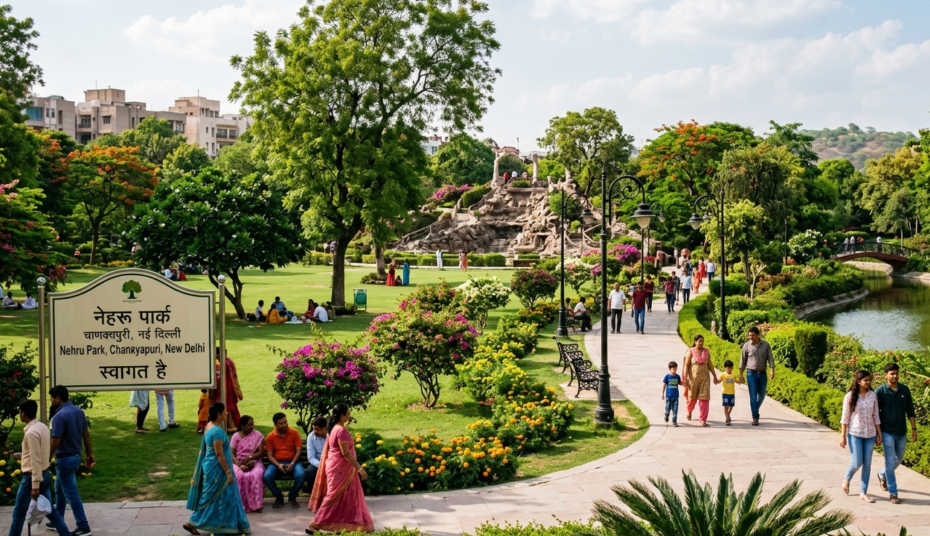
Nehru Park Chanakyapuri New Delhi :- The Emerald Valley, Rolling Topography, and Legendary Cultural Oasis of Lutyens’ Delhi
Amidst the dizzying corporate rush, concrete flyovers, and persistent traffic hum of India’s capital, is there a sanctuary where the air is strictly filtered by mature foliage, where majestic velvet lawns sweep over undulating mounds, and where the evening breeze carries the strains of live classical sitar and sufi notes? Absolutely. Tucked away within the ultra-premium, high-security diplomatic enclave of Chanakyapuri, ‘Nehru Park’ is far more than a manicured municipal garden. Sprawling over a massive canvas, it serves as the premier lifestyle backyard for Delhi’s global diplomats, avid fitness runners, nature minimalists, and international music connoisseurs. In this comprehensive travel profile, we will trace its administrative history, highly unique rolling landscape design, localized culinary highlights, and practical visitor blueprint.
Detailed History
The foundational blueprint of Nehru Park is deeply woven into the spatial planning of Chanakyapuri—the post-independence diplomatic sector designed explicitly to house international embassies and high commissions.
- Establishment and Name :– The massive green block was officially established and opened to the nation in 1969. It was named to immortalize Pandit Jawaharlal Nehru, the first Prime Minister of independent India, reflecting his well-documented love for nature, children, and open community infrastructure.
- The Custodianship :– The park is strictly owned and managed by the New Delhi Municipal Council (NDMC). Because of its sensitive geographical positioning amidst foreign legations and VVIP residences, it benefits from an elite tier of security, round-the-clock maintenance, and highly sophisticated horticultural engineering.
- The Cultural Transformation :– Over the last few decades, the park evolved from a simple morning-walk track into New Delhi’s premier open-air cultural theater, acting as the scenic stage for world-class literary fests, jazz assemblies, and spiritual musical events.
Detailed Architecture & Landscape Design
Unlike historic Delhi parks (such as Safdarjung Tomb or Lodhi Garden) which are visually anchored by medieval stone structures, Nehru Park is a triumph of pure modern landscape architecture and topographic manipulation.
- Topography & Spatial Framework (Area) :–
- The Eighty-Acre Canvas :– The park encompasses an expansive, uninterrupted perimeter of roughly 80 acres of premium central Delhi real estate.
- The Undulating Movement :– The defining characteristic of Nehru Park is its intentional lack of flat surfaces. The entire park is engineered with soft, rolling artificial earth mounds, sudden drops, hidden glades, and sweeping grassy valleys. This creates a brilliant illusion of walking through a remote hilly terrain or a natural valley rather than a city center.
- The Flora & Fauna Grid :–
- Horticultural Abundance :– The grounds are anchored by massive, canopy-forming legacy trees including Gulmohar, Neem, Amaltas, and Silk Cotton trees. During the winter cycles, the NDMC curates a spectacular seasonal floral show featuring pristine rows of Tulips, Chrysanthemums, and a manicured central Rose Garden.
- The Avian Inhabitants :– The absolute absence of commercial noise pollution makes this park a major urban avian sanctuary. Visitors are routinely greeted by the sights of free-roaming Indian Peacocks, parakeets, kingfishers, and koels nesting within the upper branches.
- Core Architectural Installation Markers :–
- The Vladimir Lenin Bronze :– Deep within the green loops stands an iconic, over-life-sized bronze statue of Vladimir Lenin, the leader of the Russian Bolshevik Revolution. Unveiled in the late Soviet-era diplomatic calendar, this statue remains a highly unique political-heritage marker within the capital, attracting global historians and state delegates annually.
- Aquatic Engineering :– Neatly integrated along the walking paths are beautifully configured artificial stone-lined ponds, rustic rocky channels, and small circulating water cascades that enhance the thermodynamic cooling of the park.
Travel Guide & Routes
For international expats, solo backpackers, digital nomads, and families seeking to execute a serene outdoor picnic or walking loop, the complete operational index is detailed below.
- Ticket :– Access into every sector of Nehru Park is completely Free of charge. No entry fees or dynamic weekend passes exist.
- Visiting Time :– The park is open to the public daily through all seasons from 05:00 AM to 09:00 PM.
- The Absolute Best Windows:– 06:00 AM to 09:00 AM for watching low-mist sunrises and join community yoga; and 04:30 PM to 07:30 PM to witness the golden sunset behind the tree canopies.
- Code of Conduct & Restrictions :– To maintain the pristine security matrix of the diplomatic zone, compliance with these directives is essential:
- Littering, abandoning plastic bottles, or leaving food wraps on the grass is strictly illegal and heavily fined by patrolling staff.
- Plucking flowers, disturbing bird nests, or harming the fauna is prohibited.
- Domestic pets are strictly restricted from entering the inner park tracks.
- How to Reach :–
- By Metro :– The premier rapid transit node is the ‘Lok Kalyan Marg’ Metro Station on the Yellow Line. Alternatively, travelers can exit via the ‘Sarojini Nagar’ or ‘Moti Bagh’ metro stations situated on the Pink Line. The park gates are an easy 5 to 7-minute auto-rickshaw journey from these transit stations.
- By Bus :– The outer perimeter is highly serviced by public transport. All DTC buses moving toward Niti Marg, Vinay Marg, or Chanakyapuri stop directly at the ‘Nehru Park’ designated curbside bus bay.
- By Road/Cab :– You can input ‘Nehru Park, Chanakyapuri’ into any digital mapping app. Tucked neatly at the intersection of Niti Marg, the access lanes are highly expansive, safe, and offer ample free public curbside parking spaces directly adjacent to the main gates.
Photography Spots, Local Flavors, and Famous Markets
- Photography Spots :–
- The Rolling Valley Frames :– Standing on top of one of the central artificial mounds during the ‘Golden Hour’ sunset offers an incredible cinematic frame of long tree shadows stretching over deep green lawns.
- The Winter Rose Garden :– Capturing the macro geometry of rare blooming roses with the soft-focus backdrop of the Chanakyapuri green canopy makes for exceptional social media frames.
- The Lenin Memorial Enclave :– A fantastic spot for capturing unique, retro-historical or journalistic travel portraits.
- Local Flavors :– The surrounding sector is an absolute goldmine for legendary local culinary exploration:
- Yashwant Place Commercial Complex :– Located just a 5-minute walk from the park, this legendary semi-open commercial block is world-famous across Delhi for its outstanding, piping-hot Tibet-style steamed/fried Momos, hot-and-sour soups, and sizzling chili potatoes. It is a beloved culinary tradition for generations of Delhi college students and diplomats.
- Santushti Shopping Complex :– Offers highly curated, ultra-premium boutique open-air cafes for artisanal coffee, continental salads, and fine-dining experiences.
- Famous Market :– If you wish to match your tranquil park walk with high-energy retail hunting, the legendary Sarojini Nagar Market—India’s ultimate high-street export-surplus bargain street—is just a short 10-minute drive away. For ethnic handicrafts, art stalls, and pan-Indian regional food counters, head straight to Dilli Haat (INA).
Nearby Attractions :-
Optimize your premium Chanakyapuri itinerary by seamlessly incorporating these highly proximate landmarks:
- National Rail Museum :– A spectacular indoor-outdoor transit museum housing vintage royal saloon cars, steam locomotives, and a running toy train, located within the same Chanakyapuri circle.
- Safdarjung Tomb :– The last grand monumental garden-tomb of the Mughal era, exhibiting stunning symmetry in red sandstone and plaster.
- Lodhi Garden :– The historic park anchored by 15th-century Sayyid and Lodi dynasty architectural domes and tombs.
- The Embassy Row Walk :– Strolling down Shantipath to marvel at the spectacular, globally diverse modern architectures of international embassies from the roadside.
Legendary Open-Air Cultural Festivals
Nehru Park is globally celebrated for hosting some of India’s most highly anticipated open-air cultural celebrations.
- Music in the Park :– A highly prestigious, long-running concert series organized by the NDMC. Here, the absolute legends of Indian Classical Music (such as Pandit Hariprasad Chaurasia and Ustad Amjad Ali Khan) perform live under the starlit sky to an audience of thousands sitting on the lawns.
- Bhakti Utsav & Sufi Nights :– Annual multi-day musical assemblies dedicated to traditional mystic sufi, folk, and classical devotional genres.
- International Food Festivals :– Prominent seasonal events where global embassies set up pop-up kitchens to showcase international street foods and delicacies.
Important Questions and Answer :-
Question 1:– Can we carry personal picnic baskets, mats, and board games inside Nehru Park?
Answer:- Yes, absolutely. Nehru Park is highly celebrated as one of the premier outdoor family picnic destinations in central Delhi. Visitors are welcome to bring outdoor sheets, home-cooked food, acoustic guitars, and light sports equipment like badminton racquets, provided they strictly clean up their spot before leaving.
Question 2:– Is there an on-site cafeteria or clean restroom system within the park perimeter?
Answer:- The NDMC maintains highly functional, clean, and modern public restrooms and pure water dispensing kiosks near the main entry rings. While there is no full commercial restaurant inside the lawns, the adjacent street nodes feature small snack kiosks and ice-cream carts.
Question 3:– Are the major musical concerts hosted at Nehru Park ticketed or require prior registration?
Answer:- The vast majority of the signature ‘Music in the Park’ and classical cultural assemblies hosted here are completely non-ticketed and open to the general public for free. Seating is usually managed on a first-come, first-served basis on the open grass lawns, so arriving early is highly recommended.
Author’s Perspective :-
From my perspective, Nehru Park represents the absolute pinnacle of urban green planning in India—a masterfully crafted escape valve tucked inside the capital’s diplomatic heart. While historic spaces like Lodhi Garden wrap you in the nostalgic weight of medieval architecture, Nehru Park offers a completely refreshing, modern sensory release. Standing on one of its rolling grass crests during a crisp winter afternoon, listening to the call of a peacock while looking out over eighty acres of pristine, uninterrupted green valleys, makes you completely forget that you are sitting in a metropolis of over thirty million people. It is a space where the elite, the student, the expat, and the artist occupy the same grass lawn in absolute harmony. If you wish to discover the ultimate refined lifestyle side of New Delhi, pack a simple picnic mat, download your favorite acoustic playlist, and spend a slow, sun-drenched evening tracing the rolling mounded trails of Nehru Park.
S“Secluded beautifully within the regal corridors of Chanakyapuri, this 80-acre rolling paradise remains New Delhi’s ultimate open-air canvas—where diplomatic quietude seamlessly blends with the timeless echoes of classical sufi melodies.”