
Detailed History
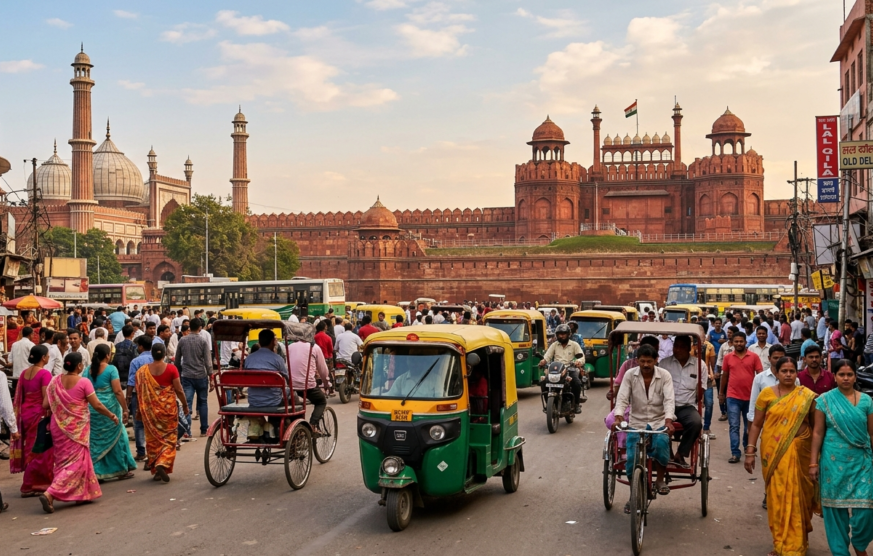
The history of Delhi is centuries old and immensely glorious. In the Mahabharata era, it was known as ‘Indraprastha‘, established by the Pandavas. Over time, Delhi was ruled by the Tomar dynasty, Chauhan dynasty, Khiljis, Tughlaqs, Sayyids, Lodhis, and eventually the Mughals. Emperor Shah Jahan made it his capital and established ‘Shahjahanabad‘ (now known as Old Delhi). During the British era in 1911, the official capital of India was shifted from Kolkata to Delhi, and Edwin Lutyens along with Herbert Baker designed New Delhi. Today, it stands as the political and cultural heartbeat of India.
Detailed Architecture
The architecture of Delhi presents a unique blend of ancient, medieval, and modern styles.
- Exterior :– The city features grand structures from the Mughal and Sultanate eras like the Qutub Minar, Red Fort, and Humayun’s Tomb, built with red sandstone and adorned with Quranic verses and intricate carvings. On the other hand, colonial-era architecture shines through the India Gate and Rashtrapati Bhavan, boasting grand pillars and massive domes.
- Interior :– Inside the Mughal monuments, one can witness exquisite marble work, Pietra Dura inlay art, grand arches, and royal fountains. The interiors of Lutyens’ buildings blend Indian and Western art motifs, featuring carved jharokhas and vast halls. Modern architectural wonders like the Lotus Temple (shaped like a blooming lotus) and Akshardham Temple display stellar contemporary craftsmanship.
Travel Guide & Routes
- Ticket and Charges :– For ASI monuments like the Red Fort, Qutub Minar, and Humayun’s Tomb, the ticket fee for Indian citizens is around ₹35-₹40 (with discounts on online booking). For foreign nationals, it ranges between ₹550-₹600. Entry to India Gate, Lotus Temple, and Birla Mandir is completely free.
- Visiting Time :– Most monuments remain open from 6:00 AM to 6:00 PM (sunrise to sunset). Akshardham and Lotus Temple remain closed on Mondays, and the Red Fort is also closed to tourists on Mondays.
- How to Reach :–
- By Air :– Indira Gandhi International Airport (IGI) connects Delhi to all major global destinations.
- By Rail :– New Delhi (NDLS), Old Delhi (DLI), and Hazrat Nizamuddin (NZM) are the primary railway stations.
- Local Transport :– Delhi Metro is the ultimate lifeline of the city. Tourists can also comfortably commute via DTC buses, auto-rickshaws, or app-based cabs like Ola and Uber.
- Photography Spots :– The lawns facing India Gate, the gardens of Humayun’s Tomb, the Qutub Minar complex, and the stepwell of Agrasen ki Baoli are the finest spots for photography.
- Local Flavors :– The stuffed paranthas at Paranthe Wali Gali in Old Delhi (Chandni Chowk), Natraj’s Dahi Bhalle, Karim’s Korma and Kebabs, and the Chole Bhature of Lajpat Nagar and Rajouri Garden are world-renowned.
- Famous Markets :– For shopping, Chandni Chowk (apparel and jewelry), Janpath and Sarojini Nagar (trendy, budget clothing), Khari Baoli (Asia’s largest spice market), and Connaught Place (branded showrooms) are highly popular.
Nearby Attractions in Detail :-
- Waste to Wonder Park :– Located near Rajiv Gandhi Smriti Van, this park features replicas of the Seven Wonders of the World, constructed entirely from industrial and domestic scrap metal. The evening lighting effects make it a visual treat.
- National Rail Museum :– Situated in Chanakyapuri, this museum showcases the rich heritage of Indian Railways. It features vintage royal coaches used by Maharajas, antique steam engines, and a toy train ride that attracts children and adults alike.
- Kingdom of Dreams :– Located in Gurugram (NCR), it is India’s first live entertainment and theater hub. The grand ‘Culture Boulevard’ brilliantly showcases the diverse art, crafts, and culinary heritage of various Indian states.
- Cyber Hub :– A futuristic and premium social avenue in Gurugram, widely known for its top-tier restaurants, pubs, cafes, and live music events. It is the ultimate spot to experience the modern lifestyle and nightlife of the region.
Interesting Facts :-
- Delhi’s ‘Khari Baoli‘ market is considered the largest wholesale spice market in Asia and has been operating since the 17th century.
- The Iron Pillar located inside the Qutub Minar complex is over 1600 years old but has never rusted to this day.
- Delhi Transport Corporation (DTC) operates one of the largest environment-friendly (CNG) public transport networks in the world.
- Delhi is fondly called the ‘City of Hearts’ (Dilwalon ki Dilli) and ranks among the greenest metropolises globally.
Important Questions and Answer :-
Question 1:- What is the best time to visit Delhi?
Answer:– The best time to visit Delhi is between October and March when the weather remains pleasant and pleasantly chilly.
Question 2:– What is considered the lifeline of Delhi?
Answer:– The Delhi Metro is considered the lifeline of the city, seamlessly connecting Delhi with neighboring NCR regions.
Question 3:– Who founded Old Delhi?
Answer:– Old Delhi was founded by the Mughal Emperor Shah Jahan in the year 1639 under the name ‘Shahjahanabad’.
Author’s Thoughts :-
Delhi is not just a city; it is a living emotion. Every corner here whispers a different tale of history. The coexistence of narrow alleys in Old Delhi and ancient Mughal monuments amidst modern skyscrapers makes this city entirely unique. As a writer and traveler, I believe that to truly understand Delhi, you must look past its grand architecture and taste its legendary street food. It is a city that might exhaust you with its fast-paced life, but instantly comforts you with its deep-rooted nostalgia and warm hospitality.
S“Embracing the depth of history and the speed of modernity, Delhi becomes the ultimate heartbeat of every traveler.”