
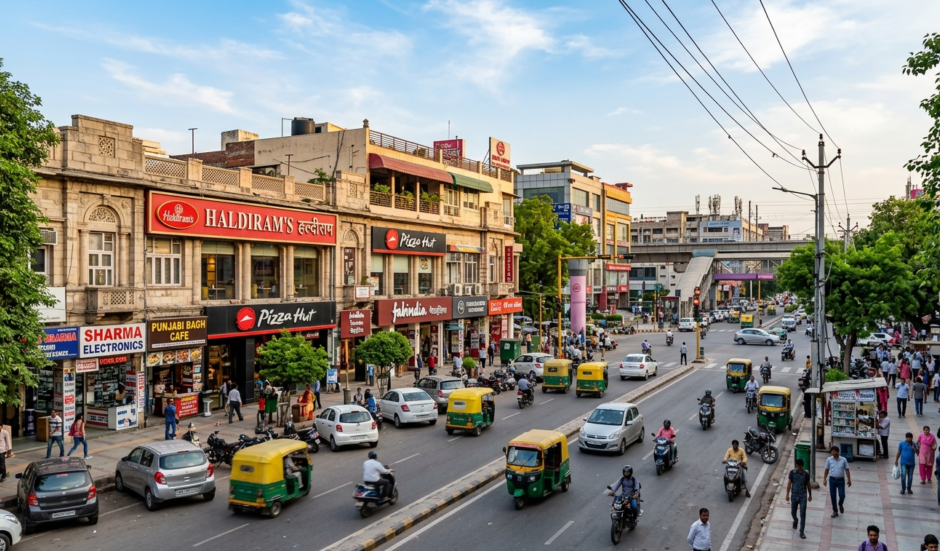
The Vibrant Hub of West Delhi :- Punjabi Bagh, Delhi
When we talk about luxury lifestyles, high-end dining, and affluent residential neighborhoods in Delhi, South Delhi often dominates the conversation. However, West Delhi houses a magnificent locality that rivals any posh area with its wide avenues, palatial bungalows, lush green parks, and, above all, a thunderous food and nightlife culture—welcome to ‘Punjabi Bagh’. What started as a humble settlement for refugees after the partition has transformed today into one of Delhi’s most elite and affluent addresses. In this comprehensive blog, let us explore the history, layout, food culture, and premium lifestyle of Punjabi Bagh.
Detailed History
The history of Punjabi Bagh is an inspiring saga of resilience, business acumen, and the sheer hard work of rebuilding an empire from scratch after the trauma of partition.
- The Partition and the Influx :– During the partition of India in 1947, thousands of Hindu and Sikh families from Western Punjab (now in Pakistan) migrated to Delhi. Many of these families were affluent traders, landlords, and businessmen who had lost everything overnight.
- The Genesis of the Refugee Colony :– In the early 1950s, this area was carved out to rehabilitate these displaced families. Initially, the government township was named ‘Paschim Puri’.
- How it Became ‘Punjabi Bagh’ :– Since the locality was predominantly settled by Punjabi migrants who poured their heart and soul into building large independent houses with beautiful personal gardens, the locality was officially renamed ‘Punjabi Bagh’ in the 1960s. Today, it stands as a monumental symbol of post-partition immigrant success.
Detailed Layout & Architecture
Punjabi Bagh was developed on a highly organized grid system, which gives it a spacious, structured, and grand appearance completely distinct from the chaotic lanes of Old or East Delhi.
- The Two Wings :– The locality is broadly divided into two zones—Punjabi Bagh West and Punjabi Bagh East. Punjabi Bagh West serves as the hyper-commercial and high-street entertainment hub, while the East sector remains predominantly quiet, green, and residential.
- Palatial Bungalows :– The defining architectural feature of Punjabi Bagh is its broad roads lined with massive, multi-crore independent bungalows showcasing ultra-modern architecture. It is home to Delhi’s top-tier industrialists, transport barons, and elite professionals.
- The Institutional Clubs :– The iconic ‘Punjabi Bagh Club’ is one of the oldest and most prestigious recreational clubs in Delhi, mirroring the high-society lifestyle of the residents. Over the years, the main arterial roads (especially Club Road) have evolved into high-end commercial high streets.
Travel Guide & Routes
If you want to experience the infectious energy, premium shopping, and culinary masterpieces of Punjabi Bagh, use this complete travel guide.
- Tickets :– Since it is a public residential and commercial district, there is no entry fee or ticketing system. Accessing the markets is completely Free.
- Best Time to Visit :– Markets and retail showrooms generally operate from 11:00 AM to 11:30 PM (with elite lounges and bars remaining active until 1:00 AM). The absolute best time to explore is post-sunset when the high streets light up brilliantly.
- How to Reach :–
- By Metro :– Punjabi Bagh boasts exceptional metro connectivity via two primary stations—‘Punjabi Bagh’ (Green Line) and ‘Punjabi Bagh West’ (Pink Line). The specialized elevated interchange footbridge connecting these two distinct lines is an engineering marvel in itself.
- By Road :– Positioned directly on the vital Ring Road network, it is seamlessly connected to all parts of Delhi. App-based cabs (Uber/Ola), auto-rickshaws, and public buses are available round the clock.
Photography Spots
While it is predominantly a modern commercial-residential hub, Punjabi Bagh offers fantastic visual frames for lifestyle, street, and Instagram photography.
- The Neon Glow of Club Road :– Capturing the high street at night with its flashing neon signs, beautifully decorated outdoor restaurant decks, and luxury sports cars provides a high-octane urban nightlife frame.
- Aesthetic Cafe Interiors :– The upscale lounges here are famous for their heavily curated, theme-based, or vintage industrial interiors, making them perfect for indoor portraits and food blogging shots.
- Maharaja Agrasen Park :– A massive, immaculately maintained green lung in the heart of the locality, ideal for capturing golden-hour shots amidst nature.
Local Food & Famous Markets
It wouldn’t be an exaggeration to label Punjabi Bagh as the ‘Food Capital of West Delhi’. The culinary landscape here is legendary.
- The Club Road Culinary Hub :–
- Club Road :– This single stretch is the beating heart of West Delhi’s nightlife. It is tightly packed with elite fine-dining restaurants, gastropubs, microbreweries, and artisanal cafes (such as Tales & Spirits, Lord of the Drinks, and Verbena). Whether you crave authentic global Continental cuisines, Italian wood-fired pizzas, or rich, heavy Punjabi classics like Butter Chicken and slow-cooked Dal Makhani, this street delivers.
- High-End Street Food :– The inner colony markets host premium street food vendors serving immaculate golgappas, crispy tikkis, stuffed momos, and traditional rabri-kulfi.
- Famous Markets :–
- Central Market :– A premium shopping district lined with flagship fashion showrooms, luxury designer boutiques, elite salons, and high-end jewelry stores. It is the premier shopping destination for residents across West Delhi.
Nearby Attractions
You can comfortably extend your itinerary from Punjabi Bagh to these surrounding hotspots.
- Rajouri Garden :– Located just 10 minutes away, another massive commercial district packed with multiple shopping malls and high streets.
- ISKCON Temple (Punjabi Bagh) :– A beautiful, serene, and structurally magnificent temple dedicated to Lord Krishna, located right within the vicinity, famous for its soulful evening prayers.
- Pacific Mall (Tagore Garden) :– One of Delhi’s premier modern shopping malls featuring global brands and premium cinema halls, located a short drive away.
Interesting Facts
- Built on Self-Reliance :– Following the partition, the incoming migrants did not wait for extensive government doles; instead, using their inherent business skills, they converted what was once a low-lying swampy terrain into a ultra-luxurious township.
- A Stronghold of Bungalows :– In a city rapidly converting into high-rise builder apartments, Punjabi Bagh is one of the rare premium pockets that has fiercely retained its layout of sprawling independent villas and family kothis.
- A Metro Milestone :– The Punjabi Bagh West metro station features Delhi Metro’s first-ever specialized steel span bridge constructed directly over an active flyaver road to facilitate an interchange between two elevated corridors (Pink and Green).
Important Questions and Answer :-
Question 1:- What makes Punjabi Bagh famous across Delhi?
Answer:– Punjabi Bagh is widely famous for its affluent residential lifestyle, sprawling independent bungalows, high-end shopping at Central Market, and the legendary fine-dining cafes and bars situated on Club Road.
Question 2:– Which is the closest metro station to Punjabi Bagh?
Answer:– The area is served by ‘Punjabi Bagh West’ on the Pink Line and ‘Base Punjabi Bagh’ on the Green Line.
Question 3:– Are the markets in Punjabi Bagh closed on any specific day?
Answer:– Most traditional retail showrooms and boutiques in the Central Market remain closed on Mondays, though the cafes, bars, and lounges on Club Road remain open all seven days of the week.
Question 4:– What is the origin of the name ‘Punjabi Bagh’?
Answer:– The locality was originally settled by displaced Hindu and Sikh families migrating from Western Punjab after the 1947 partition. Their affinity for cultivating lush green lawns combined with their ethnic identity led to the name Punjabi Bagh.
Author’s Thoughts
Strolling down the vibrant lanes of Punjabi Bagh offers a fascinating glimpse into the relentless human spirit and the evolution of modern Delhi. This locality serves as a living lesson on how sheer determination can turn a clean slate into a thriving empire. During the day, the wide, tree-lined avenues and manicured parks present a picture of sophisticated, peaceful family living. Yet, as the sun sets, the neon glow of Club Road takes over, transforming it into an energetic, high-spirited playground for the city’s youth. The air here doesn’t just carry the delicious aromas of gourmet food; it carries the essence of the classic Punjabi zest for life—one that knows how to smile and celebrate through thick and thin. Whether you want to seek peace at the ISKCON temple, shop for premium fashion, or party the night away with friends, Punjabi Bagh opens its arms to every kind of traveler.
“Rising beautifully from the ashes of partition to the dazzling neon horizons of Club Road, Punjabi Bagh stands as the ultimate testament to Delhi’s resilient spirit and elite modern lifestyle.”