
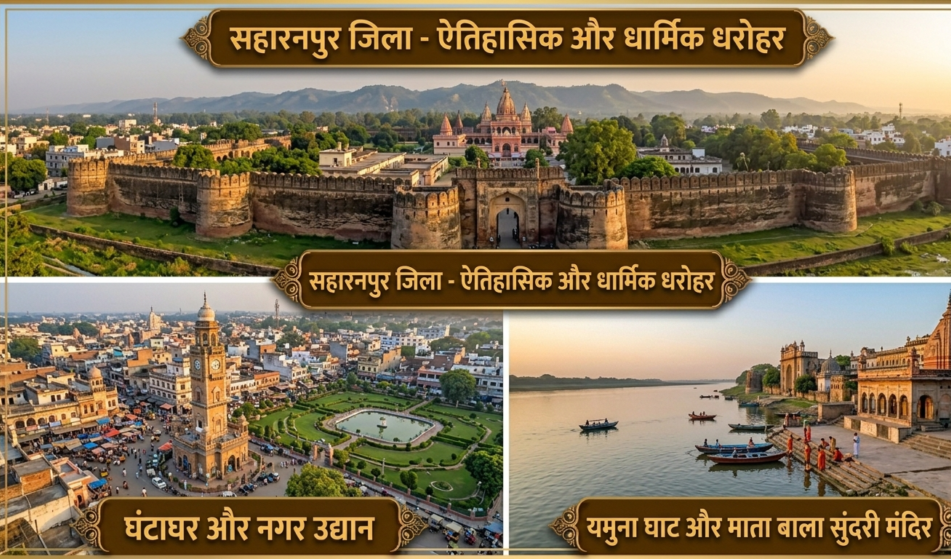
Saharanpur :- The Gateway to Wood Carvings and Spirituality
Detailed History
Saharanpur is a highly significant and historical district located in the northernmost part of Uttar Pradesh. Nestled at the foothills of the Shivalik ranges, it shares borders with Uttarakhand, Haryana, and Himachal Pradesh. The city was established around 1340 AD during the Mughal era and was named after the famous Sufi saint ‘Shah Harun Chishti‘. In ancient times, this region was part of the Kuru Kingdom. The importance of Saharanpur grew significantly during the British era with the development of a botanical garden and a major railway network. Today, Saharanpur is internationally acclaimed for its exquisite ‘Wood Carving‘ (Kasht Shilp), earning it the moniker ‘Wooden City of India‘.
Detailed Architecture
The architecture of Saharanpur showcases a magnificent blend of Mughal, Hindu, and colonial (British) styles.
- Exterior Architecture :– The ancient temples, such as the Shakumbhari Devi Temple, predominantly feature North Indian temple architecture. Historical Mughal-style arched gateways still stand in the older parts of the city. Administrative buildings and the Saharanpur Railway Station, built during the British era, reflect European styles with high ceilings and the prominent use of red bricks.
- Interior Architecture :– The true essence of Saharanpur’s architecture lies in the intricate wood carvings found inside homes and workshops. Hand-carved doors, windows, and furniture make every construction unique. The interior of the world-famous Darul Uloom in Deoband, with its vast library and prayer halls, is a sublime example of Islamic architecture.
Nearby Attractions
- Shakumbhari Devi Temple :– Located in the lap of the Shivalik hills, it is one of the most famous Shaktipeeths in North India, attracting millions of devotees during Navratri.
- Darul Uloom Deoband :– A world-renowned Islamic university, recognized globally for its historical building and religious education.
- Saharanpur Botanical Garden :– Established in 1750, it is one of the oldest botanical gardens in India, now serving as a major research and tourism hub.
- Bala Sundari Temple :– Located in Deoband, this temple is a major center of faith for Hindu devotees.
- Naugaza Peer :– A symbol of religious harmony where people of all faiths come to offer prayers and make wishes.
Travel Guide & Routes
- Tickets and Timings :– Entry to most temples and religious sites is Free. A nominal fee is required for the Botanical Garden. Visiting hours for Shakumbhari Devi Temple are generally from 5:00 AM to 9:00 PM.
- How to Reach :–
- By Rail :– Saharanpur Junction (SRE) is a major railway station in North India, directly connected to Delhi, Amritsar, Jammu, and Lucknow.
- By Road :– The district is well-connected via NH-709 and NH-344. It is easily accessible from Delhi (approx. 180 km) and Chandigarh by bus or private vehicle.
- By Air :– The nearest airport is Jolly Grant (Dehradun), approximately 80 km away.
- Photography Spots :– Panoramic views of the Shivalik hills, wood carving workshops, and the lush greenery of the Botanical Garden.
- Local Taste :– The ‘Paneer Jalebi’, ‘Chole-Bhature’, and ‘Saharanpuri Chaat’ are very famous. The local Mangoes are also renowned for their taste.
- Famous Markets :– Wood Market (Lakri Bazar) for decorative wooden items and Court Road Market for clothing and general shopping.
Interesting Facts
- Wooden furniture crafted in Saharanpur graces the Rashtrapati Bhavan and palaces across many countries worldwide.
- The Saharanpur Botanical Garden was developed by the East India Company as a key center for plant conservation.
- Deoband is also known as the ‘Classical City’ due to its historical and religious significance.
Important Questions and Answer :-
- Question 1:- What industry is Saharanpur globally famous for? Answer:- Saharanpur is world-famous for its ‘Handicraft Wood Carving’ industry.
- Question 2:- How far is Shakumbhari Devi Temple from Saharanpur city? Answer:- Shakumbhari Devi Temple is located in the hills, about 40 km away from the main Saharanpur city.
- Question 3:- What was the old name of Saharanpur? Answer:- According to historical records, it was named Saharanpur after Shah Harun Chishti, while in ancient times, it was part of the Kuru region.
- Question 4:- When is the best time to visit? Answer:- The period from October to March is the best time for a visit when the weather is pleasant.
- Question 5:- Is there any famous sweet dish found here? Answer:- Yes, the ‘Paneer Jalebi’ is extremely popular among locals and tourists alike.
Author’s Perspective
In my view, Saharanpur is a city that resides in the fingers of its artisans. When you witness a simple piece of wood being transformed into a beautiful artifact by skilled craftsmen, you realize the patience and talent of this city. Nestled under the Shivalik hills, this district not only offers spiritual strength but also captivates every traveler through its blended culture and flavors. If you are an admirer of art and wish to be close to nature, the lanes of Saharanpur and the mountains of Shakumbhari await you.
“Saharanpur is a beautiful confluence of art etched on wood and the valleys of Shivalik.”