
Siphon / Chiffon Company :- History, Business Empire, Infrastructure & Complete Guide
The term Siphon (or Chiffon) represents two major and influential commercial sectors globally. The first pertains to fluid dynamics, automotive drainage, and vacuum pipeline technology (Siphon System Technology); and the second represents the multi-billion-dollar global textile and fabric manufacturing industry (Chiffon Fabric Manufacturing). Both domains are renowned for innovation, precision engineering, and premium quality in their respective markets.
Detailed History
The history of Siphon technology and Chiffon textile manufacturing is rich with technological advancements and industrial growth.
- Industrial Siphon Systems Era :– With the rise of the industrial revolution in the mid-20th century, siphon technology was engineered for automotive, chemical processing, and municipal drainage systems. It enabled the transfer of liquids without electrical pumps, greatly accelerating industrial manufacturing.
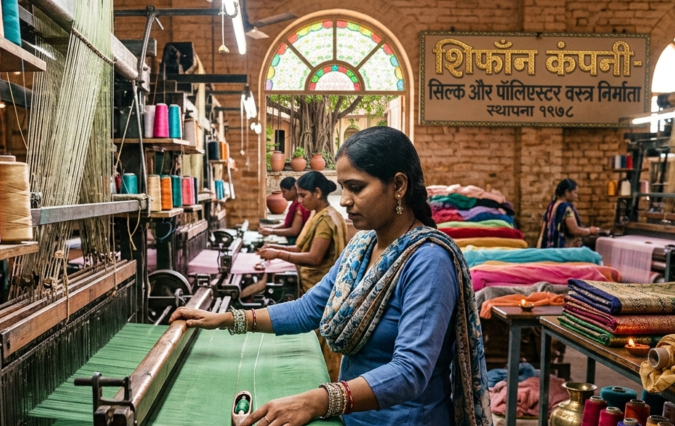
- Chiffon Textile Legacy :– In fashion and textiles, the word ‘Chiffon’ is derived from the French word ‘Chiffe’, meaning cloth. Prior to the 1900s, chiffon was exclusively crafted from natural silk for royalty. Following the invention of Nylon in 1938 and Polyester in 1958, commercial chiffon manufacturing expanded globally, creating a massive textile business.
- Global Expansion & Modern Tech :– Modern siphon engineering firms hold patents for automated vacuum flushing and fluid management, while textile chiffon companies lead the market in eco-friendly organic and synthetic weave manufacturing.
Detailed Architecture & Structural Divisions
The structural framework of the enterprise is divided into two primary divisions.
1. Siphon Industrial Infrastructure (Fluid Dynamics Architecture)
- Material & Durability :– Industrial siphon systems are engineered using high-grade PVC, stainless steel, and anti-corrosive brass fittings.
- Engineering Structure :– The internal design operates on precise vacuum pressure and airtight seals to guarantee uninterrupted fluid transmission.
2. Chiffon Textile Architecture (Fabric Construction)
- Weave Pattern :– Chiffon fabric features a balanced plain weave constructed with tightly twisted yarns (alternating S-twist and Z-twist).
- Structural Properties :– The fabric is distinguished by its sheer transparency, lightweight texture, high breathability, and elegant drape.
Travel Guide & Access Routes
If you intend to visit a major industrial siphon manufacturing plant, corporate headquarters, or a renowned textile chiffon manufacturing hub, here is the access guide.
- Primary Address :– Siphon / Chiffon Corporate & Industrial Hubs (Located across key industrial parks and textile zones).
- Operating Hours :–
- Corporate Offices:- 09:30 AM to 06:00 PM (Monday to Saturday).
- Manufacturing Facilities:- 24/7 (Operational shifts).
- Tickets & Entry Fees :– There is no entry fee for official business visitors (prior visitor clearance and passes are required).
Access Routes :–
- By Air :– From the nearest international or domestic airport, pre-paid taxis and metro routes provide direct access to major industrial parks.
- By Rail :– Main railway hubs connect seamlessly to corporate facilities via auto-rickshaws, e-rickshaws, and app-based cab services.
- By Road :– Major facilities are well connected through national highways and public bus networks (BRTS/Metro).
- Photography Spots :– Modern corporate experience centers, automated textile looms, and architectural lounges provide excelente backdrops for photography.
- Local Cuisine :– Enjoy local regional dishes and coffee at corporate cafes and nearby dining spots during your visit.
- Famous Markets :– Surrounding commercial complexes and textile wholesale markets are ideal destinations for business procurement.
Interesting Facts
- Physics in Action :– Siphon technology leverages atmospheric pressure and gravity to transport liquids from a higher level to a lower level without external power pumps.
- From Silk to Synthetic :– Before 1958, chiffon was made exclusively of luxury silk and reserved for elite fashion. The integration of polyester made it accessible worldwide.
- Automotive Application :– Modern automotive engineering relies heavily on siphon principles for efficient fuel transfer and cooling management systems.
- Eco-Friendly Manufacturing :– Contemporary chiffon manufacturers utilize recycled PET bottles (Recycled Polyester) to produce sustainable, high-grade fabrics.
Important Questions and Answer :-
Question 1:– In which sectors does the Siphon/Chiffon company primarily operate?
Answer:- It operates primarily in two sectors: industrial fluid dynamics/drainage systems (Siphon Systems) and textile fabric manufacturing (Chiffon Fabrics).
Question 2:– What is the defining characteristic of Chiffon fabric?
Answer:- Chiffon fabric is lightweight, sheer, soft, and woven using alternating S-twist and Z-twist yarns in a plain weave pattern.
Question 3:– Is an entry ticket required to visit the corporate office?
Answer:- No entry fee is required for corporate visits, though prior official appointments are mandatory.
Question 4:– What scientific principle governs an industrial Siphon system?
Answer:- Industrial siphon systems function based on the principles of atmospheric pressure and gravitational forces.
“Siphon Company: Redefining global markets through industrial fluid engineering and exquisite textile craftsmanship.”